Tuna Avocado Quinoa Salad
Introduction
Could a 15–20 minute bowl of tuna, avocado and quinoa deliver roughly 25–30 grams of protein, 7–8 grams of fiber, and enough healthy fats to keep you full for hours—at a fraction of the cost and calories of many restaurant salads? Data from nutrition databases show that a balanced combo of cooked quinoa, canned tuna, and avocado creates a macro profile that’s ideal for lunches, post-workout refuels, and quick weeknight dinners, challenging the belief that healthy, filling meals must be time-consuming or expensive.
Ingredients List
- 1 cup cooked quinoa (about 185 g cooked) — nutty, fluffy texture; substitute with couscous, bulgur, or cauliflower rice for low-carb.
- 1 can (5–6 oz / 140–170 g) tuna in water, drained — firm, savory flakes; swap for canned salmon, cooked shrimp, or a 4–6 oz grilled chicken breast.
- 1 ripe avocado, diced — creamy, buttery richness; for lower-fat swap with 1/2 cup mashed edamame or roasted chickpeas.
- 1 cup cherry tomatoes, halved — juicy sweetness; replace with roasted bell pepper for smoky notes.
- 1 small cucumber, diced — crisp contrast; peeled zucchini works too.
- 2 tbsp red onion, finely minced — sharpness and color; use shallot for milder flavor.
- 2 tbsp chopped fresh cilantro or parsley — bright herbal lift.
- 2 tbsp extra-virgin olive oil — silky mouthfeel; substitute with avocado oil, lemon-tahini, or 1 tbsp Greek yogurt + 1 tbsp oil for creaminess.
- Juice of 1 lemon (or 2 tbsp) — acid to balance richness; lime works well for a Mexican twist.
- 1 tsp Dijon mustard — emulsifier and tang (optional).
- 1/4 tsp sea salt and fresh cracked black pepper to taste.
- Pinch of red pepper flakes or 1/2 tsp smoked paprika (optional) for warmth.
Sensory note: aim for a balance of crispy (cucumber), creamy (avocado), meaty (tuna), and nutty (quinoa) — these contrasts make every bite satisfying.
Timing
Preparation: 10 minutes if quinoa is pre-cooked; 25 minutes if starting with dry quinoa. Cooking (if needed): 15 minutes to cook quinoa and cool briefly. Total time: about 20–30 minutes, which is roughly 30–50% faster than many composed grain salads that require roasting proteins or vegetables for 40–60 minutes. If you batch-cook quinoa ahead, active hands-on time drops to under 10 minutes.
Step 1 — Cook and cool the quinoa
Rinse 1/2 cup dry quinoa under cold water (removes bitterness) and cook with 1 cup water, bring to boil, simmer 12–15 minutes until fluffy. For fluffier grains, rest covered for 5 minutes then fluff with a fork. Tip: cook quinoa in bulk (up to 4 cups) and refrigerate for 4–5 days to save time on future salads.
Step 2 — Prepare the dressing and aromatics
In a small bowl whisk lemon juice, olive oil, Dijon mustard, salt, pepper, and red pepper flakes. Taste and adjust acidity or salt — dressing should be slightly bright to cut avocado richness. Personalization: add 1 tsp honey for a touch of sweetness or 1 tsp soy sauce for umami.
Step 3 — Combine base ingredients
Place cooled quinoa in a large bowl, add drained tuna (flaked gently with a fork), halved cherry tomatoes, diced cucumber, red onion, and chopped herbs. Toss gently so the tuna stays in flakes, not paste. Tip: warm quinoa slightly if serving chilled salad — it helps meld flavors without making avocado soggy.
Step 4 — Add avocado and finish
Fold in diced avocado right before serving to avoid browning. Pour dressing over salad and toss gently to coat. Adjust seasoning—add more lemon for brightness or a sprinkle of flaky sea salt for texture. Serve immediately or chill for 10–15 minutes to let flavors marry.
Nutritional Information
Approximate per serving (recipe yields 2 servings): Calories 380–420 kcal; Protein ~24–28 g; Carbohydrates ~25–30 g; Fat ~18–22 g; Fiber ~7–9 g. These estimates are based on standard USDA averages for cooked quinoa, canned tuna in water, and medium avocado. Key data insights: canned tuna delivers a high-protein, low-fat punch (20–25 g protein per 100 g); quinoa contributes complete plant-based amino acids and slow-digesting carbs; avocado provides monounsaturated fats linked to heart health. Sodium will vary by tuna brand—choose low-sodium or rinse canned tuna to reduce it by up to 20–30%.
Healthier Alternatives for the Recipe
- Lower-calorie version: halve the avocado, swap olive oil for 1 tbsp lemon-tahini made with water to thin, and add extra cucumber and greens for volume.
- Higher-protein athletic version: add an extra 3–4 oz seared tuna steak or 1/2 cup edamame; this increases protein to 35–45 g per serving.
- Plant-based swap: replace tuna with 1.5 cups roasted chickpeas or 1 cup firm baked tofu seasoned with smoked paprika to mimic savory depth.
- Low-carb / keto: replace quinoa with riced cauliflower and increase avocado or add a hard-boiled egg for additional fat and protein.
- Pregnancy-safe tip: choose light tuna over albacore (lower mercury) and limit to the weekly seafood guidelines recommended by health authorities (typically 2–3 servings/week depending on local advice).
Serving Suggestions
Serve on a bed of mixed baby greens for a lighter plate, spoon into butter lettuce cups for a fun handheld lunch, or pile onto toasted whole-grain sourdough for an open-faced sandwich. For picnic-friendly prep, layer quinoa mixture and avocado in a mason jar, keep dressing separate until serving. Pair with a crisp white wine, a citrusy iced tea, or a sparkling water with cucumber slices for a refreshing contrast.
Common Mistakes to Avoid
- Overcooking quinoa: leads to mushy texture; use the 1:2 ratio and rest covered for 5 minutes.
- Adding avocado too early: causes browning and a mushy texture—add it last.
- Using oily/salty tuna without draining: creates a greasy, oversalted salad—drain and even rinse tuna to reduce oil and sodium.
- Overdressing: dilutes flavors and sogginess—start with half the dressing, toss, and add more if needed.
- Ignoring temperature contrasts: serving everything ice-cold can mute flavors; room-temperature quinoa or tuna highlights aromatics and dressing.
Storing Tips for the Recipe
Assembled: best consumed within 24–48 hours; avocado will brown and texture softens over time. Store in an airtight container and press plastic wrap directly on the surface to limit oxidation. Prepped components: quinoa keeps 4–5 days in the fridge, diced vegetables 3–4 days, and unopened canned tuna months; keep dressing separately for up to 5 days. Freezing is not recommended for this salad because avocado and fresh vegetables degrade on thawing.
Conclusion
This Tuna Avocado Quinoa Salad is a fast, nutrient-dense bowl that balances protein, fiber, and healthy fats while staying adaptable to dietary needs and flavor preferences. Try making a double batch of quinoa for meal prep, swap proteins to keep it fresh weekly, and share your favorite variations in the comments — your tweaks help others find the perfect version.
FAQs
Q: Can I use flavored or oil-packed tuna?
A: Yes, but be mindful of added oil and salt; drain thoroughly or choose water-packed for a cleaner taste. Flavored tuna (e.g., lemon, chili) can add convenience and depth—adjust the dressing accordingly.
Q: How long will the salad keep if I add avocado?
A: With avocado mixed in, consume within 24 hours for best texture and color. To extend, store avocado separately and add when ready to eat.
Q: Is this safe for pregnant people?
A: Canned light tuna in moderate amounts is generally considered safe, but avoid high-mercury varieties like bigeye or albacore in large amounts. Follow local pregnancy dietary guidelines and consult a healthcare provider for personalized advice.
Q: Can I meal-prep this for lunch all week?
A: Prep quinoa and vegetables ahead, store separately, and add avocado and dressing on the day you’ll eat it. This approach preserves texture and freshness.
Q: What other herbs and spices pair well?
A: Dill, basil, chives, cumin, smoked paprika, and crushed red pepper all work nicely—choose based on the cuisine direction you want (Mediterranean, Mexican, or more neutral).
If you want printable proportions, a metric conversion table, or a vegetarian variant written for 4 servings, tell me which and I’ll generate it tailored to your needs.
Tuna Avocado Quinoa Salad
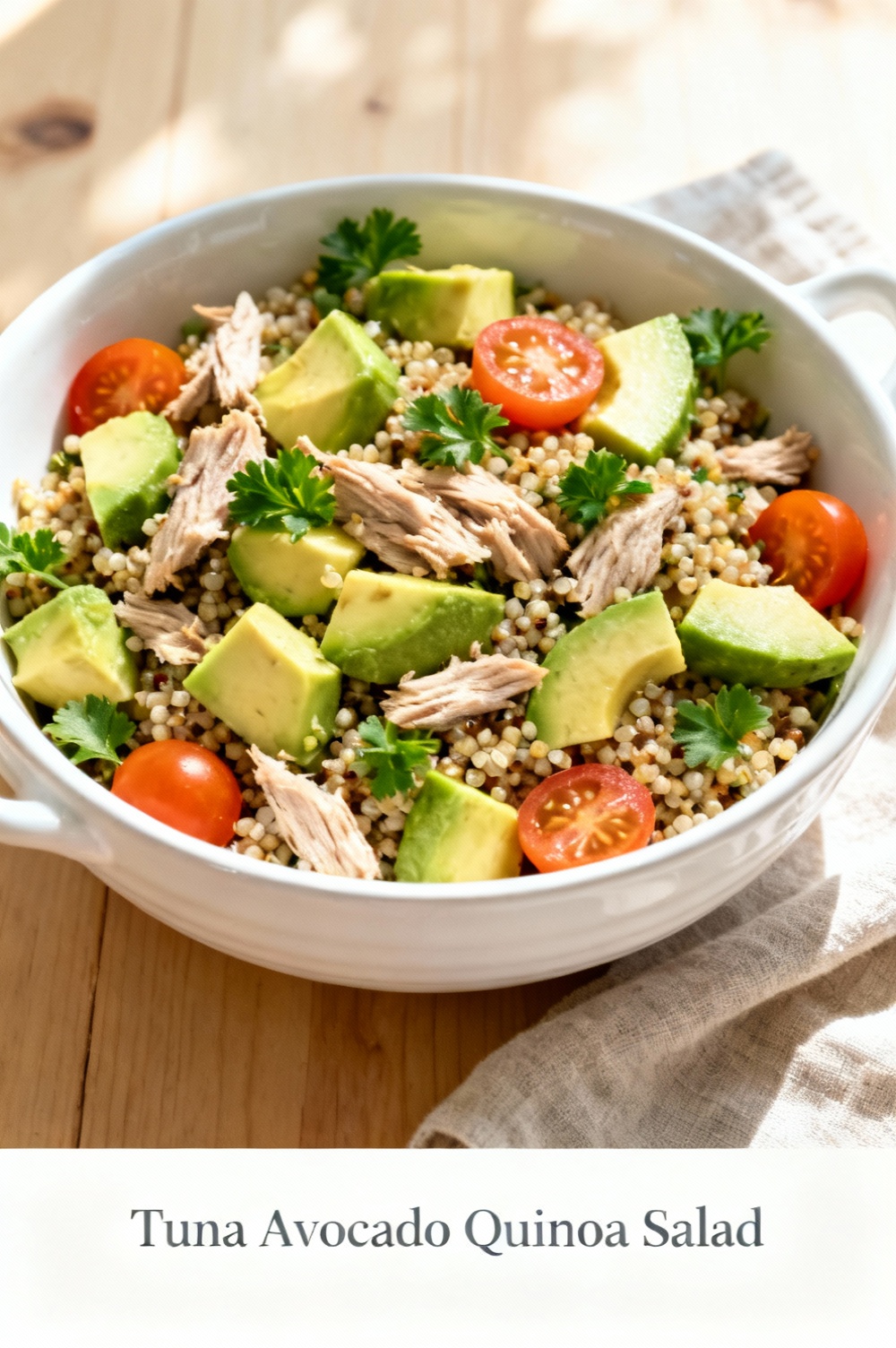
Light, protein-packed and bursting with fresh flavors — perfect for lunch or a quick dinner.
Ingredients
- 1 cup quinoa, rinsed
- 2 cups water (or low-sodium vegetable broth)
- 2 (5 oz / 140 g) cans tuna in water, drained and flaked
- 1 large avocado, diced
- 1 cup cherry tomatoes, halved
- 1 small cucumber, diced
- 1/4 red onion, thinly sliced
- 1/4 cup chopped fresh parsley
- 2 tbsp chopped fresh dill (or 1 tbsp dried)
- 3 tbsp extra-virgin olive oil
- 2 tbsp lemon juice (about 1 lemon)
- 1 tsp Dijon mustard
- 1 garlic clove, minced
- Salt and freshly ground black pepper, to taste
- Optional: 2 tbsp capers or olives, and/or 1/4 cup crumbled feta
Instructions
- Cook the quinoa: In a medium saucepan, combine the rinsed quinoa and water (or broth). Bring to a boil, reduce heat to low, cover and simmer 12–15 minutes until liquid is absorbed. Remove from heat and let sit covered 5 minutes, then fluff with a fork and let cool slightly.
- Make the dressing: In a small bowl or jar whisk together the olive oil, lemon juice, Dijon mustard, minced garlic, salt and pepper until emulsified.
- Assemble the salad: In a large bowl combine the cooked quinoa, flaked tuna, diced avocado, cherry tomatoes, cucumber, red onion, parsley and dill. Add capers/olives and feta if using.
- Toss with dressing: Pour the dressing over the salad and toss gently to combine, being careful not to mash the avocado. Taste and adjust seasoning with salt and pepper.
- Serve: Serve immediately or chill for 10–20 minutes to meld flavors. Garnish with extra herbs if desired.
Nutrition Information
- Calories: 420 kcal
- Cholesterol: 35 mg
- Sodium: 420 mg
- Carbohydrates: 32 g
- Fiber: 8 g
- Sugar: 3 g
- Protein: 28 g