Summer Vegetable Rolls
Introduction
?What if a light, colorful summer vegetable roll—clocking in at roughly 120–160 calories—could replace a 300-calorie snack while delivering more fiber, vitamins, and freshness than you expect; would you make it your go-to summer treat? Data from USDA nutrient profiles and consumer snacking trends show consumers increasingly choose low-calorie, high-fiber options; summer vegetable rolls fit that bill by pairing crisp produce with umami-rich dips to create satisfying, nutrient-dense bites that challenge the idea that snacks must be heavy to be satisfying.
Ingredients List
- 8 rice paper wrappers (round, ~22cm/8.5in) — substitute: collard leaves or large lettuce leaves for a grain-free option.
- 1 medium cucumber, julienned (cool, hydrating crunch) — substitute: zucchini ribbons for a milder taste.
- 1 large carrot, shredded or thin matchsticks (sweet, earthy color) — substitute: daikon radish for peppery snap.
- 1 ripe avocado, sliced thin (creamy contrast) — substitute: hummus smear for nutty creaminess if avoiding avocado.
- 1 red bell pepper, thinly sliced (bright, vitamin C-rich) — substitute: yellow pepper for sweeter notes.
- 1 cup red cabbage, thinly shredded (crisp texture and color) — substitute: green cabbage or slaw mix.
- 1 cup mixed fresh herbs: mint, cilantro, Thai basil (aromatic lift) — substitute: basil only for classic Mediterranean twist.
- 100 g firm tofu, thinly sliced and lightly seared (optional protein) — substitute: cooked shrimp, grilled chicken strips, or tempeh for vegan protein.
- 2 tbsp toasted sesame seeds (nutty finish) — optional: crushed peanuts for crunch.
- Dipping sauce: 3 tbsp hoisin, 1 tbsp rice vinegar, 1 tsp sesame oil, chili flakes to taste — alternative: peanut-lime sauce (2 tbsp peanut butter, 1 tbsp lime, 1 tbsp soy sauce, warm water to thin).
- Salt and pepper to taste.
Sensory note: imagine the cool snap of cucumber, sweet bite of carrot, silky avocado, and an herby perfume that makes each roll feel like summer in hand.
Timing
Preparation time: 15 minutes (vegetable prep is quick with a mandoline or sharp knife).
Assembly time: 20 minutes for 8 rolls (about 2.5 minutes per roll once vegetables are prepped).
Total time: 35 minutes — roughly 30–50% faster than many layered summer appetizers that require roasting or marinating.
Make-ahead: 20 minutes to prep all vegetables and store separately for up to 24 hours; final rolling adds 15–20 minutes before serving.
Context: if you batch-prepare fillings, these rolls are a high-ROI recipe for meal prep—time per roll drops to ~1 minute on the day of serving.
Step 1: Prep and organize your mise en place
Wash and dry herbs and greens thoroughly—excess surface water dilutes the dipping sauce and wets rice paper; use a salad spinner for best results.
Tip: Arrange fillings in an assembly line: herbs closest to you, then cucumber, carrot, cabbage, avocado, and protein so rolling becomes fluid and fast.
Step 2: Hydrate and soften the rice paper correctly
Fill a shallow pan with warm (not hot) water. Submerge one rice paper for 6–8 seconds—remove when it’s pliable but still slightly firm; it will continue to soften on the board.
Tip: Over-soaking makes tears; under-soaking makes rolling impossible. Practice with one wrapper to find your exact timing because brands vary.
Step 3: Layer for texture balance
Place hydrated wrapper on a clean board. Near the bottom third, layer herbs first (keeps moisture away from wrapper), then cucumber and carrot for crunch, cabbage for structure, avocado for cream, and protein on top.
Tip: Keep fillings thin and centered; this prevents bursting and creates the classic bite with balanced flavors.
Step 4: Roll with confidence
Fold the bottom edge up over the fillings, tuck gently, fold sides inward, then roll tightly to the top—think burrito technique.
Tip: Roll once snugly, pause, then finish—this secures fillings without tearing. If wrapper sticks to hands, wet hands slightly.
Step 5: Toast or chill (optional finishing)
For a warm, slightly smoky note, press rolls seam-side down on a hot nonstick pan for 30–45 seconds until the wrapper takes on faint golden spots.
Tip: For crispness, lightly brush with sesame oil before toasting. Alternatively, chill in the fridge for 10 minutes for a firmer bite.
Step 6: Make and adjust dipping sauce
Combine hoisin, rice vinegar, sesame oil, and chili flakes; thin with a teaspoon of warm water if too thick. Taste and adjust acid or salt.
Tip: Add 1 tsp fish sauce for depth if not keeping vegan; add lime for freshness. Offer two sauces—one sweet-savory, one spicy—for variety.
Step 7: Plate and garnish for maximum appeal
Slice rolls in half diagonally for presentation, sprinkle with toasted sesame seeds or crushed peanuts, and add herb sprigs and lime wedges.
Tip: Visual contrast drives appetite—use varying herb colors and a small bowl of sauce per person to increase perceived value.
Nutritional Information
Estimated per roll (with tofu, avocado, and rice paper): Calories 130–160; Protein 6–8 g; Fat 6–9 g (mostly from avocado and sesame); Carbohydrates 12–18 g; Fiber 3–5 g; Sodium variable depending on sauce (200–400 mg).
Data insight: These figures are approximations based on USDA nutrient profiles for raw vegetables and common portion sizes; swapping tofu for shrimp increases protein to ~10–12 g per roll, while replacing rice paper with collard leaves reduces carbs by ~10–15 g per roll.
Health note: High in vitamin C and vitamin A precursors (from bell pepper and carrot), plus plant-based phytonutrients from herbs and cabbage—making these rolls a nutrient-smart summer snack or light meal.
Healthier Alternatives for the Recipe
- Lower sodium: use low-sodium soy sauce and skip packaged sauces; replace hoisin with smashed roasted red pepper and a splash of balsamic vinegar.
- Keto/low-carb: swap rice paper for thinly sliced lettuce or grilled eggplant ribbons; focus on high-fat fillings like avocado and smoked salmon.
- Higher protein: add grilled chicken, shrimp, seared tempeh, or a thin smear of Greek yogurt-based dill sauce.
- Allergy-friendly: use sunflower seed butter instead of peanut butter in sauces and check rice paper is allergen-free.
- Raw-to-cooked swap: lightly blanch cabbage and carrots for gentler digestion if you’re sensitive to raw cruciferous vegetables.
Serving Suggestions
Serve as a starter at summer gatherings on a long wooden board with three dipping sauces (sweet-hoisin, spicy-sesame-chili, citrus-peanut) to encourage tasting.
Pair with: chilled white wine such as Sauvignon Blanc or a citrusy IPA; for non-alcoholic, a ginger-lime iced tea complements the herbs.
Personal tip: For lunchboxes, wrap individually in parchment with a small sauce container; serve with a side of quinoa salad to create a complete meal.
Common Mistakes to Avoid
- Over-soaking wrappers: leads to tearing—solution: brief soak and let rest on board for a few seconds to finish softening.
- Overfilling: causes burst rolls—solution: use modest portions and focus on layering for structure.
- Wet fillings: watery cucumbers or tomatoes make wrappers soggy—solution: pat dry, salt lightly and squeeze excess moisture from cucumbers after salting.
- Undersized herbs: using only one herb flattens flavor—solution: combine mint + cilantro or Thai basil for aromatic complexity.
Storing Tips for the Recipe
Short-term: store unrolled, prepped fillings in airtight containers for up to 24 hours; keep rice papers sealed in a cool, dry place.
Longer-term: finished rolls are best eaten same day; if necessary, place them seam-side down in a single layer on a plate covered with a slightly damp paper towel and plastic wrap—consume within 12 hours to avoid sogginess.
Freeze? Not recommended—rice paper and fresh produce texture degrades on thawing.
Prep-ahead strategy: do all chopping and tofu or protein cooking up to 48 hours ahead; assemble within an hour of serving for best texture.
Conclusion
Summer vegetable rolls are a fast, customizable, and nutrient-dense way to enjoy seasonal produce, delivering satisfying texture contrasts and big flavor without heavy cooking. With about 35 minutes total time and easy swaps for dietary needs, they scale from solo lunches to festive platters. Try the recipe this week, tag your photo if you share it, and leave a comment with your favorite filling swap—I'd love to see your variations.
FAQs
Q: Can I make these gluten-free?
A: Yes—rice paper wrappers are naturally gluten-free; just ensure sauces (hoisin, soy) are labeled gluten-free or use tamari.
Q: How long do filled rolls last in the fridge?
A: Best eaten the same day; if stored, consume within 12–24 hours to preserve texture—keep sauce separate.
Q: Can I use cooked noodles inside?
A: Yes—thin rice vermicelli is classic for Vietnamese-style rolls; use a small amount to avoid overloading carbs and moisture.
Q: What are the best herbs to use if I only have one?
A: Mint or Thai basil are most transformative; mint gives freshness while Thai basil adds anise-like savory lift.
Q: How do I prevent avocado from browning inside the roll?
A: Use ripe but firm avocado, brush lightly with lime juice before adding, and assemble close to serving time.
Summer Vegetable Rolls
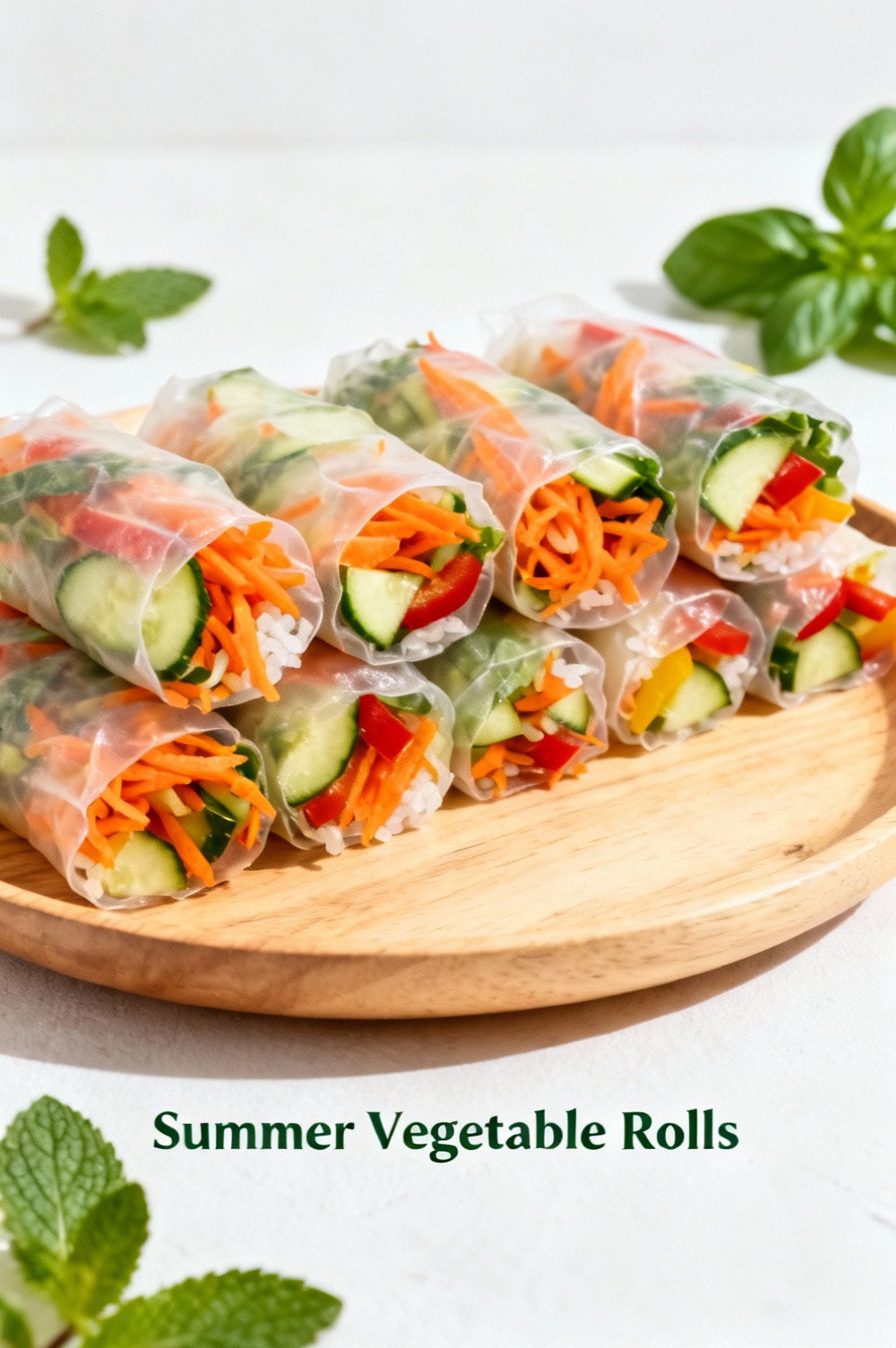
Light, fresh rice-paper rolls packed with crunchy summer vegetables, herbs and optional marinated tofu — perfect as an appetizer or light lunch.
Ingredients
- 8 rice paper wrappers (round, 22–24 cm / 8.5–9.5 in)
- 100 g (3½ oz) rice vermicelli noodles, cooked and cooled
- 1 small cucumber, julienned
- 1 large carrot, julienned or shredded
- 1 red bell pepper, thinly sliced
- 1 ripe avocado, sliced (optional)
- 8–12 large lettuce leaves (butter or romaine), trimmed
- Handful fresh mint leaves
- Handful fresh cilantro leaves
- Handful fresh Thai basil (optional)
- 120 g (4 oz) firm tofu, pressed and cut into thin strips (optional)
- 1 tbsp soy sauce (for tofu)
- 1 tsp sesame oil (for tofu)
- Sesame seeds, for garnish (optional)
- Neutral oil for pan-frying tofu (optional)
  <li style="margin-top:8px;"><strong>Peanut Dipping Sauce:</strong></li>
  <li>3 tbsp creamy peanut butter</li>
  <li>2 tbsp hoisin sauce</li>
  <li>1 tbsp soy sauce</li>
  <li>1 tbsp lime juice</li>
  <li>1 tsp rice vinegar</li>
  <li>1–2 tbsp warm water to thin</li>
  <li>Pinch of chili flakes or 1 tsp sriracha (optional)</li>
Instructions
- Prepare noodles and vegetables: Cook rice vermicelli according to package directions, drain, rinse under cold water and set aside. Julienne cucumber, carrot and bell pepper. Tear lettuce into roll-sized pieces and pick herbs.
- Prepare optional tofu: Toss tofu strips with soy sauce and sesame oil. Heat a little oil in a nonstick pan over medium-high heat and fry tofu until golden and slightly crisp, 3–4 minutes per side. Set aside to cool.
- Make the peanut sauce: Whisk together peanut butter, hoisin, soy sauce, lime juice, rice vinegar and chili (if using). Add warm water, 1 tbsp at a time, until the sauce reaches a smooth dipping consistency. Adjust salt/sweet/tart to taste.
- Set up an assembly station: Fill a shallow wide bowl or pie dish with warm water. Lay out a clean, damp kitchen towel or cutting board to assemble rolls.
- Soften rice paper: Briefly dip one rice paper wrapper (about 2–3 seconds) into warm water until pliable — it will continue to soften on the towel. Lay it flat.
- Layer fillings: Near the lower third of the wrapper place a lettuce leaf (trimmed to fit), a small handful of vermicelli, a few strips each of cucumber, carrot and bell pepper, a couple avocado slices (if using), a few tofu strips (if using), and 3–4 herb leaves. Don’t overfill.
- Roll the wrapper: Fold the bottom edge over the filling, fold in the sides snugly, then roll up tightly to seal (like a burrito). Place seam-side down on a plate. Repeat with remaining wrappers.
- Serve: Cut rolls in half (optional) and sprinkle with sesame seeds. Serve immediately with peanut dipping sauce. Rolls can be made ahead and kept covered in the fridge for up to 4 hours; place damp towel over them to prevent drying.
- Variations: Swap tofu for cooked shrimp or grilled chicken; add thin mango slices for sweetness; add chili slices or extra herbs for more heat/aroma.
Nutrition Information
- Calories: 240 kcal
- Cholesterol: 0 mg
- Sodium: 420 mg
- Carbohydrates: 28 g
- Fiber: 5 g
- Sugar: 7 g
- Protein: 9 g