Roasted Acorn Squash
Introduction
Could a simple sheet-pan trick make roasted acorn squash your most versatile fall ingredient — delivering comforting caramelized sweetness, a boost of fiber, and a weeknight side that’s faster than you think? Many cooks assume winter squash is fiddly or time-consuming, but with one reliable roast method you can get tender, deeply flavored slices that work as a side, a salad topper, or a main component in under an hour. This recipe leans on proven roasting chemistry — dry heat concentrates natural sugars and browning reactions — to create texture and flavor without fuss.
Ingredients List
• 2 medium acorn squashes (about 2–2.5 lb total). Choose firm fruits with dull skin and a deep green color; small-to-medium sizes roast more evenly. Substitution: half butternut or Kabocha if you prefer a creamier texture.
• 2 tablespoons olive oil (or avocado oil for higher smoke point). Use neutral oil for a clean roast or browned butter for a nutty finish.
• 1–2 tablespoons pure maple syrup or honey (optional). For a savory route, swap for a teaspoon of balsamic reduction.
• 1 teaspoon kosher salt and 1/2 teaspoon black pepper (adjust to taste).
• 1 teaspoon smoked paprika or ground cinnamon (choose paprika for smoky savory, cinnamon for autumnal sweetness).
• Optional finishing: flaky sea salt, chopped fresh thyme or parsley, toasted pepitas, or a drizzle of tahini or yogurt for creaminess.
Sensory note: The intact squash skin crisps slightly and gives way to pillowy, caramelized flesh that balances sweet and savory notes — think roasted chestnut meets roasted apple.
Timing
Preparation time: 10–15 minutes.
Cooking time: 30–40 minutes at 400°F (200°C).
Total time: 40–55 minutes — typically 20–30% faster than many low-and-slow winter squash recipes that roast at lower temperatures for up to 70–90 minutes. Choosing medium squash and slicing into uniform pieces optimizes cook time without sacrificing flavor.
Step 1 — Prepare the Squash
Preheat oven to 400°F (200°C). Wash the exterior to remove dirt and pat dry. Using a sharp chef’s knife, cut off the stem end, slice squash in half crosswise, scoop out seeds with a spoon, then slice into 1-inch crescents or wedges. Tip: Cut the squash into uniform 1-inch pieces so they finish cooking at the same time; thinner slices caramelize faster, thicker wedges stay creamier.
Step 2 — Season and Oil
In a large bowl, toss squash slices with olive oil, salt, pepper, and your spice of choice (smoked paprika or cinnamon). For sweet-savory balance, add maple syrup and toss until evenly coated. Tip: Use just enough oil to coat — this promotes browning without sogginess. If using browned butter, cool slightly before tossing to avoid over-browning the squash surface.
Step 3 — Arrange on a Sheet Pan
Spread squash pieces skin-side down on a rimmed baking sheet in a single layer with minimal overcrowding. Overlapping traps steam and prevents crisping. Tip: Line the pan with parchment or a silicone mat for easier cleanup and better airflow under slices; a light coat of oil on the skin side helps it crisp.
Step 4 — Roast and Monitor
Roast at 400°F for 30–40 minutes, flipping once halfway through for even browning. Start checking at 25–30 minutes: look for golden-brown edges and fork-tender flesh. Tip: If you want deeper caramelization, finish with a 2–3 minute broil, watching carefully to avoid burning.
Step 5 — Finish and Garnish
Remove from oven and let rest 3–5 minutes. Finish with a sprinkle of flaky sea salt, a squeeze of lemon for brightness, or a drizzle of tahini/yogurt for richness. Add toasted pepitas, chopped herbs, or a scattering of pomegranate seeds for color and texture. Personalized touch: For a brunch twist, top slices with a fried egg and hot sauce for contrast.
Step 6 — Serve or Repurpose
Serve warm as a side, add to grain bowls, fold into salads, or mash with roasted garlic for a simple puree. To turn into a main, stuff roasted halves with quinoa, kale, toasted nuts, and a drizzle of tahini.
Nutritional Information
Approximate nutrition per 1/2 medium roasted acorn squash (about 200 g cooked portion): 100–120 kcal, 0.5–2 g fat (depending on oil used), 22–26 g carbohydrates, 3–5 g fiber, 4–7 g sugars (natural), 2–3 g protein. Acorn squash is a good source of vitamin C, B vitamins (including folate), potassium, and beta-carotene precursors. Data insight: compared with potatoes, acorn squash offers a similar carbohydrate level but more vitamin A activity and a slightly higher fiber-to-calorie ratio, making it a nutrient-dense side. (Values approximate; consult USDA FoodData Central for exact figures based on portion sizes and preparation.)
Healthier Alternatives for the Recipe
• Lower oil: Use a light spray of oil or roast with a little vegetable broth to reduce added fat without losing moisture.
• Less sugar: Skip maple syrup and use a pinch of smoked paprika and a squeeze of orange for brightness.
• Keto/low-carb: Replace with kabocha in smaller portions, or use roasted cauliflower steaks for similar caramelized texture with fewer carbs.
• Paleo/Whole30: Use compliant sweeteners like date paste sparingly or omit; use ghee or avocado oil.
• Allergy-friendly: To keep nut-free, swap toasted pecans for sunflower seeds or roasted chickpeas when topping.
Serving Suggestions
• Holiday side: Serve alongside roasted turkey or glazed ham with a sprinkle of fresh thyme and pepitas.
• Grain bowl: Layer over farro or brown rice with kale, roasted chickpeas, and a lemon-tahini dressing.
• Salad topper: Toss warm slices into a mixed greens salad with goat cheese, toasted walnuts, and cranberries.
• Weeknight main: Stuff roasted halves with quinoa, sautéed mushrooms, spinach, and a drizzle of chili oil. Personalized pairing: If you prefer savory, pair with rosemary and Parmesan; if you like sweet-savory, pair with maple, cinnamon, and mascarpone.
Common Mistakes to Avoid
• Overcrowding the pan — leads to steaming instead of roasting; use two pans if needed.
• Uneven cuts — results in mixed doneness; aim for uniform 1-inch slices.
• Too much oil or sugar — causes burning before the squash is tender; use moderate amounts and monitor closely.
• Skipping the flip — leaving slices unturned can produce one side that’s overly charred; flip halfway for even color.
• Not preheating the oven — a hot oven jump-starts caramelization; always preheat.
Storing Tips for the Recipe
Cool roasted squash to room temperature (no more than 2 hours), then store in an airtight container in the refrigerator for 3–4 days. Reheat in a 350°F oven for 8–10 minutes to restore texture; microwaving is faster but softens the flesh. For longer storage, freeze cooled roasted pieces in a single layer on a baking sheet, then transfer to freezer bags; use within 3 months. Tip for meal prep: Roast a double batch on Sunday — use portions in salads, bowls, and soups throughout the week.
Conclusion
Roasted acorn squash is a deceptively simple ingredient that delivers rich flavor, versatile applications, and solid nutrition with minimal effort. By cutting uniformly, using the right roast temperature, and finishing with smart garnishes, you’ll get consistently caramelized, tender results. Try this method once and you’ll find dozens of ways to incorporate it into weekday meals and festive menus. Ready to roast? Try the recipe tonight, leave a comment with your favorite variation, or explore related posts like roasted butternut squash, maple-roasted carrots, or sheet-pan fall vegetables for more ideas.
FAQs
Q: Can I roast acorn squash whole?
A: You can roast whole if you pierce the skin and bake at lower heat for longer (approx 60–90 minutes), but halving and slicing cuts time and improves caramelization.
Q: Do I need to peel acorn squash?
A: No — the skin becomes tender when roasted and provides structure. Peel only if you prefer a uniformly soft texture.
Q: How can I tell when squash is done?
A: Fork-tender flesh and golden-brown edges indicate doneness. A paring knife should slide in easily.
Q: Can I use frozen acorn squash?
A: Yes, but frozen squash may be softer and release more water when roasting; pat pieces dry and roast at a higher temp to encourage browning.
Q: What are good spice combinations?
A: Savory: smoked paprika, cumin, rosemary. Sweet-savory: cinnamon, maple, orange zest. Herbaceous: thyme, sage, lemon zest.
Roasted Acorn Squash
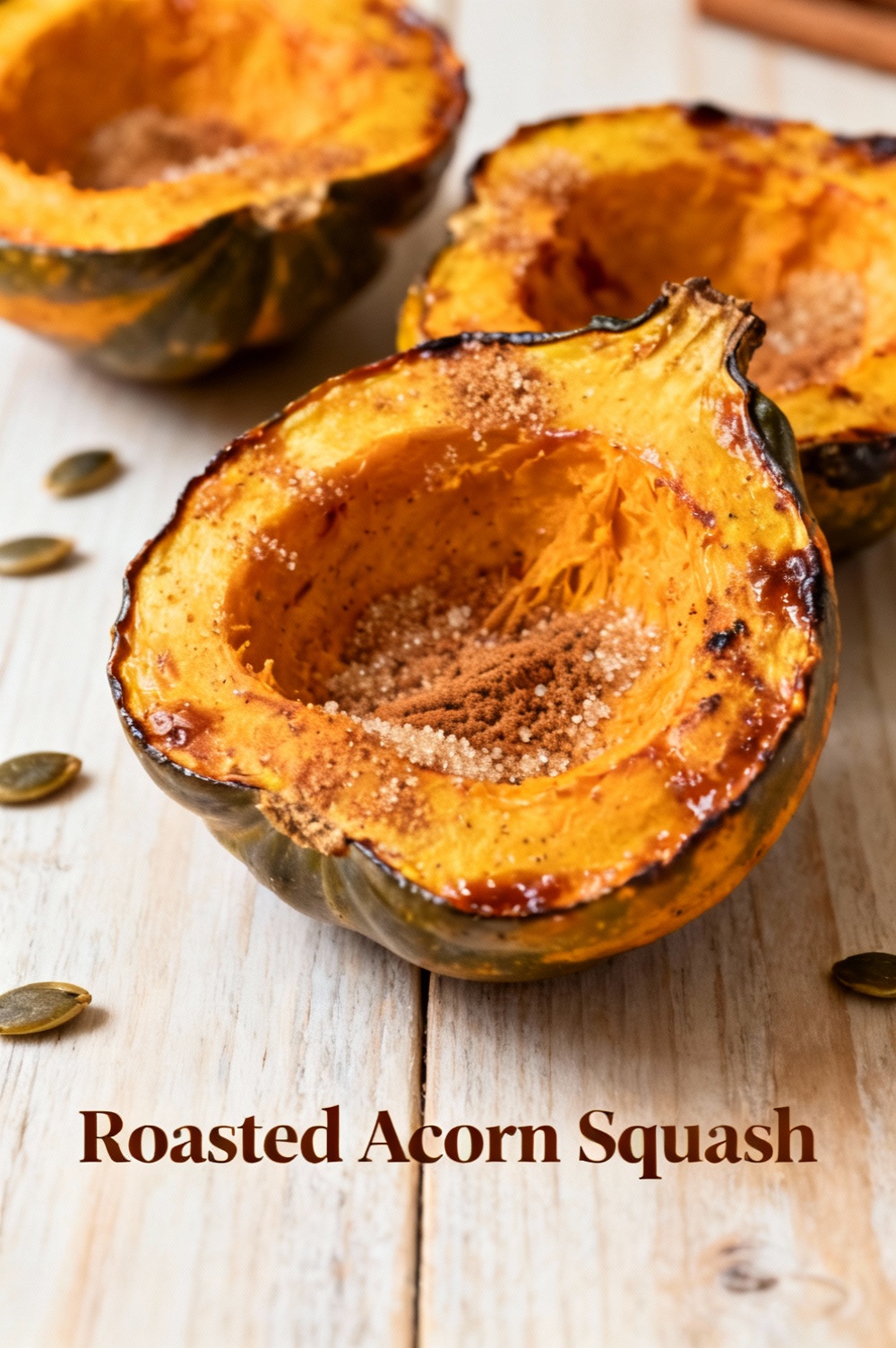
Tender roasted acorn squash halves glazed with maple-brown sugar, finished with thyme and toasted pecans.
Ingredients
- 2 medium acorn squash (about 2–2½ lbs total), halved and seeds removed
- 2 tbsp olive oil (or melted butter), for brushing
- 2 tbsp unsalted butter, melted
- 2 tbsp brown sugar (packed)
- 2 tbsp pure maple syrup
- ½ tsp ground cinnamon (optional)
- ½ tsp kosher salt
- ¼ tsp freshly ground black pepper
- 2–3 sprigs fresh thyme, leaves stripped (or 1 tsp dried thyme)
- ¼ cup toasted pecans or walnuts, chopped (optional)
- Fresh parsley or extra thyme for garnish (optional)
Instructions
- Preheat the oven to 400°F (200°C). Line a baking sheet with parchment paper or lightly oil it.
- Cut each acorn squash in half crosswise and scoop out the seeds with a spoon. Pat the halves dry.
- Brush the cut sides and edges with olive oil (or melted butter). Season with salt and pepper.
- In a small bowl, mix the melted butter, brown sugar, maple syrup and cinnamon until combined.
- Place the squash halves cut-side up on the prepared baking sheet. Spoon the maple-butter mixture evenly into the cavities of each half.
- Roast in the preheated oven for 40–50 minutes, or until the flesh is very tender when pierced with a fork and the tops are caramelized. Cooking time will vary with squash size.
- If using nuts, toast the chopped pecans in a dry skillet over medium heat for 2–3 minutes until fragrant, then sprinkle over the squash during the last 5 minutes of roasting or immediately after removing from the oven.
- Remove from the oven, sprinkle with fresh thyme leaves (or chopped parsley) and serve warm. The squash can be served as-is or scooped out and mashed slightly for a creamier texture.
Nutrition Information
- Calories: 210 kcal
- Cholesterol: 10 mg
- Sodium: 220 mg
- Carbohydrates: 40 g
- Fiber: 8 g
- Sugar: 16 g
- Protein: 2 g