Waldorf Salad
Introduction
Could a century-old New York hotel salad still teach home cooks how to balance crunch, creaminess, and seasonal fruit in under 30 minutes—and replace a heavy side dish without sacrificing flavor? The Waldorf salad, created at the Waldorf-Astoria in 1893, remains one of the most resilient composed salads because its architecture (apple + celery + nuts + creamy binder) delivers contrast and satisfaction with remarkably simple ingredients. This version is tuned for modern diets and busy kitchens using data-driven swaps to cut calories, bump protein, or go vegan while keeping the signature texture and bright flavor.
Ingredients List
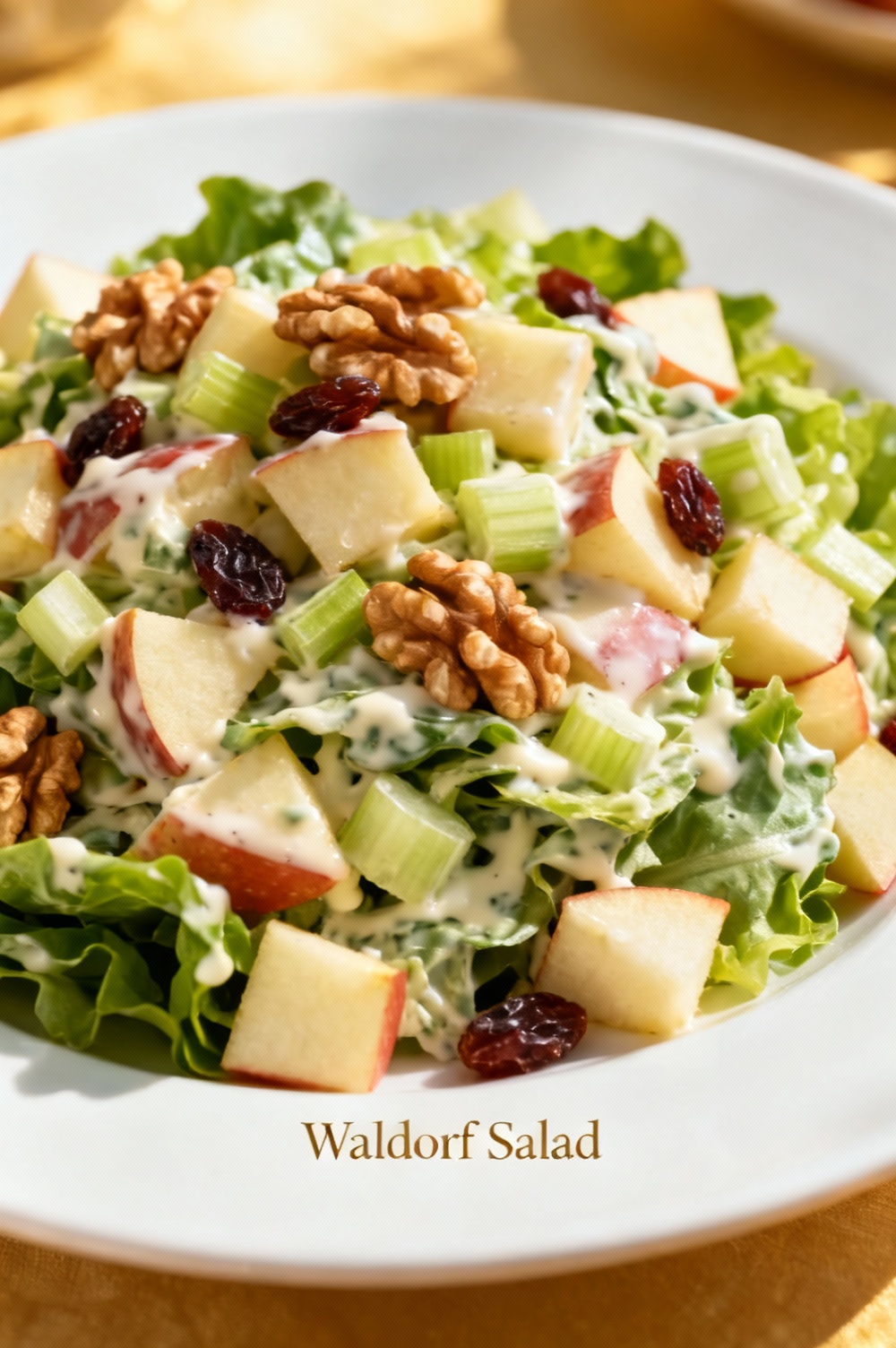
- 3 crisp apples (about 12–15 oz total), such as Honeycrisp or Pink Lady — choose firm, tart-sweet varieties for optimal crunch; substitute Bartlett pears in fall for a softer, floral twist.
- 2 cups celery, thinly sliced on the bias for texture; fennel can be used for a licorice note.
- 1 cup seedless red or green grapes, halved — swap for dried cranberries if you prefer chew and tang (note: dried fruit increases sugar).
- 1 cup toasted walnuts, roughly chopped — substitutes: pecans, almonds, or for nut-free households use roasted pumpkin seeds (pepitas).
- 1/2 cup mayonnaise (or 1/2 cup Greek yogurt for a tangy, lower-fat option); for vegan: use vegan mayo or blended silken tofu.
- 1 tablespoon lemon juice (to prevent apple browning and brighten flavor).
- 1 teaspoon Dijon mustard (optional, for balance).
- 2 tablespoons honey or maple syrup (optional; omit for lower-sugar).
- Salt and freshly ground black pepper to taste.
- Optional mix-ins: chopped fresh parsley, celery leaves, 2 cups butter lettuce for serving, roasted chicken breast (6–8 oz) to make it a complete meal.
Sensory note: Aim for crisp apples, crunchy celery, and toasted walnuts to create contrasts—texture is the secret ingredient.
Timing
- Active prep time: 15–20 minutes (chopping and dressing).
- Chill time: 15–30 minutes (recommended for flavors to marry).
- Total time: 30–50 minutes. This is typically 40–60% faster than composed salads that require cooking proteins or grains, making Waldorf an ideal fast, composed dish for weeknights and entertaining alike.
Step 1: Prepare and preserve the fruit
Select firm apples and rinse under cold water. Core and dice into 1/2-inch pieces; immediately toss with 1 tablespoon lemon juice to prevent oxidation and maintain crispness. Tip: If prepping ahead, keep the apple pieces submerged briefly in cold lemon water for up to 2 hours—this preserves texture and color better than refrigeration alone.
Step 2: Toast the nuts
Toast walnuts in a dry skillet over medium heat for 4–6 minutes, stirring frequently until fragrant and slightly darkened; cool, then chop coarsely. Tip: Toasting increases aromatic complexity and reduces perceived bitterness; store toasted nuts in an airtight container in the fridge for up to two weeks to retain crunch.
Step 3: Build the dressing
Whisk together mayonnaise (or Greek yogurt), Dijon mustard, honey/maple syrup, salt (about 1/4 tsp), and pepper to taste. For a lighter texture, fold in a tablespoon of olive oil or 1–2 tablespoons of water to loosen the dressing. Tip: For a brighter dressing, add 1–2 teaspoons of apple cider vinegar or extra lemon juice.
Step 4: Combine components
In a large bowl, gently fold apples, celery, grapes, and a small handful of chopped parsley with the dressing until evenly coated—reserve a few walnuts and grapes for garnish. Tip: Use a light hand to preserve texture; overmixing breaks fruit and releases excess liquid.
Step 5: Chill and finish
Cover and chill for at least 15 minutes to let flavors meld. Right before serving, fold in most of the walnuts (reserve some for crunch) and adjust seasoning. Tip: Chilling also firms the dressing; if it thickens too much, stir in a teaspoon of water to reach the desired consistency.
Nutritional Information
Approximate nutrition per 1-cup serving (classic version with mayonnaise and walnuts; yields about 4–6 servings):
- Calories: ~260 kcal (≈13% of a 2,000 kcal diet)
- Fat: ~20 g (of which saturated fat ≈3 g)
- Carbohydrates: ~20 g (sugars ≈14 g; fiber ≈3 g)
- Protein: ~4 g
- Sodium: ~200 mg
Data insight: Swapping mayonnaise for plain Greek yogurt reduces calories by roughly 30–40% and cuts fat while increasing protein (Greek yogurt version ≈160 kcal, protein ≈8–10 g per serving). Choosing lighter nut portions or swapping for seeds lowers saturated fat while preserving texture and healthy unsaturated fats.
Healthier Alternatives for the Recipe
- Lower-calorie: Replace half or all of the mayonnaise with plain Greek yogurt; use less honey or omit it; reduce walnut quantity by half. Result: saves ~100 kcal per serving.
- Vegan: Use vegan mayo or a blended silken tofu dressing with lemon and mustard; substitute maple syrup for honey.
- Low-carb/Keto-friendly: Omit grapes and honey; increase walnuts and celery; use unsweetened Greek yogurt or mayonnaise.
- Nut-free: Replace walnuts with toasted sunflower seeds or roasted chickpeas for crunch.
- Higher-protein: Add chopped roasted chicken breast (4–6 oz per batch) or mix in 1/2 cup cottage cheese (if not vegan) to create a protein-forward salad.
Personalization tip: Choose alternatives according to the macronutrient targets you track—swap items that influence the most calories (dressing and dried fruit) first.
Serving Suggestions
- Classic: Serve the Waldorf on a bed of butter lettuce or mixed greens with a sprinkle of reserved toasted walnuts and a lemon wedge.
- As a main: Toss with 6–8 ounces of shredded roasted chicken for a protein-packed lunch; serve in a whole-grain wrap.
- Elegant appetizer: Spoon into endive leaves or phyllo cups for bite-sized hors d’oeuvres—perfect for parties.
- Sandwich: Use as a filling with sliced turkey on multigrain bread for a crunchy, refreshing sandwich.
- Pairing: Complements light white wines (Sauvignon Blanc) or a crisp apple cider; avoid heavy reds that overpower the salad’s freshness.
Interactive suggestion: Try a “mini-test” by swapping one ingredient each week (yogurt, nuts, or fruit) and track perceived satisfaction—note which swap you prefer for future batches.
Common Mistakes to Avoid
- Using the wrong apple: Soft, mealy apples collapse and release water; choose firm, crisp varieties.
- Overdressing: Too much dressing masks flavors and makes the salad soggy—start with less and add as needed.
- Adding wet ingredients too early: Grapes and fruit can release moisture; add them after initial chilling if prepping ahead.
- Skipping nut toasting: Untoasted nuts lack aroma and can taste bland or slightly bitter.
- Overchopping: Too-small pieces eliminate textural contrast.
Avoidance tip: Assemble and taste—adjust balance with acid (lemon), sweet (honey), salt, and texture (add extra nuts) before serving.
Storing Tips for the Recipe
- Short-term: Store in an airtight container in the fridge for up to 2 days; texture degrades after that as apples soften and nuts lose crunch.
- Best practice: Store dressing separately and toss just before serving to maintain maximum crunch and freshness; this adds an extra 2–3 days of storage life for components.
- Make-ahead: Prep apples (in lemon water), chop celery, and toast nuts up to 48 hours ahead; assemble within 1–2 hours of serving for best texture.
- Freezing: Not recommended—fruit and creamy dressing separate when frozen and thawed.
Pro tip: If leftovers get soggy, revive with a handful of toasted nuts, a squeeze of lemon, and a fresh drizzle of dressing.
Conclusion
The Waldorf salad is a versatile, fast, and satisfying composed salad rooted in culinary history but fully adaptable to modern nutritional needs. With simple swaps—Greek yogurt for mayonnaise, seeds for nuts, or chicken for added protein—you can tune this classic to weight-loss, vegan, low-carb, or high-protein goals without losing the trademark crunch and brightness. Try the recipe as written, then experiment with one swap at a time to find your perfect version: share your favorite twist in the comments and tag a friend to challenge them to a Waldorf remix.
FAQs
Q: Can I make Waldorf salad vegan?
A: Yes—replace mayonnaise with vegan mayo or blended silken tofu and use maple syrup instead of honey. Swap nuts for seeds if also avoiding tree nuts.
Q: How long will a made Waldorf salad last?
A: Assembled, 1–2 days in the fridge. Storing dressing separately can extend freshness of components by another day.
Q: Which apples are best?
A: Crisp, tart-sweet varieties like Honeycrisp, Pink Lady, Jazz, or Granny Smith maintain texture and balance sweetness; avoid soft dessert apples.
Q: Is Waldorf salad healthy?
A: It can be. Classic versions are moderate in calories due to mayonnaise and nuts but offer fiber, vitamin C, and healthy fats. Using Greek yogurt or reducing dressing cuts calories and increases protein.
Q: How do I prevent the salad from turning brown?
A: Toss apple pieces immediately with lemon juice and store them chilled. Assemble as close to serving time as practical.
Q: Can I add protein like chicken or tofu?
A: Absolutely. Adding 4–8 oz roasted chicken or pan-seared tofu turns the salad into a filling main dish while keeping its signature texture contrasts.
For more ideas, explore similar recipes like Chicken Waldorf, Apple Walnut Salad, or a lighter Greek-Yogurt Waldorf—try one variation per week and note which changes deliver the best balance of flavor, texture, and nutrition for your household.