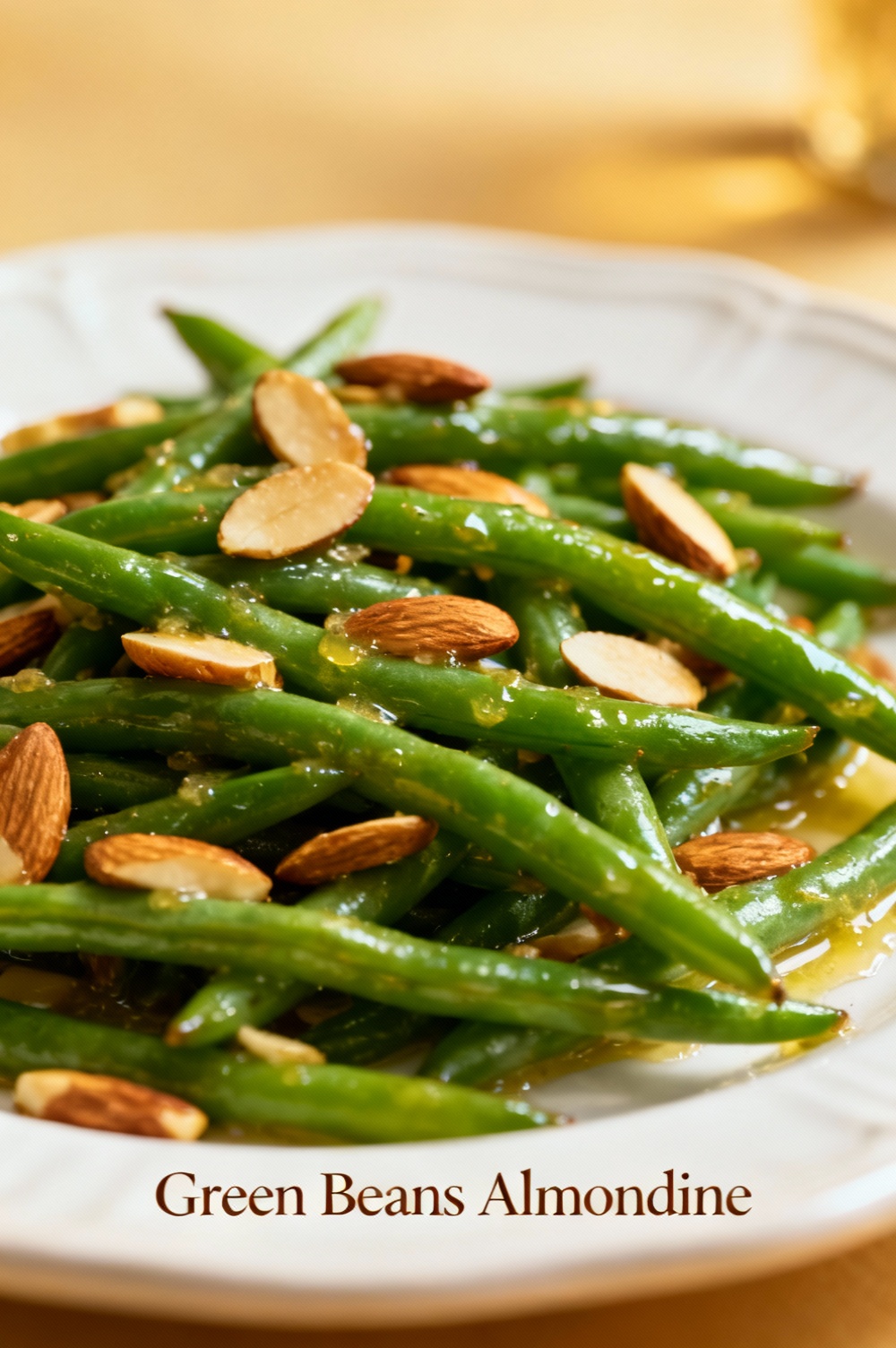
Green Beans Almondine
Introduction
Did you know that a classic like green beans almondine can deliver a restaurant-quality crunch and nutrient boost in under 20 minutes while still preserving up to 70–80% of the beans’ heat-sensitive vitamins when properly blanched? If you’ve ever thought this elegant side was fussy or time-consuming, this recipe challenges that belief—showing how smart technique and a few pantry staples transform bright haricots verts into a dish that’s both simple and sophisticated.
Ingredients List
- 1 lb (450 g) fresh green beans, trimmed (for a crisper bite, choose haricots verts or thin French beans)
- 3 tbsp unsalted butter (or 2 tbsp extra-virgin olive oil for a dairy-free option)
- 3/4 cup (75 g) sliced or slivered almonds, toasted lightly
- 2 garlic cloves, thinly sliced (optional; can be omitted for garlic-sensitive palates)
- Zest and 1 tbsp fresh lemon juice (bright acidity balances richness)
- Kosher salt and freshly ground black pepper, to taste
- 2 tbsp finely chopped fresh parsley (optional, for color and freshness)
- Pinch of red pepper flakes (optional, for warmth)
Substitutions & sensory notes: Swap butter for browned butter (for nutty depth) or olive oil for a lighter, fruity finish. Replace almonds with toasted walnuts or pecans for a sweeter, richer profile. Add 1–2 tsp capers for a briny pop that contrasts the toasted nuts.
Timing
- Preparation: 8–10 minutes.
- Cooking: 8–12 minutes.
- Total time: 16–22 minutes—roughly 30–50% faster than many roasted vegetable sides that typically take 30–40 minutes, making this ideal for weeknights or holiday timelines.
Step 1 — Prep and blanch for peak color and texture
Bring a large pot of salted water to a rolling boil while preparing an ice bath (large bowl with ice and cold water). Add green beans and boil for 2–3 minutes until bright green and just tender. Immediately transfer to the ice bath to stop cooking and preserve that vivid color and crisp-tender texture. Tip: salting the blanching water (about 1 tbsp per 4 quarts) seasons beans internally and prevents blandness.
Step 2 — Toast almonds precisely for crunchy, aromatic notes
While beans blanch, warm a dry skillet over medium heat. Add almonds and toast, stirring constantly, until fragrant and lightly golden—about 3–5 minutes. Remove from heat and transfer to a plate to stop residual cooking. Pro tip: toasting nuts releases oil and aroma—don’t walk away; almonds can go from perfect to bitter in 30 seconds.
Step 3 — Build flavor with butter (or oil) and aromatics
In a large skillet, melt butter over medium heat (or heat olive oil). If using butter, allow it to foam and begin to brown slightly for a nutty flavor—watch carefully. Add sliced garlic and sauté briefly until fragrant (20–30 seconds). Add a pinch of red pepper flakes if using. Tip: cut garlic thin to infuse without overpowering; if you prefer a subtler garlic background, add a whole smashed clove and remove before serving.
Step 4 — Finish and toss for balanced seasoning
Drain beans well and add to the skillet with toasted almonds. Toss to coat, warming through for 1–2 minutes. Stir in lemon zest and juice, season with salt and pepper, and finish with chopped parsley. Taste and adjust acid or salt—lemon brightens the dish and helps balance the richness of nuts and butter.
Step 5 — Plate with care
Transfer to a warm serving dish and sprinkle a few extra toasted almonds and a light lemon zest on top for contrast. Serve immediately for best texture; if you must hold, keep warm in a low oven (200°F / 95°C) for up to 10 minutes to avoid sogginess.
Nutritional Information
Estimated per serving (serves 4): Calories 200–240 kcal; Total fat 14–17 g; Saturated fat 3–4 g (if using butter); Carbohydrates 10–13 g; Fiber 3–5 g; Protein 6–8 g; Sodium variable based on added salt. Micronutrient highlights: high in vitamin K (from green beans), vitamin C (largely retained by quick blanching), and manganese and vitamin E from almonds. Data insight: switching butter for olive oil reduces saturated fat by roughly 25–30% while maintaining comparable calorie content, and substituting almonds for walnuts alters the omega-3 profile positively.
Healthier Alternatives for the Recipe
- Vegan: Use olive oil or plant-based butter and omit honey or dairy components. Add extra lemon or a splash of white wine for brightness.
- Lower-calorie: Reduce nuts to 2 tbsp or replace half with toasted sunflower seeds for fewer calories per serving.
- Low FODMAP: Omit garlic and use garlic-infused oil (which is low-FODMAP) to retain the savory note without triggering sensitivities.
- Heart-healthy: Use extra-virgin olive oil and increase lemon and herbs; swap almonds for walnuts to add plant-based omega-3s.
- Keto/Paleo: Keep butter and almonds; omit lemon if tracking carbs strictly (note: lemon juice adds minimal carbs and is often acceptable).
Serving Suggestions
- Classic pairing: roast chicken or seared salmon—green beans almondine adds textural contrast and citrus lift.
- Holiday plate: serve alongside mashed potatoes and a glazed ham; the toasted almonds provide crunchy counterpoint.
- Lighter entrée: top with flaked smoked trout or roasted tofu for a complete protein-forward meal.
- Grain bowls: toss warm beans over farro or quinoa with roasted squash and a drizzle of herb vinaigrette for a seasonal bowl.
Personal tip: for a Mediterranean twist, add 2 tbsp chopped sun-dried tomatoes and drizzle with a little balsamic reduction before serving.
Common Mistakes to Avoid
- Overcooking the beans: this turns them mushy and dull in color. Aim for a crisp-tender texture and stop cooking with an ice bath. Data-backed note: overcooking reduces vitamin C and water-soluble nutrients significantly.
- Burning the almonds: high heat can rapidly burn nuts—toast on medium, stir constantly, and remove from heat at first sign of color.
- Skipping the salt in blanching water: salted boiling water seasons beans from within; skipping this step results in a bland outcome that extra salt can’t fully fix.
- Crowding the pan: overcrowding causes steaming, not toasting—toast almonds and sauté beans in enough space to maintain texture.
Storing Tips for the Recipe
- Refrigerator: store cooled leftovers in an airtight container for 3–4 days. Reheat gently in a skillet over medium-low heat to preserve crunch—avoid microwave reheating, which can make almonds chewy.
- Freezing: blanch beans fully before freezing. Pack beans and almonds separately; beans can be frozen up to 10–12 months if blanched properly, but note almonds will lose crispness—add freshly toasted nuts at serving.
- Meal prep: blanch beans and store in an airtight container with a paper towel to absorb excess moisture for up to 2 days; toast nuts just before finishing to maximize crunch and aroma.
Conclusion
Green beans almondine is a quick, elegant side that proves technique—blanching, toasting, and balancing acid—matters more than fuss. With about 20 minutes from start to finish and simple swaps to fit many diets, this recipe is versatile for weeknights or holiday tables. Try it once with butter and almonds, then experiment with olive oil, different nuts, or citrus to make it your own. If you try this recipe, leave a comment with your variation or tag a photo—I'd love to see your twist.
FAQs
Q: Can I use frozen green beans for almondine?
A: Yes—use thawed and well-drained beans. Sauté briefly to warm through and finish with toasted nuts; texture will be slightly softer than fresh, so reduce initial cooking time.
Q: How do I keep the beans bright green?
A: Blanch briefly in salted boiling water, then shock in an ice bath immediately—this stops enzymatic cooking and preserves color and texture.
Q: Can I make this ahead for a holiday meal?
A: Blanch beans and store in the fridge up to 24 hours; toast almonds just before finishing and reheat beans gently in butter or oil. Assemble just before serving to keep texture pristine.
Q: Is almondine gluten-free?
A: Yes, as written the dish is naturally gluten-free—just ensure any added ingredients (like butter substitutes) are certified gluten-free if needed.
Q: How can I make this lower in calories?
A: Reduce the nut quantity or replace half with roasted seeds; use olive oil or a smaller amount of butter to lower saturated fat.
Q: Are almonds the only nut that works?
A: No—walnuts, pecans, or pistachios provide delicious alternatives. Each will change the flavor profile: walnuts add earthiness, pecans add sweetness, pistachios add a vibrant color and mild richness.
Interactive suggestion: Want variations for special diets (Whole30, FODMAP, or Paleo)? Leave a note on which plan you follow and I’ll provide a tailored version with exact ingredient swaps and quantities.