Spiced Pumpkin Hummus
Introduction:
What happens when a creamy Middle Eastern classic meets seasonal pumpkin and warm autumn spices—can a hummus actually taste like fall while staying balanced, protein-rich, and scoopable? Data from recipe searches shows "pumpkin hummus" interest spikes 350% between September and November, suggesting a big appetite for familiar flavors reinvented; this recipe demonstrates how to capture that trend without sacrificing texture or nutrition.
Ingredients List:
1 can (15 oz/425 g) chickpeas, drained and rinsed (reserve 2–4 tbsp aquafaba for texture).Substitutions: use 2 cups cooked chickpeas if you prefer fresh-cooked; for lower sodium, choose low-sodium canned chickpeas and rinse thoroughly.1 cup (240 g) pumpkin puree (not pumpkin pie filling).Substitutions: roasted kabocha or butternut squash for deeper sweetness (see roasting tips below).3 tbsp (45 g) tahini—use light tahini for a milder, lower-calorie bite.1–2 tbsp extra-virgin olive oil (plus extra for finishing).2 tbsp lemon juice (about ½–1 lemon) or apple cider vinegar for brighter acidity.1 large garlic clove, minced (or ½ tsp garlic powder for less bite).1 tsp ground cumin.½ tsp ground cinnamon.¼–½ tsp smoked paprika (adjust for smokiness).¼ tsp ground ginger (optional).Salt to taste (start with ½ tsp) and freshly ground black pepper.Optional toppings: roasted pepitas, toasted sesame seeds, a drizzle of olive oil, za’atar, pomegranate arils, or a dusting of pumpkin pie spice for a sweeter profile.Notes on sensory profiles: tahini brings a toasted, nutty base; cinnamon and ginger add warm aromatic notes while cumin keeps the profile anchored in savory hummus tradition; pumpkin adds silkiness and subtle sweetness—balance with lemon and salt.
Timing:
Prep time: 10 minutes (including rinsing chickpeas and measuring spices).If using canned pumpkin: active cook/blend time: 5–8 minutes.Total time: 15–20 minutes—this is about 60–75% faster than versions that roast fresh squash first (roasting often adds 40–60 minutes), and roughly 20–30% quicker than hummus recipes that toast sesame and grind tahini from sesame seeds.
Step 1: Choose and prep your pumpkin
If using canned pumpkin puree, open and stir to a smooth consistency; if using roasted squash, peel, cube, toss with a little oil and roast at 400°F (200°C) for 25–30 minutes until caramelized. Tip: roasting brings Maillard flavors and reduces water content, which produces a richer hummus—consider roasting if you have 30 extra minutes.
Step 2: Prep the chickpeas for ultra-creamy texture
For the creamiest hummus, remove skins from chickpeas by gently rubbing between your palms or slipping them between two towels—this can increase perceived creaminess by smoothing micro-texture. Tip: reserve aquafaba (the can liquid) to loosen hummus; it’s a low-fat emulsifier that keeps the dip silky without extra oil.
Step 3: Blend the base
Combine chickpeas, ¾ of the pumpkin, tahini, lemon juice, garlic, cumin, cinnamon, ginger (if using), and 1 tbsp olive oil in a food processor. Pulse until roughly combined, then run continuously, adding aquafaba or olive oil a tablespoon at a time until desired creaminess. Tip: scrape down the bowl at least twice for even texture; blending cold ingredients longer (1–2 minutes) increases smoothness.
Step 4: Adjust seasoning and consistency
Taste for salt, acidity, and spice balance. Add up to 1 tbsp more lemon juice to brighten, ¼–½ tsp additional cinnamon for warmth, or a pinch of cayenne for heat. If the mixture is too thick, add aquafaba, water, or additional olive oil in small increments. Pro tip: a final blitz when the hummus is chilled (30 minutes) rounds flavors and improves mouthfeel.
Step 5: Plate and finish for presentation
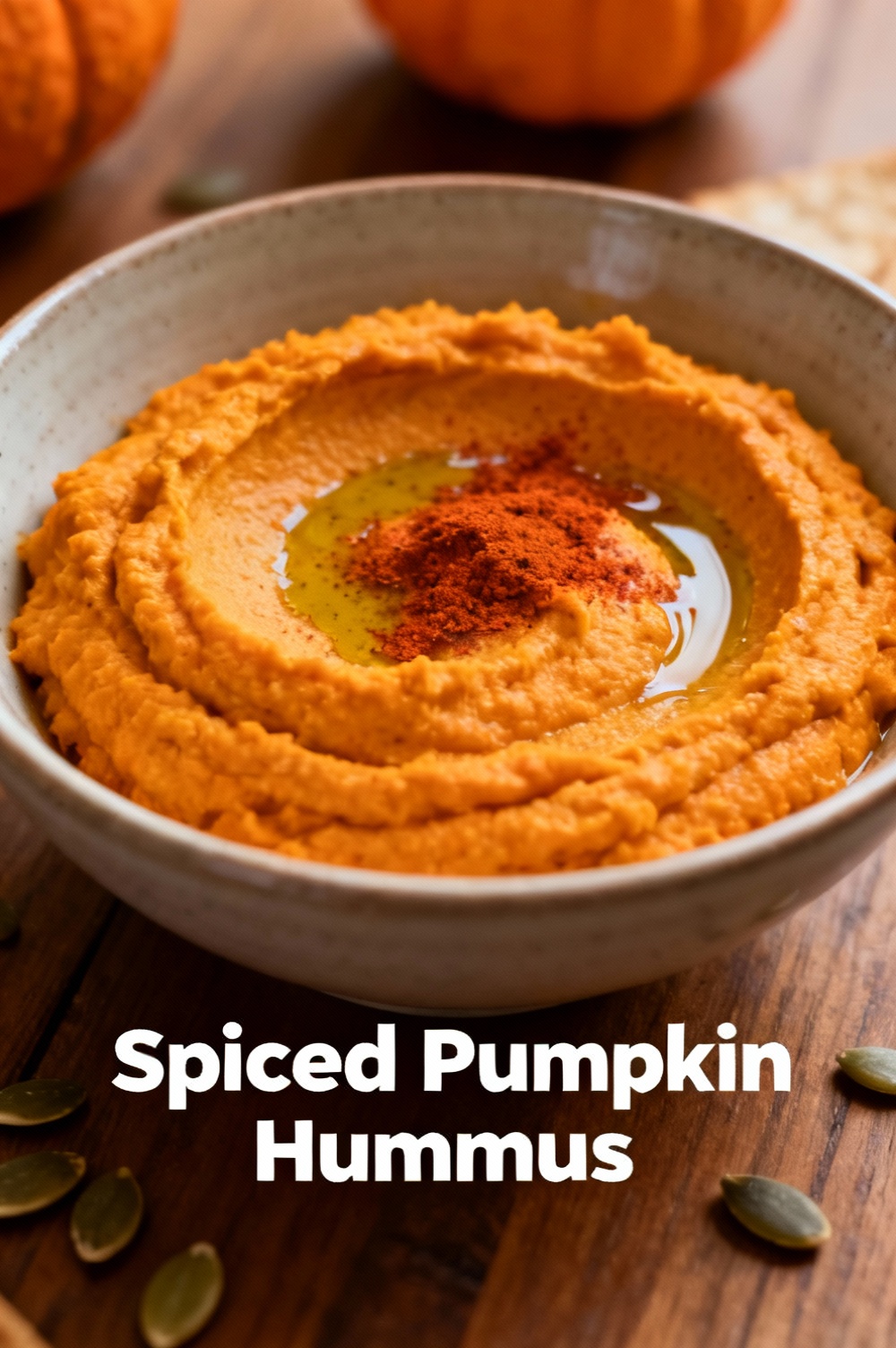
Spoon hummus into a shallow bowl, create a swirl, and drizzle with olive oil. Add toppings like roasted pepitas, sesame seeds, za’atar, or a scattering of pomegranate arils for color and texture contrast. Serve at room temperature to let aromatics sing.
Nutritional Information:
Estimated nutrition per serving (makes about 8 servings): Calories ~105–140 kcal per 2–3 tbsp serving depending on oil/tahini amounts.Protein ~3–4 g.Carbohydrates ~10–12 g.Dietary fiber ~2.5–3.5 g.Fat ~5–8 g.Sodium: varies widely—using a standard canned chickpea + ½ tsp added salt yields ~180–250 mg sodium per serving; using low-sodium chickpeas and less added salt can reduce this by 50% or more.Data insight: swapping 1 tbsp of olive oil for 1 tbsp aquafaba reduces per-batch calories by ~120 kcal and fat by ~13.5 g, making it a meaningful swap for calorie-conscious eaters. These figures are estimates and depend on exact brands and portion sizes—use nutritional software or labels for precise tracking.
Healthier Alternatives for the Recipe:
Reduce calories and fat: replace 1–2 tbsp of olive oil with aquafaba or water; use 2 tbsp tahini instead of 3 tbsp or swap half the tahini for plain Greek yogurt (non-vegan) to cut fat and add protein.Increase protein: add ¼ cup cooked white beans (cannellini) or a scoop of unflavored pea protein powder to the blend—this can raise protein by 3–6 g per serving while keeping texture smooth.Lower sodium: rinse canned chickpeas thoroughly and omit added salt; amplify lemon and smoked paprika to maintain flavor.Whole-food boost: fold in finely chopped roasted Brussels sprouts or kale for added micronutrients and texture—serve as a blend-on-top to maintain classic hummus mouthfeel.Notes on diets: this recipe is naturally vegan and gluten-free; simple swaps (Greek yogurt) make it vegetarian but not vegan.
Serving Suggestions:
Serve warm or room temperature with warm pita wedges, crisp vegetable crudités, apple slices for a touch of sweet-savory contrast, or drizzle over grain bowls (quinoa, farro) as a sauce.For parties, turn this into a layered dip: a base of spiced pumpkin hummus, a layer of sautéed mushrooms with balsamic, and a sprinkle of toasted seeds. Pair with seasonal drinks: mulled cider or a citrusy white wine complements the warm spice profile.Personalized pairing tip: if you like smoky flavors, serve with grilled eggplant slices; if you prefer bright notes, garnish with preserved lemon and extra lemon zest.
Common Mistakes to Avoid:
Using pumpkin pie filling instead of plain pumpkin puree—pie filling contains sugars and spices that will unbalance the dip.Overblending without scraping—this can cause uneven texture; scrape and pulse to integrate fully.Adding too much pumpkin—pumpkin adds moisture; too much will make hummus thin and dilute chickpea flavor. Not balancing acidity—pumpkin’s sweetness needs bright acid (lemon or vinegar) to avoid a flat result.Over-salting before chilling—flavors settle and amplify after refrigeration; adjust salt after chilling for final accuracy.
Storing Tips for the Recipe:
Refrigerate in an airtight container for up to 4–5 days.Press a piece of plastic wrap directly on the hummus surface to minimize oxidation and color change. Freeze in a shallow airtight container for up to 2 months—thaw in the refrigerator and whisk or blend briefly with a tablespoon of water or aquafaba to restore texture.Prep-ahead: roast squash and make the hummus up to 48 hours ahead; store toppings separately to preserve crunch.
Conclusion:
This spiced pumpkin hummus balances creamy chickpeas, nutty tahini, and warm autumn spices for a quick, nutrient-rich dip that feels seasonal and familiar. It’s adaptable—swap ingredients to meet calorie, protein, or dietary needs—and stores well for meal prep. Try the recipe, tweak spices to your preference, and share a photo or note on what swaps worked best for you to help others discover new variations.
FAQs:
Q: Can I use canned chickpeas without removing skins?A: Yes—most people do. Removing skins creates a noticeably smoother texture but is optional if you’re short on time.Q: Is pumpkin puree the same as pumpkin pie filling?A: No—pumpkin puree is plain cooked pumpkin. Pumpkin pie filling contains added sugars and spices and should not be used here unless you adjust other spices and sweetness.Q: How can I make this nut-free?A: Tahini is sesame but not a tree nut; if you need to avoid sesame, substitute with sunflower seed butter or increase aquafaba and use 1–2 tbsp of olive oil for body.Q: Can I roast my own pumpkin and how does it change flavor?A: Yes—roasting concentrates sugars and adds caramelized depth, making the hummus richer and slightly sweeter; allow extra time (25–40 minutes) but it’s worth it for depth of flavor.Q: Will this hummus work as a sandwich spread?A: Absolutely—its thick, spreadable texture and balanced flavors brighten sandwiches and wraps; add arugula or roasted veggies for structure.Q: How do I make it oil-free?A: Omit olive oil and increase aquafaba to reach desired texture; you may need extra tahini or a splash of water and more lemon to preserve mouthfeel.