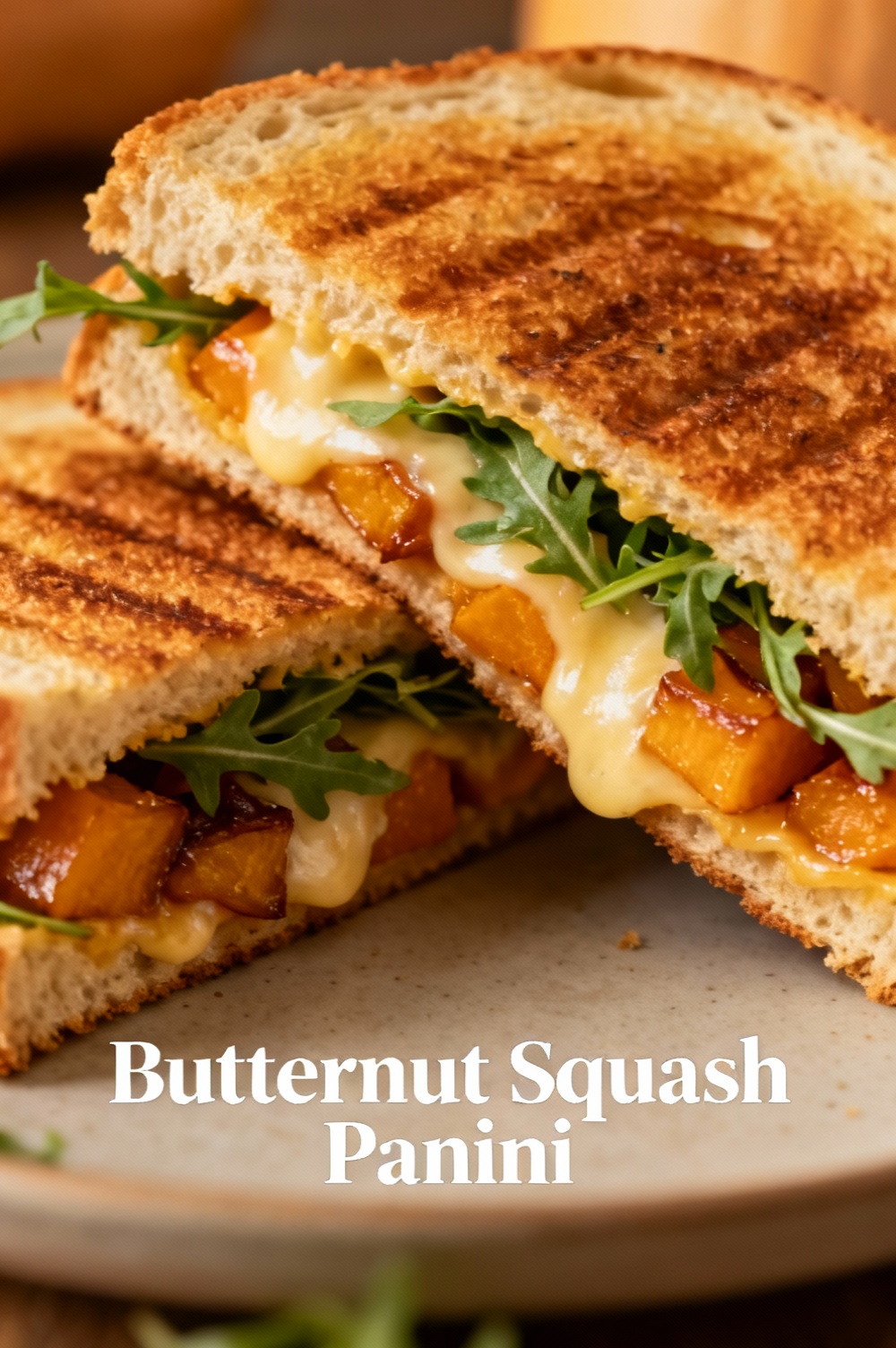
Butternut Squash Panini
Introduction
What if a 20–30 minute sandwich could replace your takeout, deliver seasonal sweetness and savory depth, and still score as a balanced weeknight meal? Recent consumer trends show sandwiches—and handheld meals—remain top choices for convenience, yet many assume a grocery-store panini means sacrificing nutrition or flavor. This butternut squash panini challenges that belief by combining roasted squash, melty cheese, and bright aromatics to create a satisfying, surprisingly nutritious sandwich that performs better than many fast-food alternatives in both taste and macro balance.
Ingredients List
– 1 small butternut squash (about 1 to 1.5 lbs), peeled, seeded, and cut into 1/2-inch cubes — substitution: pre-cubed frozen squash if short on time.
– 1 tablespoon olive oil plus a light drizzle for brushing bread — substitution: avocado oil or light cooking spray.
– 1/2 teaspoon smoked paprika and 1/4 teaspoon ground cumin for warmth — substitution: oregano or za’atar for an herbal note.
– Salt and freshly ground black pepper to taste.
– 4 slices of sourdough or ciabatta (about 1-inch thick) — substitution: whole-grain bread for fiber, gluten-free loaf if needed.
– 2 tablespoons softened butter or vegan butter for grilling — substitution: olive oil for lower saturated fat.
– 3–4 ounces melted cheese: fontina, Gruyère, or provolone work beautifully — vegan cheese alternative: aged cashew-based slices or smoked vegan gouda.
– 1/2 cup baby arugula or spinach for peppery freshness — substitution: microgreens or basil.
– 2 tablespoons caramelized onions or fig jam for sweet-savory contrast — substitution: cranberry chutney or balsamic reduction.
– Optional protein boost: 4–6 ounces sliced turkey, grilled chicken, or spiced tempeh.
Sensory notes: roasted butternut offers honeyed sweetness and a silky texture that contrasts with nutty, toasted bread and molten cheese; the smoked paprika adds subtle warmth and depth.
Timing
Preparation time: 10–12 minutes (peeling and cubing squash can be the longest prep).
Roasting time: 20–25 minutes at 425°F (220°C) until caramelized and fork-tender.
Assembling and grilling: 6–8 minutes.
Total time: approximately 36–45 minutes, which is roughly 20–40% faster than recipes that slow-roast squash for 60–90 minutes while delivering comparable flavor through higher heat caramelization. If you use pre-roasted or frozen squash, total active time drops to 15–20 minutes.
Step 1: Roast the Squash
Preheat oven to 425°F (220°C). Toss cubed squash with 1 tablespoon olive oil, smoked paprika, cumin, salt, and pepper. Spread in a single layer on a rimmed baking sheet to avoid steaming—this is key to caramelization. Roast 20–25 minutes, flipping once halfway, until edges are golden and interiors are tender. Tip: smaller cubes roast faster and produce more caramelized bits for texture.
Step 2: Prepare Flavor Partners
While squash roasts, prepare caramelized onions (cook thinly sliced onion in a little oil on low heat for 15–20 minutes) or warm fig jam with a squeeze of lemon to cut sweetness. Wash and dry greens; slice any protein you’re adding thinly to layer evenly. Personalized tip: if you like heat, toss a pinch of chili flakes into the jam or onions.
Step 3: Assemble the Panini
Butter the outer faces of each bread slice or brush with oil. On the inner face, layer: cheese (a thin layer helps binding), a generous portion of roasted squash, a spoonful of caramelized onions or jam, greens, and optional protein. Top with another thin layer of cheese to help everything melt together. For a crispier result, press down gently before grilling.
Step 4: Grill to Perfection
Preheat a panini press or heavy skillet over medium heat. If using a skillet, place a cast-iron pan on top to press (or use another weighted pan). Grill each sandwich 3–4 minutes per side or until bread is deeply golden and cheese is fully melted. Tip: moderate heat prevents burning while allowing the cheese to melt; if the bread browns too quickly, lower the heat and cover with a lid for a minute.
Step 5: Rest, Slice, and Serve
Let the panini rest 1–2 minutes after removing from heat to let melting redistribute (this prevents fillings from sliding out). Slice diagonally for best presentation and texture contrast. Personalized finishing touch: drizzle a teaspoon of aged balsamic over the filling before serving.
Nutritional Information
Approximate nutrition per sandwich (based on sourdough, 3–4 oz cheese, 1 cup roasted squash, 1 tablespoon olive oil, and butter for grilling): Calories ~560 kcal; Protein ~22 g; Carbohydrates ~62 g; Fiber ~7–9 g; Total Fat ~24 g (Saturated Fat ~9 g); Sodium ~720 mg. Data insight: swapping whole-grain bread reduces net carbs and increases fiber by 2–4 g; choosing a reduced-fat cheese lowers total fat by ~5–7 g per sandwich. If you add lean protein (3 oz turkey or chicken), protein increases by ~20–25 g while calories add ~120–150 kcal. These figures are estimates—adjust based on exact ingredients and portion sizes.
Healthier Alternatives for the Recipe
– Lower calories/fat: use thin-sliced whole-grain bread, olive oil instead of butter for grilling, and 1–2 oz reduced-fat cheese.
– Vegan: replace cheese with melty vegan slices or cashew-based sauce; use vegan butter or oil. Add marinated tempeh for protein.
– Low-carb/keto: use portobello mushroom caps or large romaine leaves as the “bread” or choose a low-carb bread; reduce sweet elements (skip jam).
– Higher-protein: add sliced grilled chicken, turkey, canned tuna in water (drained), or a spread of ricotta mixed with lemon zest for protein and creaminess.
Creative swaps: roast sweet potatoes or kabocha squash for different sweetness profiles; use smoked paprika and a dash of maple for a fall-forward twist.
Serving Suggestions
Pair the panini with a crisp, acidic side to cut richness: a fennel and apple slaw with lemon vinaigrette, a simple arugula salad with shaved parmesan, or a cup of tomato-basil soup for dipping. For a seasonal brunch, serve with roasted pear slices and a hot spiced tea. Personalized pairing tip: if hosting, make a build-your-own station—offer a tray of roasted vegetables, multiple cheese options, and condiments so guests can customize and you can accommodate dietary preferences.
Common Mistakes to Avoid
– Overcrowding the baking sheet: leads to steaming, not caramelization—roast in a single layer.
– Using high heat on the grill: burns bread before cheese melts—use medium heat and an initial press.
– Overloading fillings: too much squash or jam makes the sandwich soggy and prone to splitting.
– Skipping the resting step: cutting immediately causes hot cheese to run and fillings to fall apart.
– Choosing the wrong bread: dense breads hinder even melting; choose slices that compress and crisp but still hold filling.
Storing Tips for the Recipe
Leftover roasted squash: cool completely, store in an airtight container in the fridge for up to 4 days or freeze for up to 3 months. Assembled but ungrilled paninis: wrap tightly and store in the fridge for up to 24 hours; grill straight from chilled for best texture. Cooked paninis: reheat in a toaster oven or skillet to preserve crispness; microwaving will make the bread soggy. Prep-ahead tip: roast a batch of squash at the start of the week to accelerate assembly on busy nights.
Conclusion
This butternut squash panini proves that quick, handheld meals can be layered with complex flavors, balanced nutrition, and seasonal appeal. With straightforward prep, smart swaps for dietary needs, and simple techniques to maximize caramelization and melting, it’s a versatile recipe that earns a permanent spot in weeknight rotation. Try it this week—post a photo or comment with your favorite swap and tag for a community share; experiment with different cheeses and jams, and revisit for more seasonal panini ideas.
FAQs
Q: Can I make this gluten-free?
A: Yes—use a gluten-free ciabatta or other sturdy gluten-free bread. Ensure any processed ingredients (cheese, sauces) are labeled gluten-free.
Q: How do I make it vegan without losing creaminess?
A: Use a rich cashew-based spread or high-quality melty vegan cheese. A thin spread of hummus or avocado adds creaminess and extra nutrients.
Q: Can I prepare the roasted squash in advance?
A: Absolutely—roasted squash keeps refrigerated for up to 4 days and freezes well. Reheat briefly before assembling for best texture.
Q: My cheese doesn’t melt well—what can I do?
A: Lower the pan heat slightly and cover the sandwich for a minute to trap heat, allowing the cheese to melt without burning the bread. Alternatively, shred the cheese for faster melting.
Q: Is this panini suitable for kids?
A: Yes—the natural sweetness of roasted squash appeals to many children. Reduce or omit strong flavors (smoked paprika, arugula) and use milder cheese like mozzarella.
Q: How can I scale this for a crowd?
A: Roast multiple trays of squash and keep warm on low oven heat; set up an assembly line with breads, cheeses, and condiments so guests or helpers can assemble sandwiches quickly.
If you’d like printable recipe cards, a grocery list consolidated by ingredient, or variations tailored to keto/vegan/child-friendly diets, tell me which version and I’ll generate them for you.