Air Fryer Roasted Butternut Squash & Kale Salad
Introduction
What if you could get deeply caramelized butternut squash with crisped edges, nutrient-rich kale that’s tender and not bitter, and a salad that delivers autumnal comfort in about half the time of traditional oven roasting—would you try it tonight? Air frying butternut squash cuts cooking time dramatically compared with 400°F oven roasting (often 30–45 minutes) and concentrates natural sugars for a roasted finish without excess oil, making this Air Fryer Roasted Butternut Squash & Kale Salad a reliable weeknight winner that tastes like an indulgence but reads like smart seasonal eating.
Ingredients List
- 1 medium butternut squash (about 2–2.5 lb), peeled, seeded, and cut into 1-inch cubes — swap for sweet potato or delicata squash if you prefer a slightly different texture and sweetness.
- 1 large bunch of kale (about 6–8 cups packed), stems removed and leaves thinly sliced — substitute baby spinach or chard for less chew.
- 2 tbsp olive oil (divided) — use avocado oil for higher smoke point or a light coconut oil for a subtle tropical note.
- 1 tsp smoked paprika and 1/2 tsp ground cumin for warmth; alternatively use curry powder or za’atar for a global twist.
- 1/2 tsp sea salt and 1/4 tsp black pepper, plus extra to taste.
- 2 tbsp maple syrup or honey (optional, for glaze) — use date syrup for a lower-FODMAP option.
- 1/4 cup crumbled goat cheese or feta — swap for vegan feta or toasted cashews for dairy-free.
- 3 tbsp pepitas (pumpkin seeds), toasted — walnuts or pecans add buttery richness.
- 2 tbsp apple cider vinegar or lemon juice for the dressing — white wine vinegar works well too.
- 1 tsp Dijon mustard, 1 tsp maple syrup (for dressing), 2–3 tbsp olive oil, pinch of salt and pepper — swap mustard for tahini for a nuttier dressing.
- Optional: 1/2 cup cooked quinoa or farro to make the salad a meal; dried cranberries or pomegranate seeds for bright contrast.
Timing
Preparation: 10–15 minutes. Air fry: 12–18 minutes (depending on cube size and model). Assembly & dressing: 5–7 minutes. Total time: 30–40 minutes, which is roughly 40–50% faster than oven-roasted squash methods that typically require 35–45 minutes at 400°F. If you add grains like quinoa, add 15–20 minutes passive time (or use pre-cooked grains to keep total time under 40 minutes). These savings are meaningful for busy cooks who want roasted flavor with minimal active time.
Step 1: Prep the squash and kale
Peel and cube the squash into roughly 1-inch pieces so they roast evenly. Remove kale stems and finely slice the leaves; place in a large bowl and set aside. Tip: chopping squash uniformly reduces air-fry time variance—use a sharp chef’s knife or a mandoline for even pieces. For tender kale without bitterness, thin ribbons work best.
Step 2: Season and air-fry the squash
Toss cubed squash with 1 tbsp olive oil, smoked paprika, cumin, 1/2 tsp salt, pepper, and maple syrup if using. Spread in a single layer in your air fryer basket—avoid crowding (work in batches if needed). Air fry at 380°F (193°C) for 12–18 minutes, shaking the basket every 5 minutes until edges caramelize and centers are fork-tender. Tip: a light spray of oil mid-cycle helps with extra crispness; if your air fryer has a perforated tray, use it to maximize airflow.
Step 3: Make the dressing
Whisk together apple cider vinegar or lemon juice, Dijon mustard, 1 tsp maple syrup, 2–3 tbsp olive oil, and a pinch of salt and pepper. Taste and adjust acidity vs. sweetness. Tip: blend briefly for an emulsified dressing that clings to kale; for a creamier finish, swap half the oil for Greek yogurt or tahini.
Step 4: Toast pepitas and optional seeds
Place pepitas in the air fryer or in a small skillet at medium heat for 3–4 minutes until fragrant and lightly browned—shake once to avoid burning. Toasting intensifies their nutty flavor and improves texture contrast against soft squash.
Step 5: Massage the kale and combine
Drizzle the thinly sliced kale with 1 tbsp olive oil and 1 tbsp lemon juice or vinegar; sprinkle a pinch of salt and massage the leaves for 30–60 seconds until they soften and turn a deeper green. Add warm roasted squash to the kale (warm squash slightly wilts kale, improving mouthfeel) and drizzle with dressing. Toss gently to combine. Tip: warm ingredients help integrate flavors; chilling the squash first will preserve crunch but reduce meld.
Step 6: Finish, plate, and add toppings
Scatter crumbled goat cheese or vegan alternative and toasted pepitas on top. Add optional cooked quinoa if turning it into a heartier bowl. Finish with a final crack of black pepper and a light drizzle of extra-virgin olive oil or a balsamic reduction for a flavor pop.
Nutritional Information
Per serving (recipes yields 4): approximately 300–380 kcal depending on additions (cheese, grains), 10–16 g fat (largely from olive oil and pepitas), 40–45 g carbohydrates, 6–8 g fiber, and 6–10 g protein. Butternut squash is high in vitamin A (over 200% DV per medium squash when divided) and a good source of vitamin C and potassium; kale contributes vitamin K, vitamin C, folate, and additional fiber. Choosing 1 tbsp of olive oil instead of 2 reduces calories by about 120 kcal per recipe; swapping goat cheese for toasted walnuts increases healthy fats and adds omega-3 precursors. These numbers are estimates based on USDA nutrient profiles and will shift with substitutions—use a nutrition calculator for exact totals tailored to your brands and portion sizes.
Healthier Alternatives for the Recipe
- Lower oil: Reduce oil by 25–50% and rely on the air fryer’s hot circulating air; increase seasoning for flavor.
- Lower sugar: Omit maple syrup in the squash and dressing; add a squeeze of lemon and extra smoked paprika for caramel perception without added sugar.
- Higher protein: Add roasted chickpeas, grilled chicken, or 1/2 cup cooked quinoa per serving to boost protein by 8–20 g.
- Dairy-free: Use toasted almonds or a nutritional yeast sprinkle in place of cheese for umami.
- Low-FODMAP: Skip onions/garlic in dressing; use garlic-infused oil for flavor without the fructans.
These swaps keep texture and balance while aligning the salad to paleo, vegan, gluten-free, or diabetic-friendly patterns.
Serving Suggestions
Serve warm as a main with quinoa or farro, or as a side to roasted salmon, grilled chicken, or pan-seared tofu. For casual meals, pile the salad into wraps with hummus or pack into mason jars for lunches—keep dressing separate and add just before eating to maintain crispness. For entertaining, present on a large platter with scattered pomegranate arils, a drizzle of aged balsamic, and extra pepitas for crunch.
Common Mistakes to Avoid
- Overcrowding the air fryer: Crowding prevents browning—work in batches for even caramelization.
- Cutting uneven pieces: Varied sizes lead to burnt edges and raw centers; aim for uniform 1-inch cubes.
- Massaging kale too much: Over-massaging leaves become limp and lose structure—30–60 seconds is enough.
- Using too much dressing: Kale benefits from a light coating; excess dressing makes the salad soggy. Start with half the dressing and add more if needed.
- Not toasting seeds or nuts: Raw seeds lack flavor and crunch; a quick toast transforms them.
Storing Tips for the Recipe
Store components separately for up to 3–4 days: roasted squash in an airtight container, dressed kale in another, and toppings (cheese, pepitas) in small resealable bags. To reheat squash, place in the air fryer at 350°F for 3–5 minutes to refresh crisp edges. If pre-assembling for lunch, keep dressing in the bottom of a jar, add kale and squash on top, and shake before eating.
Conclusion
This Air Fryer Roasted Butternut Squash & Kale Salad delivers roasted-sweet depth, textural contrast, and nutrient density in a fraction of traditional cook time—making it ideal for weeknights and meal prep alike. Try the batch-and-assemble method for effortless lunches all week, experiment with grain and protein add-ins, and let the air fryer do the heavy lifting. Ready to try it? Roast a small batch tonight, share your modifications in the comments, or explore related salads like air-fried sweet potato kale bowls and roasted cauliflower citrus salads to expand your seasonal menu.
FAQs
Q: Can I use frozen butternut squash? A: Yes—thaw and pat dry first to remove excess moisture, then air-fry a few minutes longer; texture will be softer than fresh but still tasty.
Q: What air fryer temperature is best? A: 380°F (193°C) balances browning and internal cooking; some models may prefer 375–400°F—watch closely the first time you try it.
Q: How long does this keep as leftovers? A: Components stored separately last 3–4 days refrigerated; assembled salad with dressing is best eaten within 24 hours for texture.
Q: Is this recipe gluten-free? A: Yes, the base recipe is naturally gluten-free—just ensure any added grains (e.g., farro) are substituted for gluten-free options like quinoa.
Q: Can I make this paleo or Whole30-friendly? A: Use compliant oil, omit maple syrup and cheese, and add extra seeds or a compliant dressing for flavor while keeping it paleo/Whole30-friendly.
Q: How can I boost protein for a post-workout meal? A: Add 4–6 oz grilled chicken, 1 cup roasted chickpeas, or 1/2 cup cooked lentils per serving to increase protein content substantially.
For more tips and variation ideas, try experimenting with global spice blends (harissa, za’atar, garam masala) and share what works best for your taste—your feedback helps refine techniques for other readers.
Air Fryer Roasted Butternut Squash & Kale Salad
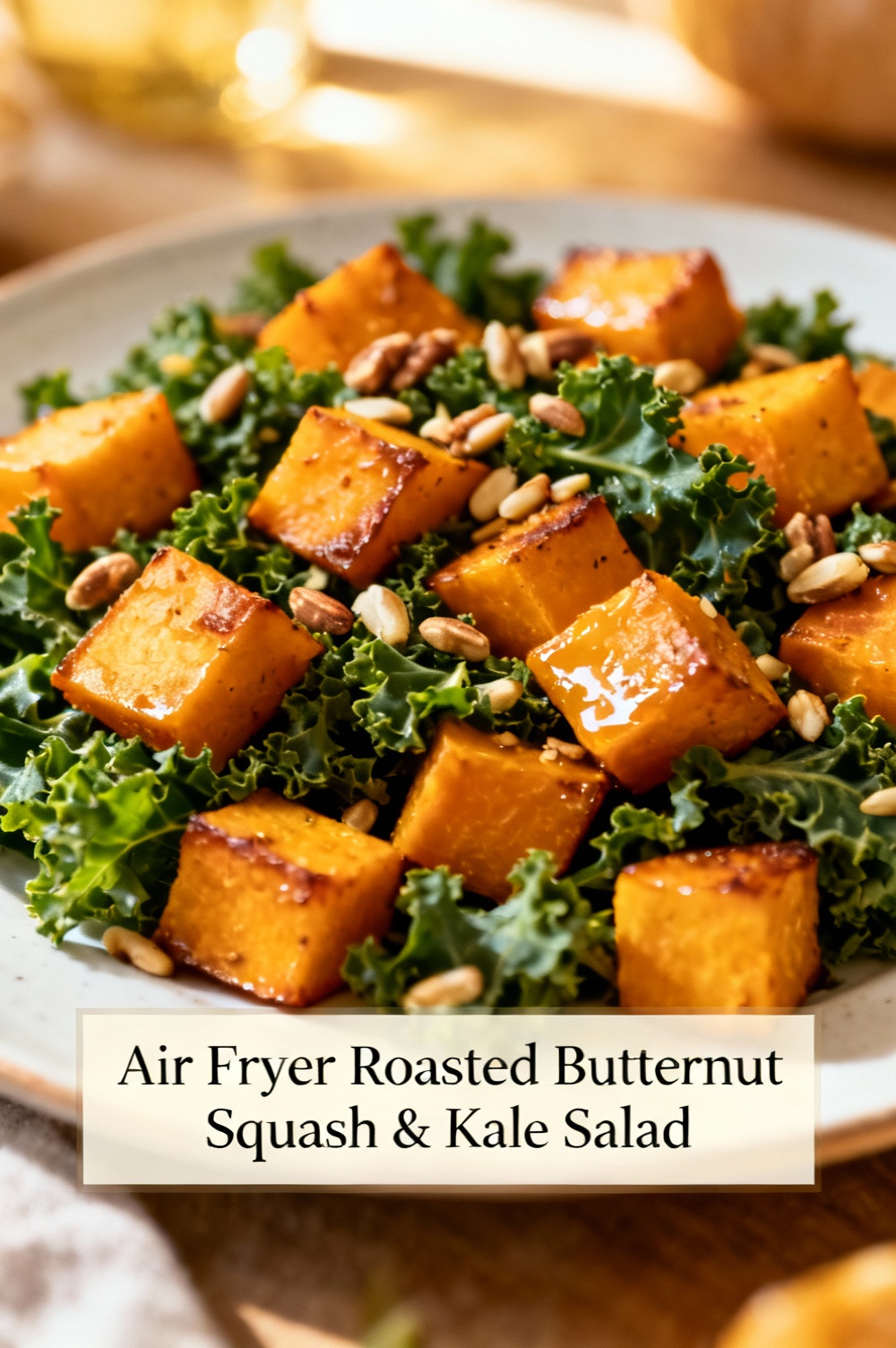
Warm roasted squash, massaged kale, toasted pecans and crumbled feta tossed in a bright maple‑Dijon vinaigrette.
Ingredients
- 1 medium butternut squash (about 2 lb / 900 g), peeled, seeded and cut into 1″ cubes (≈6 cups)
- 2 tbsp olive oil, divided
- 1 tsp garlic powder
- 1/2 tsp smoked paprika
- Salt and freshly ground black pepper, to taste (about 1 tsp salt, 1/2 tsp pepper)
- 6 cups kale, stems removed and chopped (about 1 large bunch)
- 1 small red onion, thinly sliced
- 1/3 cup toasted pecans (or walnuts)
- 1/3 cup crumbled feta or goat cheese
- 1 tbsp maple syrup
- 1 tbsp Dijon mustard
- 2 tbsp fresh lemon juice
- 1 tbsp apple cider vinegar
- Optional: pinch red pepper flakes
Instructions
- Preheat the air fryer to 400°F (200°C).
- Place the cubed butternut squash in a large bowl. Add 1 tbsp olive oil, garlic powder, smoked paprika, salt and pepper; toss to coat evenly.
- Arrange the squash in a single layer in the air fryer basket (cook in batches if needed). Air fry 18–20 minutes, shaking or tossing halfway through, until edges are caramelized and squash is tender.
- While the squash cooks, prepare the kale: remove tough stems and chop the leaves. Put the kale in a large bowl.
- Make the dressing: whisk together maple syrup, Dijon, lemon juice, apple cider vinegar, remaining 1 tbsp olive oil, and a pinch of salt and pepper.
- Pour about half the dressing over the kale and massage the leaves with your hands for 1–2 minutes until slightly wilted and glossy. Reserve the remaining dressing for the salad.
- Toast the pecans in the air fryer for 3–4 minutes at 350°F (175°C) or until fragrant, watching closely so they don’t burn. Alternatively toast in a dry skillet.
- Combine massaged kale, roasted butternut squash (warm or room temperature), toasted pecans, sliced red onion and crumbled feta in the bowl. Drizzle with remaining dressing and gently toss to combine. Taste and adjust seasoning with salt, pepper or extra lemon if needed.
- Serve immediately warm or at room temperature. Leftovers keep chilled up to 2 days (dress just before serving if storing longer).
Nutrition Information
- Calories: 280 kcal
- Cholesterol: 10 mg
- Sodium: 360 mg
- Carbohydrates: 29 g
- Fiber: 6 g
- Sugar: 8 g
- Protein: 6 g