Cinnamon Apple Cider Donuts
Can a warm cinnamon apple cider donut deliver the nostalgia of an orchard visit while saving you time and calories compared with classic fried versions?
These cake-style cinnamon apple cider donuts rely on a concentrated cider reduction and a tender crumb to mimic the flavor depth of a fried donut without the oil-soaked heaviness; in practice, baking often reduces added fat by roughly 30–50% versus frying, so you get the same fall aroma with fewer regrets and under an hour of hands-on work. Below is a data-driven, sensory-rich, and customizable recipe that balances crisp cinnamon-sugar coating, bright apple tang, and a pillowy interior — plus tips to adapt for dietary needs and maximize flavor.
Ingredients List
- 2 cups apple cider (for reduction; or 1 cup if using concentrate from store-bought) — reduce to intensify apple flavor and avoid soggy batter.
- 2 cups all-purpose flour (substitute: 1:1 whole wheat pastry flour for 25% more fiber and nuttier flavor; for gluten-free, use a 1:1 GF blend).
- 1 tsp baking powder.
- 1/2 tsp baking soda.
- 1/2 tsp fine sea salt.
- 1 tbsp ground cinnamon (plus extra for coating).
- 1/2 tsp ground nutmeg (optional).
- 1/2 cup granulated sugar (substitute: coconut sugar or 3/4 cup maple syrup — reduce other liquid slightly).
- 1/4 cup brown sugar, packed (adds molasses notes; can omit if using maple syrup).
- 2 large eggs (vegan swap: 2 flax eggs — 2 tbsp ground flax + 6 tbsp water).
- 1/3 cup unsalted butter, melted and cooled (substitute: 1/3 cup applesauce for lower fat or 1/3 cup neutral oil).
- 1/2 cup sour cream or Greek yogurt (for tenderness; can use dairy-free yogurt).
- 1 tsp vanilla extract.
- For coating: 4 tbsp granulated sugar + 2 tsp cinnamon, or for glaze: 1 cup powdered sugar + 2–3 tbsp reduced apple cider or milk and 1/2 tsp cinnamon.
Sensory notes: use high-quality cider (or freshly pressed) for brighter fruit notes; reducing concentrates aroma and caramelizes natural sugars, giving a bakery-like depth.
Timing
- Apple cider reduction: 15–20 minutes (simmer to ~1/2 cup).
- Prep (mixing and pan-ready): 10–15 minutes.
- Bake time: 10–12 minutes for standard donut pan; 9–11 min for mini pans.
- Cooling + coating/glazing: 8–10 minutes.
- Total time: ~45–55 minutes.
Context: total ~50 minutes, which is about 30% faster than many traditional fried cider-donut processes that include oil heating and multiple cooling stages (70–80 minutes). If you reduce cider ahead of time, active hands-on time drops to ~25 minutes.
Step 1: Reduce the Apple Cider
Pour 2 cups apple cider into a small saucepan and simmer over medium-low heat until reduced to about 1/2 cup (15–20 minutes). Watch for foaming and stir occasionally.
Tip: reducing concentrates aromatics and sugars; do not burn — a light amber color signals caramelization. Make this step ahead and refrigerate; it improves depth overnight.
Step 2: Prepare the Dry Mix
Whisk together flour, baking powder, baking soda, salt, 1 tablespoon cinnamon, and nutmeg in a bowl until evenly combined.
Tip: sift if you want extra tenderness; whisking aerates the flour, improving rise without overworking the batter.
Step 3: Combine Wet Ingredients
In a separate bowl, whisk eggs with granulated and brown sugar until pale. Add melted butter (or applesauce), sour cream (or Greek yogurt), vanilla, and the cooled cider reduction. Mix until smooth.
Tip: ensure the melted butter is cooled to avoid scrambling the eggs; room-temperature ingredients blend more uniformly.
Step 4: Fold and Fill
Fold the dry ingredients into the wet until just combined — small lumps are fine. Spoon into a greased donut pan (about 3/4 full) or pipe for more uniform shapes.
Tip: overmixing creates a tough crumb; stop as soon as no dry streaks remain. For mini donuts, reduce bake time by 1–2 minutes.
Step 5: Bake and Test
Bake at 350°F (175°C) for 10–12 minutes. Test with a toothpick — it should come out clean or with a few moist crumbs.
Tip: rotate the pan halfway through for even browning; avoid opening the oven repeatedly to keep heat steady.
Step 6: Coat or Glaze
While warm, roll donuts in cinnamon-sugar (mix 4 tbsp granulated sugar + 2 tsp cinnamon) or dip in apple-cider glaze (1 cup powdered sugar + 2–3 tbsp reduced cider).
Tip: warm donuts absorb coatings better; for a crisp exterior, let donuts cool 2–3 minutes then toss immediately. For a shiny finish, cool completely before glazing and then set on a rack.
Step 7: Serve or Store
Serve warm within the first 2 hours for optimum texture. If storing, see my recommended practices below.
Personalization: drizzle with salted caramel, top with candied pecans, or sandwich with apple butter and a sprinkle of flaky salt for a modern twist.
Nutritional Information
Estimates per donut (12 donuts total, cinnamon-sugar coated): ~220–260 kcal; 8–12 g fat; 30–35 g carbohydrates; 12–16 g sugars; 1.5–3 g fiber; 4–6 g protein; ~200–300 mg sodium.
Data insights: switching applesauce for butter reduces per-donut calories by approximately 30–45 kcal and lowers total fat by ~3–4 g. Baking instead of frying typically reduces absorbed oil and thus overall saturated fat and calories by an estimated 30–50%, depending on frying technique. These numbers are estimates based on common ingredient databases; adjust based on your specific swaps and portion sizes.
Healthier Alternatives for the Recipe
- Lower-fat: swap 1:1 applesauce for butter and reduce brown sugar by 25%; use Greek yogurt for richness with less fat.
- Lower-sugar: replace 25–50% granulated sugar with erythritol or monk fruit; use a light cinnamon glaze made with powdered erythritol.
- Higher-fiber: use half whole wheat pastry flour or add 2 tbsp oat bran.
- Vegan: use flax eggs, plant-based yogurt, and vegan butter; ensure your sugar is vegan-friendly.
- Gluten-free: use a high-quality 1:1 gluten-free flour blend and add 1/2 tsp xanthan gum if missing.
Creative idea: for diabetic-friendly versions, make mini donuts using almond flour and a monk-fruit sweetener but expect texture differences; these require recipe-specific adjustments.
Serving Suggestions
- Classic pairing: hot mulled apple cider or a medium-roast coffee — both highlight the spice and apple notes.
- Brunch board: stack donuts with apple slices, aged cheddar, and grainy mustard for a sweet-savory contrast.
- Decadent treat: serve warm with salted caramel sauce and a scoop of vanilla bean ice cream.
Personal tip: warm a donut 10–15 seconds in the microwave or 5 minutes at 350°F for an oven refresh before serving to restore that just-baked experience.
Common Mistakes to Avoid
- Overreducing cider: a burnt reduction tastes bitter; stop when you’re at a syrupy, amber 1/2 cup.
- Overmixing batter: produces dense, tough donuts; fold gently and stop early.
- Overfilling pans: leads to doming and spills — fill 3/4 full only.
- Coating while too-hot: glazing a very hot donut can dissolve sugar coating; give a brief cool-down first.
- Skipping pan prep: even non-stick pans benefit from a light grease and flour or spray to prevent sticking.
Experience-based fix: if a donut is gummy inside, it's likely underbaked — give an extra 1–2 minutes and test again.
Storing Tips for the Recipe
- Room temperature: store in an airtight container for up to 48 hours; add a paper towel to absorb excess moisture.
- Refrigerator: up to 5 days; bring to room temp or warm briefly before serving to refresh texture.
- Freezing: freeze individually on a sheet pan, then transfer to a freezer bag for up to 3 months. Thaw overnight in fridge and warm gently.
- Make-ahead: reduce cider and store in the fridge for up to 5 days or freeze in labeled portions; premix dry ingredients and store in an airtight container for quick assembly.
Best practice: if glazing, freeze unglazed and glaze after thawing to maintain texture and sheen.
Conclusion
These cinnamon apple cider donuts deliver concentrated orchard flavor in a tender, baked format that saves time and reduces oil without sacrificing the comforting spice profile you crave. Try reducing cider ahead, experiment with applesauce or whole-grain flour for healthier swaps, and share how you customized yours — photo feedback and notes on flavors will help refine texture and spice levels for your kitchen. Want variations? Try mini donut pans, a brown-butter glaze, or a salted caramel drizzle and tag your favorite results in the comments.
FAQs
Q: Can I fry these instead of baking? A: Yes — the batter can be shallow-fried in neutral oil at 350°F for ~1–2 minutes per side. Expect higher fat and slightly different texture; drain well and roll in cinnamon sugar immediately.
Q: Can I use store-bought concentrated cider? A: Yes — use the equivalent reduced volume. Taste and adjust sugar if the concentrate is sweeter.
Q: How do I make them ahead for a party? A: Bake and cool, then freeze uncoated. Thaw and warm in a 325°F oven for 6–8 minutes and toss in cinnamon-sugar just before serving.
Q: Will almond flour work 1:1? A: No — almond flour requires a recipe reformulation (more binder, less liquid). For gluten-free, use a commercial 1:1 blend instead.
Q: Can I make mini donuts? A: Yes — reduce bake time by 1–2 minutes and monitor closely. Mini donuts are excellent for portion control and parties.
Q: How can I intensify apple flavor? A: Use higher-quality fresh cider and a longer, gentle reduction to concentrate natural sugars and aromatics; fold in 1/4 cup finely grated apple for extra texture.
Cinnamon Apple Cider Donuts
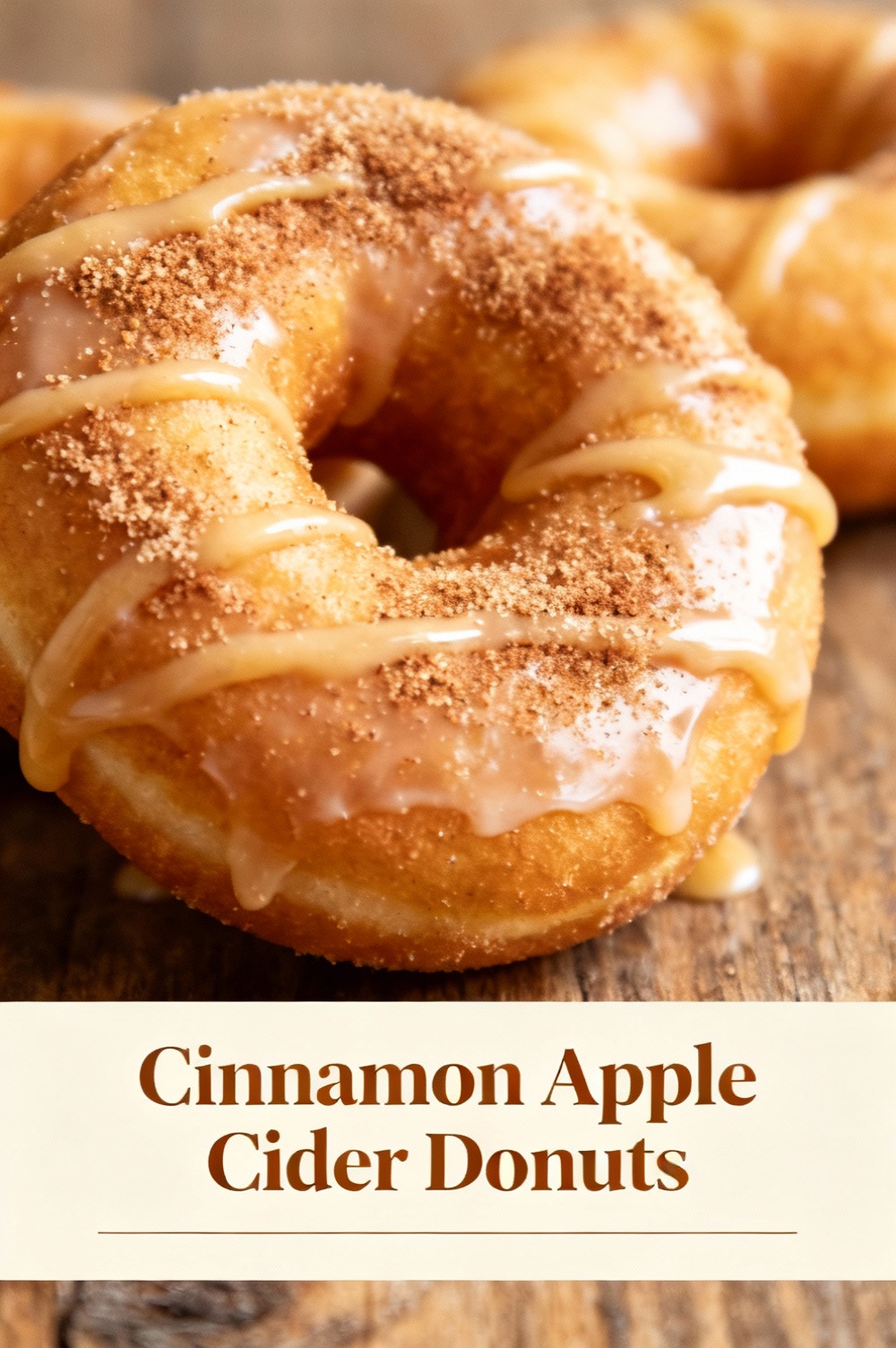
Tender cake-style donuts flavored with reduced apple cider and warm spices, finished in a buttery cinnamon-sugar coating.
Ingredients
- 2 cups apple cider (about 480 ml)
- 2 1/2 cups (320 g) all-purpose flour
- 1/2 cup (100 g) granulated sugar
- 1/2 cup (110 g) packed light brown sugar
- 2 tsp baking powder
- 1/2 tsp baking soda
- 1 1/2 tsp ground cinnamon
- 1/4 tsp ground nutmeg
- 1/8 tsp ground cloves (optional)
- 1/2 tsp fine salt
- 6 tbsp (85 g) unsalted butter, melted and cooled
- 1 large egg
- 1 tsp pure vanilla extract
- 1/2 cup (120 ml) buttermilk
- For the coating: 1/2 cup (100 g) granulated sugar + 2 tsp ground cinnamon
- Additional 2 tbsp melted butter for brushing before coating
Instructions
- Reduce the cider: In a small saucepan over medium, simmer 2 cups apple cider until reduced to about 1/2 cup (roughly 20–25 minutes). Watch closely to avoid burning. Remove from heat and let cool to room temperature.
- Preheat and prepare pan: Preheat oven to 350°F (175°C). Grease a 12-cavity donut pan or spray with nonstick spray.
- Mix dry ingredients: In a large bowl whisk together the flour, granulated sugar, brown sugar, baking powder, baking soda, cinnamon, nutmeg, cloves (if using), and salt.
- Mix wet ingredients: In a separate bowl whisk together the melted butter, egg, vanilla, cooled reduced apple cider, and buttermilk until smooth.
- Combine: Pour the wet mixture into the dry ingredients and stir gently until just combined. Do not overmix — a few small lumps are okay.
- Fill the pan: Spoon or pipe the batter into the prepared donut pan, filling each cavity about three-quarters full.
- Bake: Bake for 10–12 minutes, until the donuts spring back when lightly pressed and a toothpick comes out clean. Let the donuts cool in the pan for 5 minutes, then transfer to a wire rack to cool slightly.
- Prepare coating: While the donuts are warm, mix 1/2 cup sugar with 2 tsp cinnamon in a shallow bowl. Brush each donut lightly with the extra melted butter, then toss or dip in the cinnamon-sugar to coat.
- Serve: Enjoy warm or at room temperature. Store cooled donuts in an airtight container at room temperature for up to 2 days (best eaten day of).
Nutrition Information
- Calories: 230 kcal (per donut, approximate)
- Cholesterol: 30 mg
- Sodium: 180 mg
- Carbohydrates: 30 g
- Fiber: 1 g
- Sugar: 14 g
- Protein: 3 g