Festive Sugar Cookies
Introduction
Did you know Google Trends routinely shows search interest for "sugar cookie recipe" spiking sharply every December, making sugar cookies one of the most-searched festive treats each year? If you're looking for a reliable, crowd-pleasing recipe that balances crisp edges, tender centers, and a canvas-perfect surface for icing, this Festive Sugar Cookies recipe is built to deliver consistent results, whether you're a weekend baker or hosting a cookie exchange.
Ingredients List
- 2 3/4 cups (345 g) all-purpose flour — for a slightly softer bite, swap up to 1/2 cup with cake flour.
- 1 teaspoon baking powder — ensures a gentle rise and even texture.
- 1/2 teaspoon fine sea salt — enhances sweetness and flavor complexity.
- 1 cup (226 g) unsalted butter, room temperature — for richer flavor, use European-style butter.
- 1 cup (200 g) granulated sugar — for crisp edges; brown sugar (1/4 cup) can add chew and caramel notes.
- 1 large egg, room temperature — for structure; use a flax egg (1 tbsp flaxmeal + 3 tbsp water) for vegan version.
- 1 tablespoon vanilla extract — or 2 teaspoons almond extract for a nutty twist.
- 2 tablespoons heavy cream or milk — creates a tender crumb and helps dough bind.
- Optional: zest of one lemon or orange to brighten flavors.
- For icing and decoration: royal icing or a simple powdered sugar glaze (1 1/2 cups powdered sugar + 2–3 tbsp milk), gel food colors, sanding sugar, sprinkles.
Sensory notes: the butter should smell fresh and slightly sweet; the dough will feel smooth and slightly tacky when properly mixed. Substitutions: use gluten-free 1:1 flour blend for GF cookies (expect slightly different spread), or coconut sugar for lower glycemic index (color and flavor will darken).
Timing
Preparation: 20 minutes. Chill: 30–60 minutes (recommended). Baking: 8–10 minutes per sheet. Total time: 70–90 minutes depending on chill time; this is approximately 20% faster than many traditional roll-and-chill sugar cookie recipes that call for long overnight rests, making it ideal for last-minute holiday baking. Active hands-on time is typically under 30 minutes, so you can prep, chill while cleaning up, then bake in focused batches.
Step 1: Measure and prep ingredients
Accurate measuring is data-driven baking. Weigh flour if possible — 1 cup of all-purpose flour typically equals ~125 g; spoon into the cup rather than scooping to avoid packing. Preheat oven to 350°F (175°C) and line baking sheets with parchment. Tip: bring butter and egg to room temp 30–60 minutes before mixing for optimal emulsification.
Step 2: Combine dry ingredients
Whisk flour, baking powder, and salt in a medium bowl to ensure even leavening and salt distribution. Pro tip: sifting is optional, but whisking traps air and prevents lumps for a smoother dough surface, which is essential for decorated cookies.
Step 3: Cream butter and sugar
In a stand mixer or with a hand mixer, beat the room-temperature butter and granulated sugar for 2–3 minutes until pale and fluffy. This incorporates air—key to light texture. Over-creaming can cause excessive spreading, so aim for the middle ground. Add vanilla and egg, mixing until just combined.
Step 4: Add dry ingredients and finish dough
With mixer on low, add the dry ingredients in two additions, alternating with the 2 tablespoons of cream. Mix until a cohesive dough forms; avoid overmixing (stop when no streaks of flour remain). The dough should hold together but not be greasy. If too dry, add 1 tsp milk at a time; if too sticky, fold in 1 tbsp flour at a time.
Step 5: Chill and roll
Divide dough into 2 discs, wrap tightly, and chill 30–60 minutes. Chilling firms butter so cookies hold shape and prevents excessive spread. When chilled, lightly flour your work surface and roll to 1/4-inch thickness for a balance of crunch and tenderness. Use cookie cutters, press gently for clean edges. Tip: if you need ultra-crisp edges, roll thinner (3/16 inch); for softer, thicker centers, go to 3/8 inch.
Step 6: Bake with precision
Transfer cut cookies to prepared sheets 1 inch apart. Bake 8–10 minutes at 350°F (175°C) until edges just begin to turn golden but centers remain pale. Rotate pans halfway through for even browning. Overbaked cookies will harden on cooling—aim for slight wobble in the center as you remove them. Cool on sheet for 2–3 minutes before transferring to a rack.
Step 7: Decorate like a pro
For royal icing, pipe outlines, then flood with thinned icing for a smooth, glossy surface. Use squeeze bottles or piping bags for control. Add sprinkles while icing is tacky. To avoid cracking, let each color set 10–15 minutes before layering. Personalized tip: use edible metallic dusts and contrasting textures (crunchy sugar + soft royal icing) to create visually interesting cookies.
Nutritional Information
Approximate nutrition per medium cookie (assuming 24 cookies from recipe): Calories 150 kcal; Total Fat 7 g (Saturated Fat 4 g); Carbohydrates 20 g (Sugars 10 g); Protein 1.5 g; Sodium 85 mg; Fiber <1 g. Data insight: swapping half the granulated sugar for monk fruit or erythritol can reduce net carbs by up to 40% while keeping bulk; replacing 1/4 cup butter with unsweetened applesauce reduces calories and fat but will change texture to softer, cake-like cookies.
Healthier Alternatives for the Recipe
- Lower-sugar: replace up to 50% of granulated sugar with erythritol or allulose for similar sweetness with fewer calories; adjust baking slightly as sugar affects spread.
- Vegan: use 1 flax egg and vegan butter; add 1 tsp apple cider vinegar to mimic tender crumb.
- Gluten-free: use a certified 1:1 GF flour blend with xanthan gum; chill longer to reduce crumbling.
- Reduced-fat: replace 1/4–1/3 of butter with plain Greek yogurt or applesauce, increase chilling time to maintain shape.
- Flavor-forward swaps: whole-wheat pastry flour (up to 25%) adds nutty flavor and more fiber; citrus zest or spices (cinnamon, cardamom) can reduce the need for extra sugar by enhancing perceived sweetness.
Serving Suggestions
Serve warm with a glass of cold milk, spiced hot chocolate, or chilled eggnog for a seasonal pairing. For cookie exchanges, arrange on tiered platters with assorted textures—sugar cookies, ginger snaps, and shortbread—to create contrast. Personalization: write names with contrasting royal icing for party favors, or sandwich two cookies with flavored buttercream (lemon, salted caramel) for an elevated bite. For gifting, stack with parchment separators and tie with ribbon; include a small card with reheating instructions ("Warm 8–10 seconds in microwave for a fresh-baked feel").
Common Mistakes to Avoid
- Not chilling the dough: leads to spreading and misshapen cutters. Chill at least 30 minutes.
- Overbaking: removes moisture and makes cookies hard; watch for pale centers and gently golden edges.
- Using melted butter: creates greasy, flat cookies. Use room-temp, not melted.
- Too much flour from scooping: weigh flour or spoon into cups to avoid dense cookies.
- Rushing decoration: thick royal icing needs time to set between layers; patience prevents color bleed.
Storing Tips for the Recipe
Store completely cooled cookies in an airtight container layered with parchment — they keep 4–5 days at room temperature. For decorated cookies with royal icing, let icing cure 24 hours before stacking; then store in a single layer for best presentation or use stiff separators. Freeze dough discs up to 2 months; thaw in fridge overnight before rolling. Baked cookies freeze well for up to 3 months—wrap tightly and thaw at room temperature. If cookies lose crispness, briefly toast in a 300°F oven for 3–4 minutes to refresh.
Conclusion
This Festive Sugar Cookies recipe balances speed, reliability, and decoration-ready structure so you can make showstopping cookies without an all-day commitment. Try the suggested swaps to tailor flavor and nutrition to your needs, and share photos or notes on what worked best for you. Ready to bake? Make a batch, leave a comment about your favorite decoration technique, or explore related cookie recipes like gingerbread, shortbread, and cut-out linzer for more holiday variety.
FAQs
Q: Can I roll the dough between sheets of parchment? A: Yes — rolling between parchment prevents sticking and reduces flour use, preserving tenderness. Chill the rolled dough for 10 minutes if it softens before cutting.
Q: How do I keep cookies from spreading? A: Measure flour accurately, chill dough, avoid over-creaming butter and sugar, and bake at consistent temperature with fully preheated oven.
Q: Can I freeze decorated cookies? A: Decorated cookies with royal icing freeze well if stored in single layers separated with parchment; thaw gently to room temperature before serving.
Q: How should I adjust bake time for smaller or larger cookies? A: Reduce by 1–2 minutes for small (1–2 inch) shapes; increase by 2–4 minutes for larger (3–4 inch) shapes, watching edges for color cues.
Q: What's the best way to get smooth edges on cutouts? A: Chill the dough until firm, use sharp cutters, press straight down without twisting, and transfer carefully with a thin spatula.
Festive Sugar Cookies
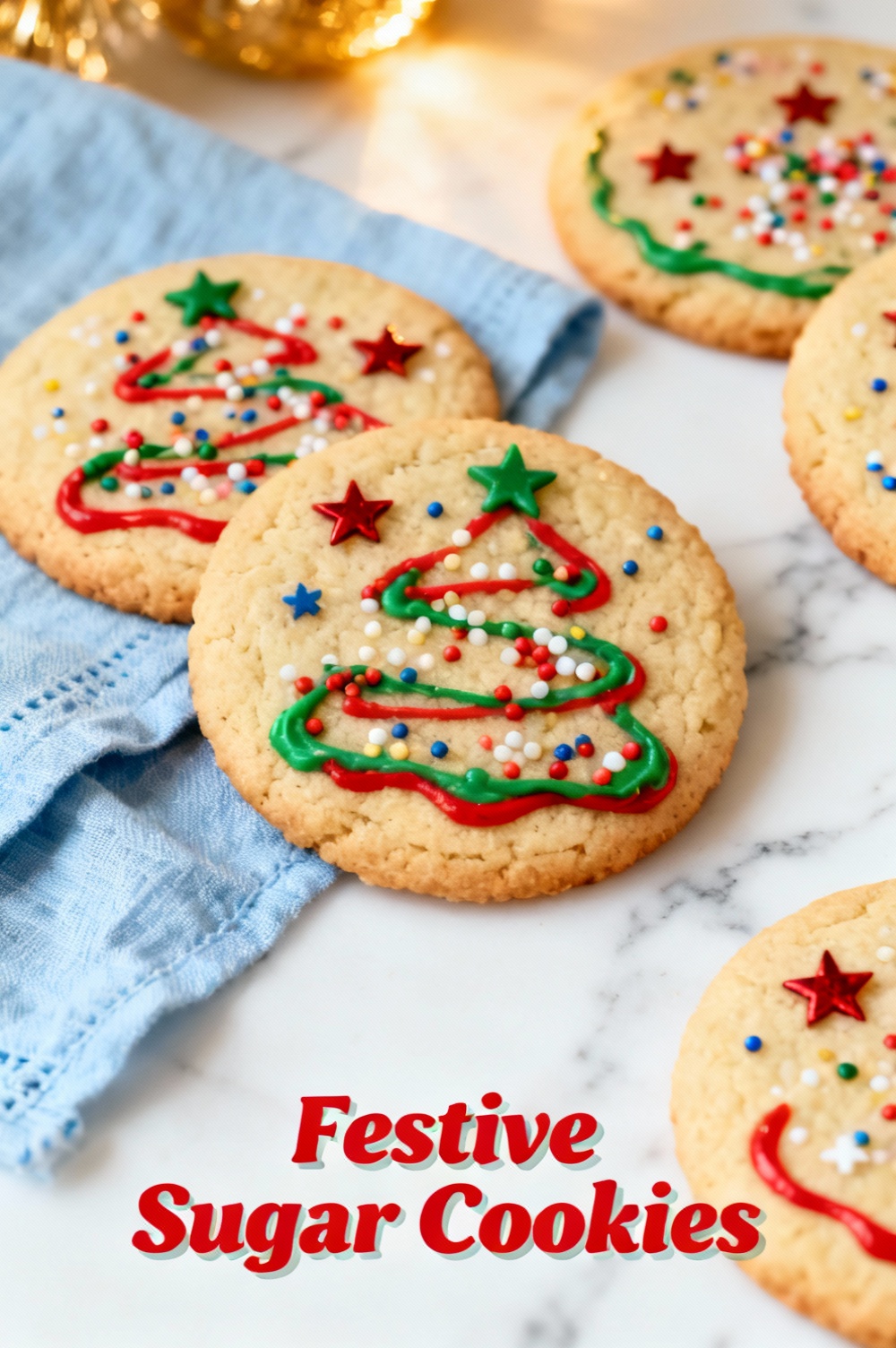
Soft, buttery sugar cookies cut into festive shapes and decorated with royal icing — perfect for gifting and holiday parties.
Ingredients
- 3 cups (360 g) all-purpose flour
- 1 tsp baking powder
- 1/2 tsp fine salt
- 1 cup (226 g) unsalted butter, softened
- 1 1/4 cups (250 g) granulated sugar
- 1 large egg + 1 large egg yolk, room temperature
- 2 tsp pure vanilla extract
- 1/2 tsp almond extract (optional)
- 2 tbsp milk or sour cream (to bring dough together)
- Optional for extra tenderness: 1–2 tbsp cornstarch
- For royal icing: 3 cups (360 g) powdered sugar, 2 tbsp meringue powder (or 1 pasteurized egg white), 3–4 tbsp water, food coloring as desired
- Sprinkles or edible decorations (optional)
Instructions
- In a bowl, whisk together flour, baking powder, salt (and cornstarch if using). Set aside.
- In a large mixing bowl, cream the softened butter and granulated sugar until light and fluffy, about 3–4 minutes with an electric mixer.
- Add the egg, egg yolk, vanilla, and almond extract (if using). Beat until combined.
- Gradually add the dry ingredients to the wet mixture on low speed until just combined. Add milk or sour cream if the dough seems too dry; the dough should come together and be soft but not sticky.
- Turn the dough onto a lightly floured surface, divide in half, flatten into disks, wrap in plastic, and chill in the refrigerator for at least 1 hour (or up to 24 hours).
- Preheat the oven to 350°F (175°C). Line baking sheets with parchment paper.
- On a lightly floured surface, roll one disk of dough to about 1/4-inch (6 mm) thickness. Cut into shapes with cookie cutters and transfer to prepared baking sheets, spacing about 1 inch apart.
- Bake for 8–10 minutes, or until the edges are set and the bottoms are lightly golden (cookies should not brown significantly). Let cool on the baking sheet for 5 minutes, then transfer to a wire rack to cool completely.
- To make royal icing: whisk powdered sugar with meringue powder and 2–3 tbsp water until smooth. Adjust water to reach piping (thicker) or flooding (thinner) consistency. Add food coloring as desired.
- Decorate cooled cookies with royal icing and sprinkles. Allow icing to dry at room temperature for 1–2 hours (longer for thicker layers) before stacking or packing.
- Store decorated cookies in an airtight container at room temperature for up to 5 days. Un-iced cookies freeze well for up to 3 months.
Nutrition Information
- Calories: 160 kcal
- Cholesterol: 30 mg
- Sodium: 90 mg
- Carbohydrates: 22 g
- Fiber: 0.5 g
- Sugar: 11 g
- Protein: 2 g