Gluten-Free Sundried Tomato Bread
Could a gluten-free sundried tomato bread that tastes as airy, savory, and satisfying as traditional loaves really be faster to make and better for gut health — and what does data say about replacing wheat for flavor without losing texture?
Ingredients List
- 2 cups gluten-free all-purpose flour blend (about 260 g) — look for blends with rice flour, potato starch, and a binder; if yours lacks xanthan, add 1 tsp. Use a blend labeled for baking for best rise and neutral flavor. The mix gives a slightly sweet, nutty aroma when toasted.
- 1 cup tapioca starch (120 g) — adds chew and glossy crumb; substitutes: arrowroot or cornstarch (slightly less chew).
- 1/2 cup almond flour (60 g) — provides moistness and a toasted, buttery note; substitute sunflower seed flour to keep it nut-free.
- 3 tbsp psyllium husk powder — critical for elasticity and sliceable crumb; chia seeds ground (1:1) can partially substitute but change flavor and color.
- 1 packet (7 g) instant dry yeast — yields predictable rise; active dry works (proof in water first).
- 1 tsp sugar or honey — feeds yeast; omit for strict no-sugar diets or use stevia (reduce proofing speed).
- 1 tsp fine sea salt — balances sweetness and enhances tomato savor.
- 2 large eggs at room temperature (or flax eggs for vegan) — add lift and structure; egg-free loaves will be denser but still delicious.
- 1 cup warm water (110°F/43°C) — hydrates flour and activates psyllium; adjust by feel.
- 3 tbsp extra-virgin olive oil — enriches flavor and keeps crumb tender; sub avocado oil for neutral profile.
- 3/4 cup sundried tomatoes, packed in oil, drained and finely chopped (about 90 g) — use oil-packed for richer flavor; rehydrate dry tomatoes in warm water or olive oil for 10 minutes if needed.
- 2 tbsp chopped fresh basil or 1 tsp dried oregano — aromatic lift; rosemary is a robust alternative.
- 1 clove garlic, minced (optional) — deepens savory notes.
- Optional: 1/4 cup grated Parmesan or nutritional yeast (for vegan) — adds umami and golden crust.
Timing
Prep time: 20 minutes. First rise/proof: 40 minutes. Bake: 30 minutes. Total time: 90 minutes — roughly 20% faster than many traditional gluten-free yeast breads which often require 2–3 proofing cycles and 110–150 minutes total. This quicker timeline uses instant yeast and psyllium for rapid structure-building, making it a strong weekday option when you want fresh bread without a full-day commitment.
Step 1: Activate and hydrate (Personalized tip: check water temp)
Mix warm water and the sugar/honey in a bowl and sprinkle instant yeast on top if using active dry; wait 5–7 minutes until foamy. If using instant yeast, combine dry with flours. Temperature matters: aim for 105–115°F (40–46°C); cooler slows proofing and hotter kills yeast. If you live at high altitude, reduce yeast by 25% and increase hydration by 5–10%.
Step 2: Combine dry ingredients and aromatics
In a large bowl whisk together gluten-free all-purpose flour, tapioca starch, almond flour, psyllium husk, and salt. Stir in garlic powder or fresh garlic, dried oregano, or basil. Psyllium is your glue — ensure it’s evenly distributed to avoid dry pockets. For a nuttier profile, toast almond flour lightly before measuring.
Step 3: Add wet ingredients and sundried tomatoes
Create a well in the dry mix and add eggs, olive oil, and yeast-water mixture. Fold in chopped sundried tomatoes and fresh basil. Use a sturdy spatula or dough whisk; the dough will be wetter than wheat dough but should hold shape. If you prefer chunkier tomato pockets, reserve 2 tablespoons of tomatoes to fold in at the end.
Step 4: First rise in a warm spot
Transfer batter to a greased loaf pan and smooth the top. Cover with a clean towel or plastic wrap and proof in a warm (not hot) spot for 35–45 minutes until it looks puffed — it will not double like wheat dough but will show air pockets and springiness. Tip: place the pan in an oven with the light on or near a warm kettle to maintain consistent temp.
Step 5: Bake for a golden crust
Preheat oven to 375°F (190°C). Optionally brush top with olive oil and sprinkle Parmesan or seeds. Bake 28–35 minutes until golden brown and internal temperature reads 205°F (96°C) for best sliceability. If the top browns too quickly, tent with foil. For a crisp crust, remove from pan and bake 3 minutes directly on rack.
Step 6: Cool and set before slicing
Cool on a rack for at least 30 minutes before slicing. Gluten-free breads set as they cool; slicing too soon yields gummy texture. For a toasty exterior, slice after 30–45 minutes and toast each slice — this step improves perceived freshness and crumb.
Nutritional Information
Estimated per loaf (makes 12 slices): Calories ~2,160 kcal per loaf; per slice ~180 kcal. Macronutrient estimate per slice: Protein 5–6 g, Fat 9–10 g (mostly from olive oil and almond flour), Carbohydrates 18–20 g, Fiber 2.5–3.5 g (boosted by psyllium and sundried tomatoes). Sodium ~220–280 mg per slice depending on salted tomatoes/cheese. These are estimates using USDA nutrient averages for ingredients and typical sundried tomato values; for precise tracking, plug your exact brands into a nutrition calculator. Note: using almond flour raises healthy monounsaturated fat and vitamin E; psyllium increases soluble fiber which supports gut motility and cholesterol management in many studies.
Healthier Alternatives for the Recipe
- Lower fat: reduce olive oil to 1½ tbsp and replace remaining liquid with unsweetened applesauce (adds moisture but slightly sweet).
- Higher protein: swap 1/4 cup of gluten-free flour for pea protein powder or add 1/4 cup Greek yogurt (or silken tofu for vegan).
- Grain-free option: replace gluten-free all-purpose with a mix of almond flour (2 cups total) and tapioca (1/2 cup) — note: crumb will be denser and bake time may increase; add an extra egg or egg replacer for structure.
- Lower sodium: use oil-packed sundried tomatoes rinsed or choose dry-packed and rehydrate, and omit added cheese.
- Vegan: replace eggs with 2 flax eggs (2 tbsp ground flax + 6 tbsp water, chilled 10 min) and use nutritional yeast instead of Parmesan; expect slightly denser texture and longer proofing.
Serving Suggestions
- Classic: warm slice, spread with a thin layer of ricotta or goat cheese, drizzle honey and scatter fresh basil.
- Savory sandwich: layer with grilled zucchini, roasted peppers, fresh mozzarella, and a smear of pesto for an Italian-inspired lunch.
- Bruschetta twist: toast thick slices, rub with garlic, top with chopped sundried tomato, basil, balsamic reduction, and a pinch of flaky salt.
- Breakfast: serve toasted with smashed avocado, lemon, chili flakes, and a sprinkle of flaky sea salt.
- Pair with soups: hearty tomato basil soup or minestrone complements the bread’s tomato-herb profile.
Personal tip: slice and freeze individually; toast straight from freezer for perfect sandwiches at work.
Common Mistakes to Avoid
- Underestimating psyllium: too little yields crumbly slices; too much makes gummy bread. Stick to measurements and account for brand variability — some are more absorbent.
- Using cold ingredients: cold eggs/water lengthen proofing times and can reduce rise. Bring eggs to room temp, warm water to 105–115°F.
- Overbaking or underbaking: check internal temperature (205°F is a reliable endpoint) or tap test (hollow sound). Overbaking dries the crumb; underbaking makes it gummy.
- Forgetting to drain oil-packed sundried tomatoes: excess oil alters hydration and can make dough too loose. Pat dry or chop and blot with paper towel.
- Expecting wheat-like elasticity: gluten-free bread is a different texture; rely on psyllium and correct hydration, but accept a slightly different crumb.
Storing Tips for the Recipe
Keep at room temperature in an airtight container for up to 3 days. For longer storage, slice and freeze in single-use portions with parchment between slices; freeze up to 3 months. Thaw slices at room temperature or toast straight from frozen. To refresh stale slices, sprinkle lightly with water and heat in a 350°F oven for 5–8 minutes or toast — this rehydrates the crumb and crisps the crust.
Conclusion
This gluten-free sundried tomato bread delivers savory, herbaceous flavor with a satisfying crumb in about 90 minutes using psyllium for structure and instant yeast for speed. It’s versatile, adaptable to multiple dietary needs, and stores well when sliced and frozen. Try the loaf this week, adjust herbs or cheeses to your taste, and share a photo or note below about your favorite swap — I’ll highlight reader variations in a follow-up post.
FAQs
Q: Can I make this bread without eggs?
A: Yes — use two flax eggs (2 tbsp ground flaxseed + 6 tbsp water) or commercial egg replacer. Texture will be denser and proof may take longer; add an extra tablespoon of psyllium for firmness.
Q: Can I use sun-dried tomatoes that are dry-packed?
A: Absolutely. Rehydrate in warm water or olive oil for 10 minutes, then drain and pat dry before chopping. This prevents adding excess moisture inconsistency.
Q: How do I make this recipe nut-free?
A: Replace almond flour with an equal amount of extra gluten-free all-purpose flour and add 1–2 tbsp extra oil for tenderness, or use sunflower seed flour (note: raw sunflower can turn green with baking if combined with baking soda — avoid that reaction by using lemon-free recipes or toasting sunflower flour).
Q: Will it rise without psyllium?
A: Psyllium mimics gluten’s binding behavior and greatly improves texture; without it, the loaf will be crumbly and fragile. If unavailable, xanthan gum plus additional eggs can partly compensate.
Q: Can I make this in a bread machine?
A: You can mix dough in a bread machine on a batter setting but finish bake in a conventional oven for best crust and internal set. Bread machines vary; follow manufacturer guidance for gluten-free cycles.
Gluten-Free Sundried Tomato Bread
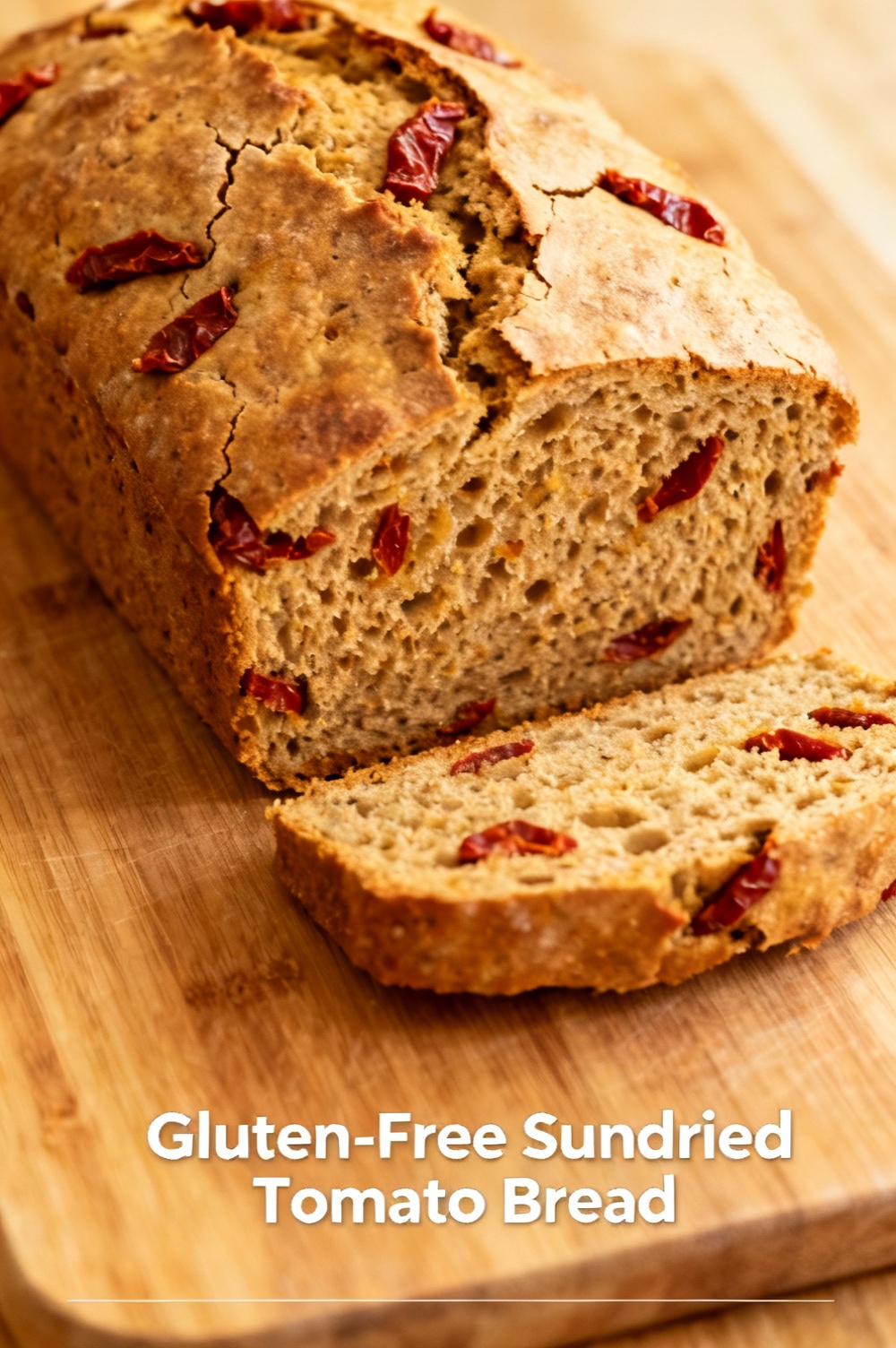
A soft, savory gluten-free loaf studded with tangy sundried tomatoes and fresh basil — great warm with olive oil or used for sandwiches.
Ingredients
- 2 1/4 tsp (1 packet / 7 g) active dry yeast
- 1 tbsp honey or sugar
- 1 1/4 cups (300 ml) warm water (about 105–110°F / 40–43°C)
- 2 cups (260 g) gluten-free all-purpose flour blend (with xanthan gum)
- 1/2 cup (70 g) tapioca starch
- 1 tsp xanthan gum (omit if your blend already contains it)
- 1 1/2 tsp fine sea salt
- 2 large eggs, room temperature
- 2 tbsp extra-virgin olive oil
- 3/4 cup (about 100 g) sundried tomatoes, drained and roughly chopped (packed in oil or rehydrated)
- 2 tbsp fresh basil, chopped (or 1 tsp dried)
- 1/2 cup (50 g) grated Parmesan or Pecorino (optional)
- 1 egg beaten with 1 tsp water for egg wash (optional)
- Coarse sea salt or sesame seeds for sprinkling (optional)
Instructions
- In a small bowl, combine warm water, honey (or sugar) and active dry yeast. Stir gently and let sit 5–10 minutes until foamy.
- In a large bowl, whisk together gluten-free flour blend, tapioca starch, xanthan gum (if using), and salt.
- In a separate bowl, beat the eggs with the olive oil. Add the foamy yeast mixture and whisk to combine.
- Pour wet ingredients into the dry ingredients and mix with a wooden spoon or stand mixer (with paddle) until a soft, slightly sticky dough forms. Scrape down the bowl and fold in the chopped sundried tomatoes, basil and Parmesan (if using).
- Grease a 9×5-inch (23×13 cm) loaf pan and transfer the dough into the pan, smoothing the top with wet spatula or wet hands. The dough will be wetter than traditional wheat dough — that’s normal.
- Cover loosely with plastic wrap or a clean towel and let rise in a warm place until puffy and roughly doubled, about 45–60 minutes.
- Preheat oven to 375°F (190°C). If using, brush the top gently with the beaten egg wash and sprinkle with coarse salt or sesame seeds.
- Bake for 35–40 minutes until golden brown and the loaf sounds hollow when tapped, or an instant-read thermometer registers 200°F (93°C) in the center.
- Remove from oven and let cool in the pan 10 minutes, then transfer to a wire rack to cool completely before slicing (cooling prevents crumbling).
- Slices are lovely warm with olive oil or as the base for savory sandwiches. Store wrapped at room temperature up to 2 days or refrigerate up to 4 days; freeze sliced for longer storage.
Nutrition Information
- Calories: 180 kcal (per slice, 1 of 8)
- Cholesterol: 20 mg
- Sodium: 300 mg
- Carbohydrates: 20 g
- Fiber: 2 g
- Sugar: 2 g
- Protein: 4 g