Graham Cracker Toffee Bark
Introduction:
What if a simple sheet of graham crackers could become the fastest crowd-pleasing candy you make this season — with just five ingredients and less cleanup than cookies? Graham Cracker Toffee Bark converts a childhood classic into a modern, Instagram-ready dessert that delivers crunchy, buttery toffee, melty chocolate, and a hit of salt in under an hour — perfect for holiday spreads or last-minute gifts when search interest for easy no-bake treats reliably spikes. This recipe challenges the idea that great candy needs long technique or tempering skills: with a few evidence-based shortcuts and temperature-aware tips, you’ll get professional results at home.
Ingredients List:
- 12–14 full-sheet graham crackers (or equivalent graham cracker squares to cover a 9×13 pan)
- 1 cup (2 sticks) unsalted butter — sensory note: rich, nutty mouthfeel when browned slightly
- 1 cup packed dark brown sugar — substitution: coconut sugar for deeper caramel notes
- 1/4 tsp fine sea salt plus flaky finishing salt (to taste)
- 2 cups semisweet or dark chocolate chips — alternatives: dairy-free/vegan chips or chopped couverture for glossy finish
- 1/2–3/4 cup chopped toasted pecans or almonds (optional) — substitution: pumpkin seeds for nut-free crunch
- 1 tsp pure vanilla extract (optional, for depth)
- Optional toppings: mini marshmallows, crushed pretzels, citrus zest, edible gold flakes
Ingredient notes: Use room-temperature butter for even melting; if using gluten-free graham-style crackers, expect a slightly different crumb but identical structural performance. For a vegan version, replace butter with coconut oil (use refined if you want neutral flavor) and choose vegan chocolate.
Timing:
Preparation time: 10 minutes. Cooking (toffee) time: 8–12 minutes. Assembly and cooling: 30–40 minutes (or 15 minutes in freezer). Total time: 48–62 minutes depending on cooling method — roughly 50% faster than traditional stovetop toffee that requires careful tempering and extended cooling. If you chill in the freezer, total time drops below 50 minutes; using room-temperature cooling adds about 20–30 minutes but yields slightly chewier toffee.
Step 1: Line the pan and arrange crackers
Preheat your oven to 350°F (175°C) if you want a lightly toasted base (optional). Line a 9×13-inch baking pan with parchment, leaving excess to lift the bark out later. Fit graham crackers tightly in a single layer to fully cover the bottom; small gaps are okay — they’ll bind with the toffee. Tip: If your crackers are uneven, break pieces to fill gaps so the toffee distributes evenly and prevents weak points.
Step 2: Make the toffee base
In a medium heavy-bottomed saucepan, combine butter and brown sugar over medium heat. Stir constantly until sugar is dissolved and mixture begins to bubble. Cook, stirring, until it reaches a hard-ball stage equivalent feel (bubbling steadily and slightly thickened) — about 3–6 minutes. You can test by dropping a little into cold water: it should form a soft toffee ball. For accuracy, use a candy thermometer: aim for 295–300°F (147–149°C) for classic toffee. Tip: Lower heat and patience prevent burning; if you prefer a deeper, nutty flavor, allow butter to brown lightly before adding sugar, but watch closely to avoid bitterness.
Step 3: Pour and spread the toffee
Immediately pour the hot toffee evenly over the graham crackers and spread with an offset spatula to cover all edges. Work quickly: cooled toffee becomes harder to spread. If some cracker seams aren’t fully covered, dab a spoonful to anchor them — this ensures structural coherence when you break the bark later. Actionable trick: If you want ultra-thin toffee, reduce cooking temperature slightly; for thicker, chewier toffee, cook to the higher end of the temperature range.
Step 4: Add chocolate while hot
Sprinkle the chocolate chips across the hot toffee layer as soon as it’s spread. Let sit 2–3 minutes to soften, then spread into a smooth, glossy layer with a spatula. If using high-quality chocolate, you’ll get a beautiful shine without tempering because the thin layer is stabilized by the cold underneath. Sprinkle nuts or toppings immediately so they adhere. Tip: For marbled effects, use two types of chocolate and swirl with a skewer.
Step 5: Chill and finish
Refrigerate the pan for 15–30 minutes or freeze for 10–15 minutes until the chocolate is set and the toffee is firm. Sprinkle flaky sea salt over the top just before the chocolate fully sets for the best visual and flavor contrast. Lift the bark by the parchment, place on a cutting board, and break into irregular pieces for that artisanal look. Personalization: Cut into uniform rectangles if gifting in boxes.
Step 6: Serve or package
Arrange on a platter, or layer in waxed-paper-lined boxes for gifting. If transporting, place a thin layer of parchment between layers to prevent sticking. Tip: For display, cluster different bark varieties (sea salt, marshmallow, nut) to give visual variety and cater to different preferences.
Nutritional Information:
Estimated per 1-ounce (28 g) serving (based on 12 servings from a 9×13 pan): Calories ~160–190 kcal, Total fat 10–12 g (Saturated fat 6–7 g), Carbohydrates 18–22 g (Sugars 14–16 g), Protein 1–2 g, Sodium 70–120 mg depending on added salt, Fiber 0.5–1 g. Data insight: swapping dark chocolate for semisweet reduces sugar by ~10–15% per serving; using coconut oil reduces saturated fat slightly but increases medium-chain triglyceride content. These are estimates for planning — adjust portioning to meet dietary goals. If precise macros are needed, run ingredients through a nutrition calculator based on your brands.
Healthier Alternatives for the Recipe:
- Lower-sugar version: use 3/4 cup brown sugar + 1/4 cup powdered erythritol (baking-friendly) to reduce net sugar without changing texture dramatically. Use dark chocolate with ≥70% cacao.
- Vegan/dairy-free: replace butter with 1 cup coconut oil (solid measure) and choose vegan chocolate chips; note coconut oil yields a slightly softer toffee at room temp.
- Nut-free: swap nuts for toasted sunflower seeds or crushed gluten-free pretzels for texture and lower allergen risk.
- Lower-fat snack-sized bites: make mini versions using square wafer crackers and smaller chocolate amounts — portion control reduces per-serving calories by up to 40%.
Creative idea: fold in freeze-dried raspberries or orange zest into the chocolate layer for natural flavor and reduced added sugar compared to marshmallows.
Serving Suggestions:
Serve room-temperature for chewier toffee or slightly chilled for firm snaps. Pair with freshly brewed coffee, dark roast espresso, or a bold black tea to balance the sweetness. For a dessert board, combine with fresh fruit, salted nuts, and shortbread for contrast. Gift idea: package 6–8 pieces in a glassine bag tied with twine and a small tasting card suggesting “Best with dark roast coffee” — personalization boosts perceived value when sharing or selling.
Common Mistakes to Avoid:
- Overcooking the toffee: burns quickly and tastes bitter; use medium heat and a candy thermometer or cold-water test to prevent this.
- Pouring too slowly: toffee sets fast; have your chocolate and pan ready before finishing the toffee.
- Not lining the pan: skipping parchment makes removal difficult and can ruin presentation. Always use parchment or reliable nonstick spray plus parchment.
- Using low-quality chocolate: it can seize or taste waxy; choose real chocolate or high-quality chips for a glossy finish.
- Adding salt too early: sprinkling flaky salt before the chocolate sets causes it to sink; add at the end for peak crunch and visual contrast.
Storing Tips for the Recipe:
Store in an airtight container at room temperature for up to 5 days or refrigerated for up to 2 weeks. For longer storage, freeze in single layers separated by parchment for up to 3 months; thaw in the refrigerator to avoid condensation affecting the chocolate sheen. When storing for gifting, include a small desiccant packet if moisture is a concern, and avoid stacking heavy items on top.
Conclusion:
Graham Cracker Toffee Bark transforms pantry staples into a fast, crowd-pleasing dessert that’s adaptable, giftable, and reliably delicious. Key takeaways: use even layers, watch candy temperature, and add flaky salt at the end for the best contrast. Try this recipe this week — make one standard batch and one with your favorite twist, then tell me which topping combo won the family vote. Share a photo or comment below and explore related recipes like Salted Almond Toffee Bark or Chocolate Pretzel Bark for more variations.
FAQs:
Q: Can I use crushed graham crackers instead of whole sheets? A: Yes, but crushed crackers will create a more compact base that soaks the toffee differently — press them firmly into the pan and expect a denser bite.
Q: My toffee is sticky at room temperature — what went wrong? A: Likely undercooked toffee (didn’t reach the hard-ball/near-hard-crack range). Reheat the mixture and cook a bit longer, or chill the finished bark to firm it up.
Q: Is a candy thermometer necessary? A: Not strictly, but it increases consistency. If you don’t have one, use the cold-water test to check for soft-ball consistency and remember to err on the side of slightly higher temperature for firm snap.
Q: How do I prevent the chocolate from dulling or sweating? A: Avoid rapid temperature swings when setting; chill briefly in the fridge or freezer, then let pieces come to room temp before exposing to warm air. Use good-quality chocolate for better gloss.
Q: Can I double the recipe for a larger batch? A: Yes — use a larger baking sheet and increase ingredients proportionally. Be mindful that thicker toffee on larger sheets may require a longer cooling time and slightly more precise heat control to avoid burning.
Explore related how-tos and downloadable printable recipe cards for easy gifting and step-by-step photos in the recipe archive — try one variation and tag a friend to double the fun.
Graham Cracker Toffee Bark
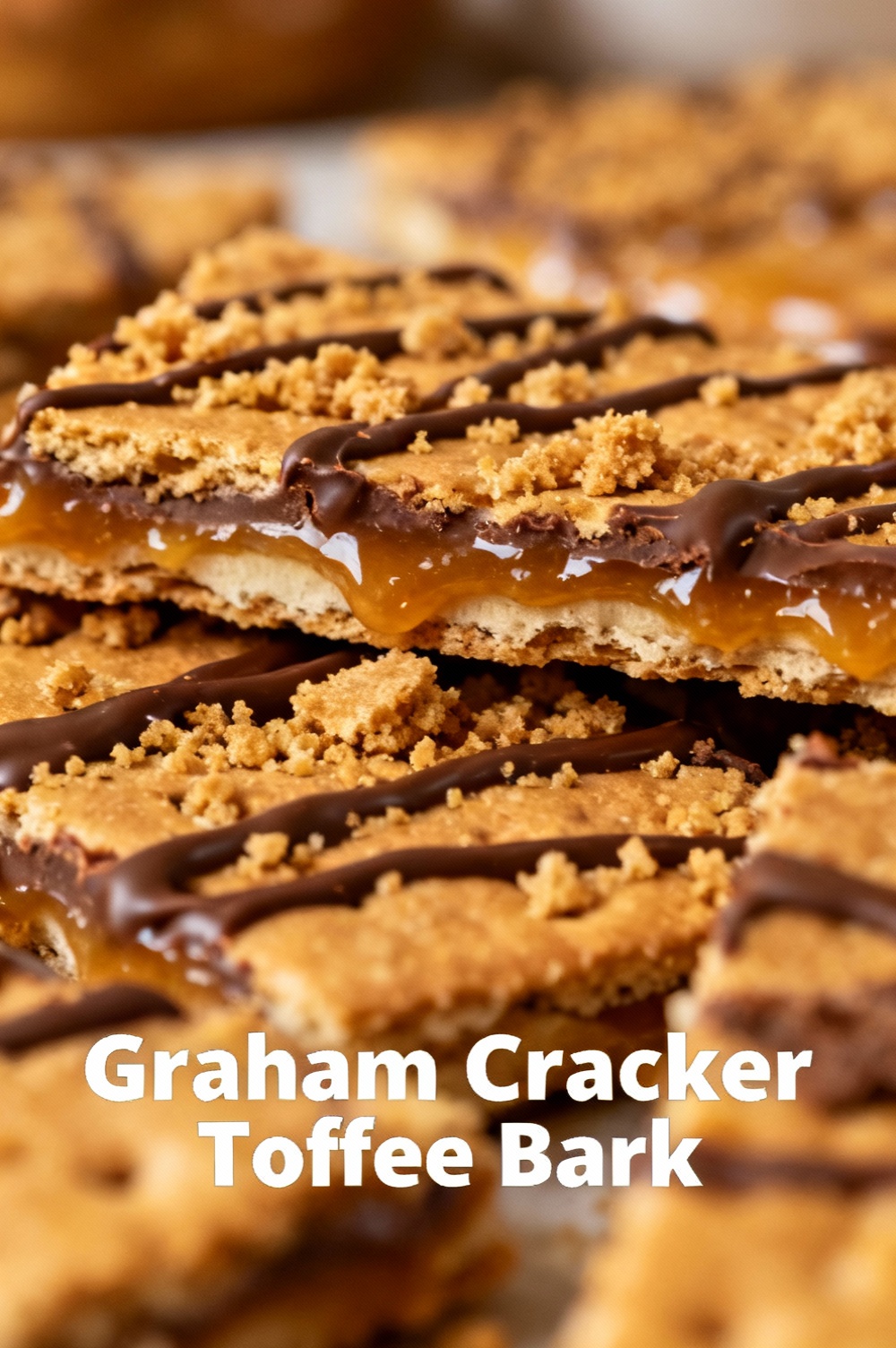
Crunchy graham crackers topped with buttery toffee, melted chocolate, chopped nuts and a sprinkle of flaky sea salt.
Ingredients
- About 2 sleeve (about 36) graham cracker squares (enough to fully line a 9×13 pan)
- 1 cup (2 sticks / 226 g) unsalted butter
- 1 cup packed light brown sugar (200 g)
- 2 cups (340 g) semi-sweet chocolate chips
- 1 cup (170 g) white chocolate chips or melting wafers (for drizzle)
- 1/2–3/4 cup chopped pecans or walnuts (optional)
- Flaky sea salt, for sprinkling
- Nonstick spray or parchment paper (for the pan)
Instructions
- Preheat oven to 350°F (175°C). Line a 9×13-inch baking pan with parchment paper or foil, leaving an overhang for easy removal; lightly spray or grease.
- Arrange graham crackers in a single layer to cover the bottom of the pan. Break crackers as needed to fill gaps.
- In a medium saucepan over medium heat, melt the butter and brown sugar together, stirring constantly. Bring to a gentle boil and let boil for 2–3 minutes while stirring (mixture should thicken and become glossy). Remove from heat immediately to avoid burning.
- Carefully pour and spread the hot toffee evenly over the graham crackers (use a spatula to coat as needed). If any crackers shift, press them gently back into place.
- Bake in the preheated oven for 6–8 minutes, until the toffee is bubbling and set. Remove from oven.
- Sprinkle the semi-sweet chocolate chips evenly over the hot toffee. Let sit 2–3 minutes to soften, then use a spatula to spread the melted chocolate into an even layer.
- Sprinkle chopped nuts over the chocolate, if using. Melt the white chocolate chips in a small microwave-safe bowl in 20–30 second intervals, stirring between, until smooth. Drizzle the white chocolate over the top.
- Sprinkle flaky sea salt lightly over the bark. Allow the pan to cool at room temperature until set (about 30–45 minutes), or refrigerate 15–20 minutes to speed up setting.
- Once firm, lift the bark from the pan using the parchment overhang and break into pieces. Store in an airtight container at room temperature for up to 5 days (or refrigerate for longer shelf life).
Nutrition Information
- Calories: 210 kcal
- Cholesterol: 20 mg
- Sodium: 120 mg
- Carbohydrates: 25 g
- Fiber: 1 g
- Sugar: 18 g
- Protein: 2 g