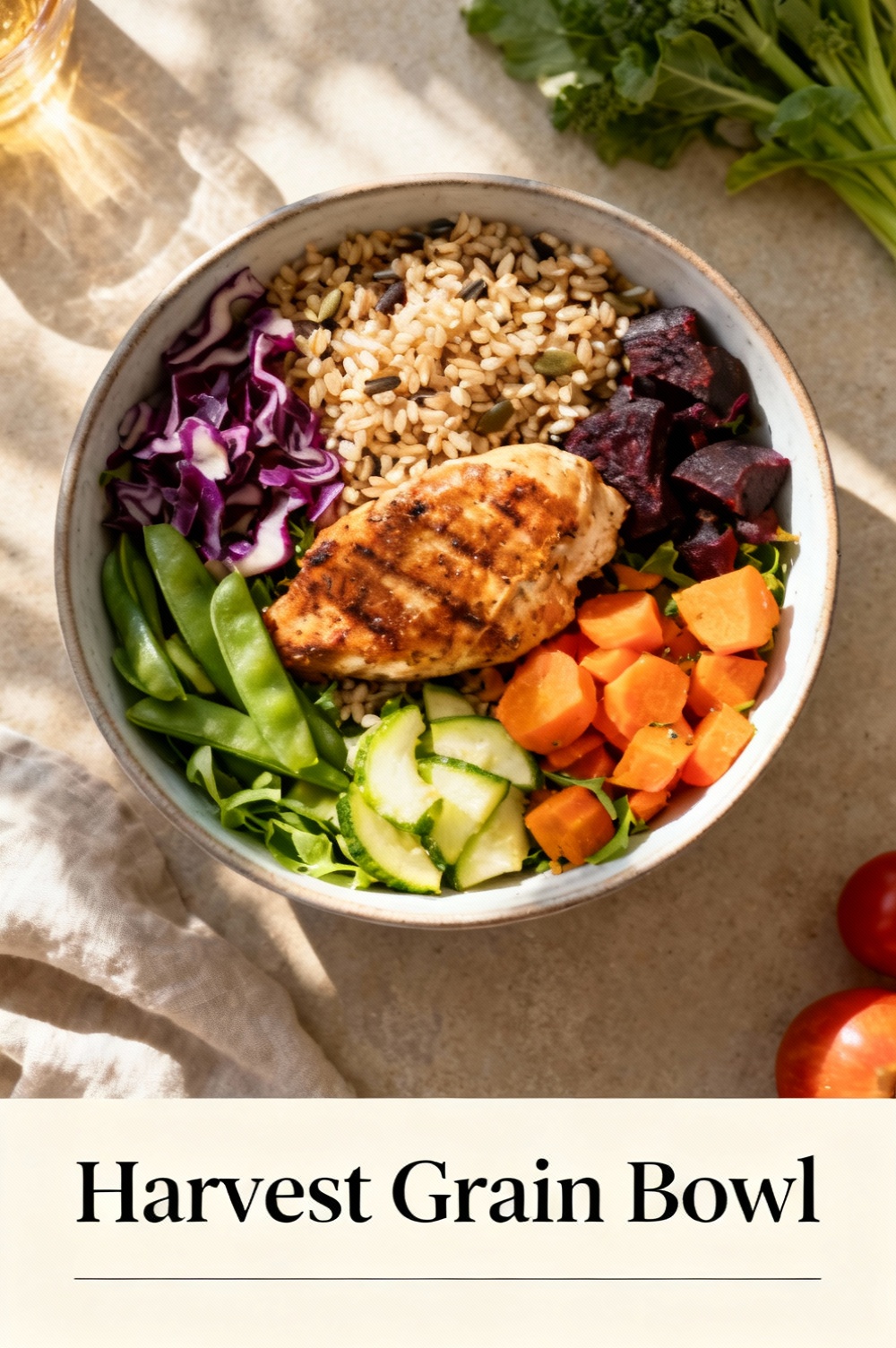
Harvest Grain Bowl
Introduction:
What if one adaptable bowl could deliver a balanced meal of whole grains, seasonal vegetables, and at least 20–30 grams of protein while taking less than an hour to make—could a harvest grain bowl replace your weekday lunches and still keep you energized through the afternoon? This harvest grain bowl recipe is built on that exact premise: combining nutrient-dense ingredients, simple techniques, and flavor-forward dressings to create a high-satisfaction meal. Grain bowls have surged in popularity because they score high on convenience, nutrition, and customization—making them perfect for meal prep and for people tracking macros or aiming to increase plant-forward eating.
Ingredients List:
- 1 cup farro (or 1 cup brown rice for a gluten-free option) — nutty, chewy base that soaks up dressings.
- 1 cup quinoa (optional mix with farro for texture) — light, slightly crunchy seeds that boost protein.
- 1 small sweet potato, diced and roasted (about 1 cup) — caramelized sweetness and silky texture.
- 1 cup roasted Brussels sprouts, halved — savory, slightly crispy edges for contrast.
- 1 can (15 oz) chickpeas, drained and rinsed — pan-roasted with paprika for crunch.
- 2 cups mixed baby greens or kale, massaged — fresh, peppery lift.
- 1/4 cup toasted pumpkin seeds (pepitas) — nutty crunch with magnesium and zinc.
- 1/4 cup dried cranberries or pomegranate seeds — tart-sweet pops that complement roasted veg.
- 1/2 avocado, sliced — creamy mouthfeel and healthy fats.
- For the dressing: 3 tbsp olive oil, 2 tbsp apple cider vinegar, 1 tbsp maple syrup, 1 tsp Dijon mustard, 1/2 tsp smoked paprika, salt and pepper to taste.
- Optional protein boosters: 4–6 oz grilled chicken, baked salmon, or 1 cup cubed tofu.
Substitutions and sensory notes: Swap farro for barley for a chewier bite, or use freekeh for a smoky aroma. Use roasted acorn squash instead of sweet potato in fall for a nuttier sweetness. Greek yogurt can replace maple syrup in the dressing for tang and extra protein. For crunch alternatives, use walnuts or roasted chickpeas instead of pepitas.
Timing:
Prep time: 20 minutes (most chopping and dressing prep). Cook time: 30–40 minutes (grain cooking + roasting vegetables). Total time: about 50–60 minutes, which is comparable to many balanced bowl recipes but optimized by roasting grains and vegetables simultaneously to save time. For meal-preppers, active time drops to 20 minutes if grains and veggies are cooked ahead—this can reduce average weekday assembly time by up to 75% compared to cooking everything fresh each day.
Step 1 — Cook the Grains:
Rinse 1 cup of farro and 1 cup of quinoa (if using) under cold water to remove excess starch. Bring 3 cups water or low-sodium broth to a boil, add farro, reduce to a simmer, cover, and cook 20–25 minutes until tender; add quinoa in the last 12 minutes or cook separately per package directions. Tip: Use broth for more depth, and salt lightly at the end to control sodium. Personalized hack: add a bay leaf or a smashed garlic clove while cooking for subtle aroma, then discard before serving.
Step 2 — Roast the Vegetables:
Preheat oven to 425°F (220°C). Toss diced sweet potato and halved Brussels sprouts in 1 tbsp olive oil, a pinch of salt, and 1/2 tsp smoked paprika. Spread on a baking sheet and roast 20–25 minutes, flipping once, until edges caramelize. Tip: Keep similar-sized pieces for even roasting; if you like extra crispness, broil 1–2 minutes at the end while watching carefully.
Step 3 — Crisp the Chickpeas:
Pat chickpeas dry, toss with 1 tsp olive oil, 1/2 tsp smoked paprika, 1/4 tsp cayenne (optional), and a pinch of salt. Roast on a separate sheet at 400°F (200°C) for 20–25 minutes until golden and crunchy. Tip: For maximum crunch, shake the pan every 7–8 minutes and remove any split chickpeas early.
Step 4 — Make the Dressing:
Whisk together 3 tbsp olive oil, 2 tbsp apple cider vinegar, 1 tbsp maple syrup, 1 tsp Dijon mustard, 1/2 tsp smoked paprika, salt, and pepper. For a creamier option, blend 2 tbsp Greek yogurt into the mix. Tip: Taste and adjust acidity—a touch more vinegar brightens roasted vegetables and balances sweetness.
Step 5 — Assemble the Bowl:
Layer a base of grains (about 1 to 1 1/2 cups per bowl), add 1 cup mixed greens, top with 1/2 cup roasted sweet potato, 1/2 cup Brussels sprouts, 1/3 cup crispy chickpeas, avocado slices, pepitas, and dried cranberries. Drizzle dressing just before serving. Personalization: If tracking macros, weigh your proteins and grains; if craving creaminess, add a dollop of hummus or tzatziki.
Step 6 — Optional Protein Finish:
For omnivores, top with 4–6 oz grilled chicken or salmon; for vegetarians, add cubed baked tofu or tempeh. Tip: Marinate tofu in tamari, maple, and smoked paprika before baking at 400°F for 20–25 minutes for flavor continuity with the bowl.
Nutritional Information:
Estimated per serving (bowl makes 2–3 servings depending on portion sizes): Calories: ~550–650 kcal; Protein: 20–34 g (higher with added animal protein); Carbohydrates: 65–80 g; Fat: 18–28 g; Fiber: 10–14 g. Micronutrients: Good source of vitamin A (from sweet potato), vitamin C and K (from Brussels sprouts and greens), iron (from farro/quinoa and chickpeas), and heart-healthy monounsaturated fats from avocado and olive oil. Data insight: A balanced bowl delivering 20–30 g protein and 8–12 g fiber aligns with many dietary guidelines for a satiating lunch that supports blood sugar stability and satiety. Tip for accuracy: Use a nutrition calculator with exact ingredient brands and portion sizes to match your dietary targets precisely.
Healthier Alternatives for the Recipe:
- Reduce oil: Roast veggies with a light spray of oil and use lemon zest or additional herbs to amplify flavor while cutting calories by up to 15–20%.
- Lower glycemic load: Swap sweet potato for roasted turnip or cauliflower rice to reduce carbohydrate load while maintaining texture.
- Increase protein: Add a scoop of fermented soy tempeh or a soft-boiled egg to push protein above 30 g for muscle-repair needs.
- Sodium-conscious choices: Use low-sodium broth, rinse canned chickpeas thoroughly, and limit added salt in the dressing.
- Anti-inflammatory boost: Replace pumpkin seeds with chopped walnuts and add turmeric to the dressing for omega-3s and anti-inflammatory polyphenols. Adaptations for diets: Make gluten-free by using only quinoa and rice; make keto by replacing grains with cauliflower rice and increasing healthy fats.
Serving Suggestions:
Serve warm or at room temperature for maximum versatility. Pair with a light soup for colder months or a citrusy salad in summer. For entertaining, present build-your-own bowls with labeled bowls of grains, roasted vegetables, proteins, and dressings—this increases engagement and accommodates diverse tastes. Pairing tip: A crisp white wine (Sauvignon Blanc) pairs well with roasted root flavors; non-alcoholic option: sparkling water with lemon and a sprig of rosemary for a refreshing counterpoint.
Common Mistakes to Avoid:
- Overcooking grains: Results in mushy texture. Use recommended cooking times and drain promptly to preserve chew.
- Skimping on seasoning early: Vegetables can taste bland without layered seasoning; salt lightly at each stage—grains, veg, proteins.
- Dressing everything too early: Adding acidic dressing too far in advance can wilt greens and make textures soggy; dress just before serving or keep separate for meal prep.
- Uneven roasting: Crowding the pan steams vegetables rather than crisps them. Leave space for air to circulate and roast in batches if needed.
- Ignoring temperature contrast: Combining hot roasted veggies with cold greens can be delightful, but avoid mixing piping-hot proteins with chilled avocado to preserve texture.
Storing Tips for the Recipe:
Store components separately for up to 4 days in the refrigerator: grains (in airtight container), roasted vegetables (cool completely before sealing), crispy chickpeas (store at room temp in airtight container to preserve crunch), and dressing (keeps 7–10 days refrigerated). For reheating: Warm grains and vegetables in a microwave-safe dish with a sprinkle of water to restore moisture; re-crisp chickpeas in a 350°F oven for 5–8 minutes. Batch prep ideas: Cook double portions of grains and roast a large tray of vegetables on Sunday to assemble bowls quickly during the week, reducing weekday meal time to under 10 minutes.
Conclusion:
This harvest grain bowl is a flexible, nutrient-dense recipe that balances whole grains, seasonal vegetables, and satisfying proteins while offering broad adaptability for dietary preferences and time constraints. By prepping components ahead and following the simple assembly steps, you can enjoy a colorful, flavorful meal that supports satiety and nutrient goals. Try it this week, personalize with your favorite grains and proteins, then share your version or questions in the comments so others can learn from your tweaks.
FAQs:
Q: Can I make this gluten-free?
A: Yes—use quinoa, millet, or rice instead of farro/barley and ensure any packaged ingredients are labeled gluten-free.
Q: How long will leftovers last?
A: When stored properly with components separated, up to 4 days in the refrigerator; freeze cooked grains for up to 3 months if needed.
Q: Can I turn this into a warm-only bowl?
A: Absolutely—serve warm grains and roasted veggies with a warm grain-based dressing (e.g., tahini warmed with lemon and hot water) and top with room-temperature avocado.
Q: Is this suitable for weight loss?
A: It can be—control portion sizes (especially grains and dressing), favor higher-protein toppings, and increase non-starchy vegetables to lower calorie density while maintaining fullness.
Q: How do I make this nut-free and allergy-friendly?
A: Omit pepitas and swap for roasted chickpeas or seeds that are safe for you. Always check labels and substitute dressings to avoid allergens.
Suggested next steps: try swapping seasonal produce based on what’s in your local market and test one different grain each week to discover your preferred texture profile; explore related recipes like Mediterranean grain bowl, Southwest quinoa bowl, or a winter root vegetable bowl to keep variety in your weekly rotation.