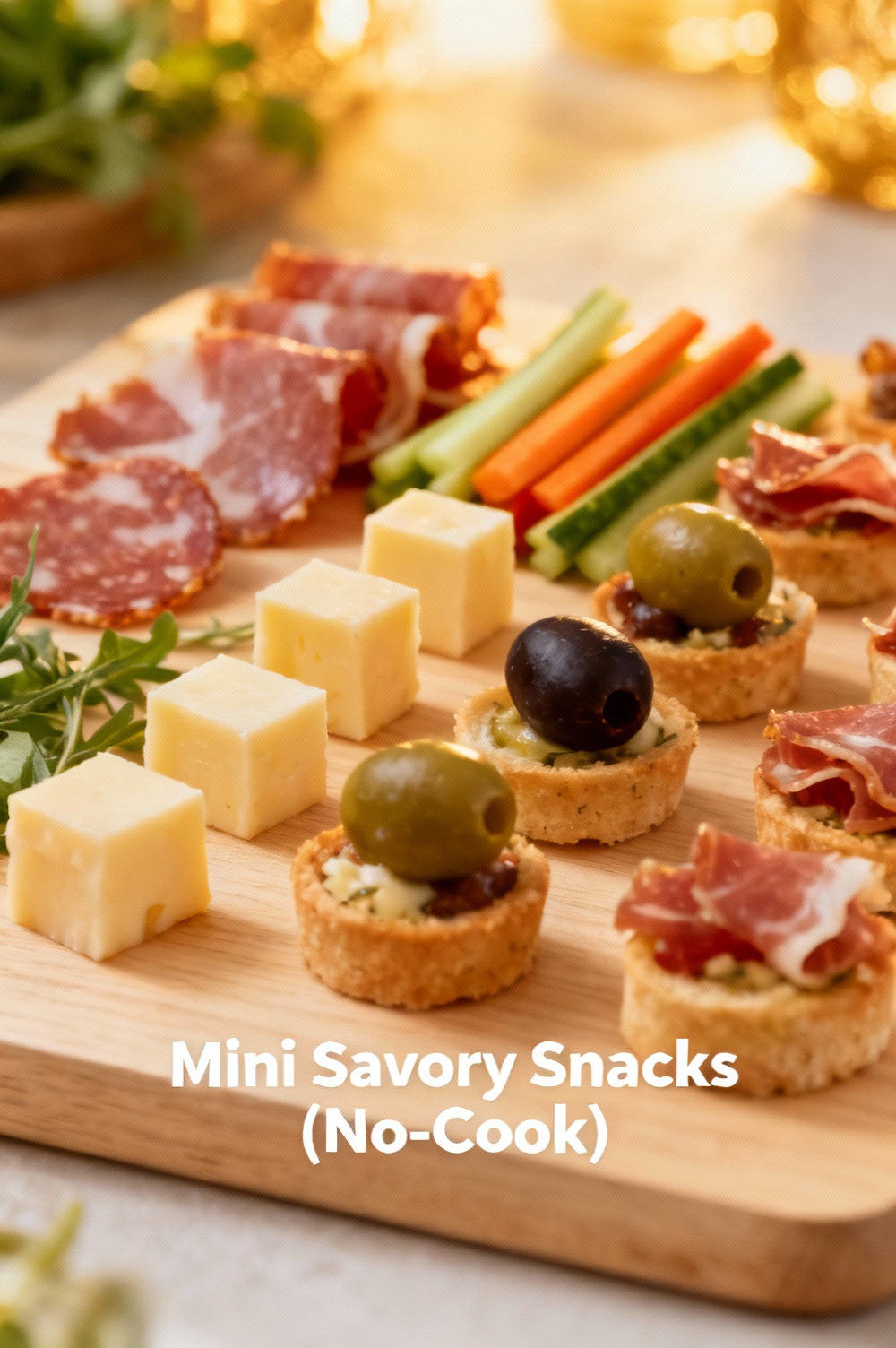
Mini Savory Snacks (No-Cook)
Introduction
Did you know you can create crowd-pleasing, restaurant-style mini savory snacks in under 10 minutes—cutting prep time roughly 70–80% compared with typical baked hors d'oeuvres—and still deliver the same wow factor in flavor and texture? No-cook mini savory snacks prove that heat isn’t required for memorable bites: they rely on contrasting textures, bold seasonings, and smart assembly to deliver maximum taste with minimal effort, which makes them perfect for last-minute gatherings, busy weeknights, and snack boards where variety matters most.
Ingredients List
Crisp cucumber rounds: fresh, firm cucumbers sliced 1/4 inch thick (substitute zucchini for a milder flavor).Creamy spread base: full-fat cream cheese or Greek yogurt mixed with lemon zest and salt (substitute dairy-free cream cheese or mashed avocado for vegan option).Smoked salmon or cured meats: thinly sliced smoked salmon, prosciutto, or soppressata (use marinated grilled vegetables or smoked tofu for vegetarian/vegan swaps).Mini peppers and cherry tomatoes: halved or hollowed for scooping (sub with blanched snap peas for crunch).Olives and tapenade: kalamata olives, capers, olive oil, garlic (sub with sun-dried tomato paste for a different tang).Fresh herbs and aromatics: dill, chives, basil, mint, lemon zest, and flaky sea salt.A crunchy base: whole-grain crackers, rice cakes, cucumber rounds, endive leaves, or toasted baguette slices (use gluten-free crackers or lettuce cups for keto/gluten-free).Nuts & seeds: toasted walnuts, pistachios, or sesame seeds for texture (sub with pumpkin seeds for nut-free).Condiments & small-adds: honey, balsamic glaze, harissa, za'atar, or preserved lemon for flavor pop.Optional: pre-made store-bought hummus, tapenade, pesto, or ricotta to speed assembly.
Timing
Prep time: 8–12 minutes.Cooking time: 0 minutes.Total time: 8–12 minutes — about 70–80% faster than typical baked mini appetizers that often require 30–45 minutes including oven time and cooling.Choosing pre-sliced ingredients or store-made spreads can reduce assembly to 5 minutes, which is ideal for last-minute entertaining.
Step 1: Gather and organize mise en place
Lay out all ingredients and tools (small bowls, piping bag or zip-top bag, tiny spoons, toothpicks).Wiping and slicing first saves time and prevents soggy bases—place sliced cucumbers or endive on a paper towel-lined tray to absorb excess moisture.Label small bowls for each topping to streamline assembly if serving multiple varieties.
Step 2: Build the base spreads (no-cook)
Whip cream cheese or Greek yogurt with lemon zest, salt, and a splash of olive oil for a silky base. For hummus or tapenade, stir in fresh herbs and adjust acidity with lemon.Aim for a spread consistency that holds shape but is soft enough to pipe; too runny will make crackers soggy.Hint: use a piping bag or a zip-top bag with the corner snipped for neat, consistent dollops.
Step 3: Assemble flavor clusters
Start with the neutral base (cracker, cucumber slice, or endive leaf), add a spoonful or piped dollop of your spread, then layer a protein or cured item, finishing with a contrasting topper (toasted nut, herb, citrus zest).For balance follow a simple formula: creamy base + salty/cured + acidic element + crunchy finish. Example: cucumber + herbed labneh + smoked salmon + caper + dill + lemon zest.
Step 4: Garnish and finish
Finish each bite with a tiny accent—flaky sea salt, micro-herb, drizzle of honey for spicy bites, or a few grinds of black pepper.Garnish just before serving to keep herbs fresh and crackers crisp.Consider micro-portion tasting spoons for sophisticated presentation.
Step 5: Present like a pro
Group similar flavors together on a board to guide guests (vegetarian, gluten-free, bold flavors).Use height and color contrast—stack small bowls of olives or spreads, fan cured meats, and tuck herbs between piles for a dynamic look.Add small labels if hosting a large crowd so guests know which bites meet their dietary needs.
Nutritional Information
Per bite estimates vary by base and topping; typical mini savory snack (cracker + spread + protein + garnish) contains approximately 60–120 kcal, 3–7 g fat, 3–8 g carbohydrate, and 2–6 g protein.Using Greek yogurt or labneh reduces saturated fat and boosts protein compared with full-fat cream cheese.Choosing cucumber or endive as a base can drop calories below 30 kcal per bite while increasing water and fiber content.Watch sodium when using cured meats or smoked fish—one smoked salmon bite can add 150–300 mg sodium; aim to balance with low-sodium bases and fresh herbs.Consider using nutrition calculators or apps to get precise macros if tracking intake; the values above are estimates for planning and portion control.
Healthier Alternatives for the Recipe
Swap full-fat cream cheese for strained Greek yogurt or labneh to cut saturated fat and increase protein.Use whole-grain crackers or seed-based crispbreads to add fiber and micronutrients.Replace cured meats with smoked tempeh, marinated mushrooms, or smashed chickpea salad for plant-forward protein.Make dressings and spreads with extra-virgin olive oil and lemon rather than heavy mayonnaise to lower processed fat intake.For low-sodium options, rinse pickled items and use fresh herbs, citrus, and vinegar for flavor instead of adding more salt.Make keto-friendly versions using romaine or butter lettuce cups and high-fat, low-carb toppings like prosciutto and whipped ricotta with olive oil.
Serving Suggestions
Serve an assortment of 6–8 varieties for a party of 8–12 to allow guests to sample multiple flavors.Pair with chilled white wine (Sauvignon Blanc or Albariño) for seafood-forward bites, or light-bodied red (Pinot Noir) for cured-meat assortments.Offer non-alcoholic pairings like sparkling mineral water with lemon, iced herbal tea, or a citrus spritz.Present on a large wooden board with small dipping bowls for spreads and pickles—this adds an interactive element that boosts guest engagement.Scale by prepping spreads and garnishes ahead and assembling last-minute to keep textures optimal.
Common Mistakes to Avoid
Overloading bases: an overly tall bite collapses and becomes awkward to eat; keep height to two or three layers.If using watery ingredients (tomato, cucumber), pat dry to prevent soggy crackers or bread.Balancing flavors: too many salty components dull the palate—include an acid (lemon, vinegar) or something sweet to balance.Rich spreads can overpower delicate toppings—use sparingly or thin with yogurt or olive oil.Not labeling allergen-containing bites leads to guest anxiety—label nuts, dairy, gluten, and seafood clearly.
Storing Tips for the Recipe
Store spreads (hummus, herbed cheese) in airtight containers in the refrigerator for 3–5 days; homemade ricotta and labneh last about 4–5 days.Whole assembled bites with crisp bases are best consumed within 1–2 hours—keep crackers separate and assemble on-site if you need longer hold time.To prep ahead: make spreads and chop garnishes up to 48 hours prior; store sliced cucumbers and endive wrapped tightly to avoid dehydration.Leftover components: combine leftover spreads with cooked pasta or use as sandwich spreads within 3 days; freeze none of these fresh components—freezing ruins texture.
Conclusion
Mini savory no-cook snacks deliver maximum flavor with minimal effort, perfect for busy hosts, healthy snacking, and last-minute entertaining. Focus on contrast—creamy plus crunchy plus acidic—and you’ll create memorable bites every time. Try a trio of cucumber-labneh-salmon, hummus-stuffed mini peppers, and endive-goat-cheese-walnut to start; then tweak for dietary needs and seasonality. Ready to transform your next gathering? Assemble one variety tonight, snap a photo, and share feedback or tag your favorite tweaks so we can feature reader-made variations.
FAQs
Q: How long can I keep assembled no-cook bites before serving?A: For best texture and food safety, assemble crackers or toasted bases within 15–30 minutes of serving; cucumber or endive-based bites can sit up to 1 hour refrigerated. If using smoked fish, keep cold and serve within 2 hours once plated.Q: Are these mini snacks suitable for kids?A: Yes—choose milder toppings (cream cheese + cucumber, or hummus + cherry tomato) and avoid choking hazards by cutting large items small. Watch for allergens like nuts and fish.Q: Can I make these vegan?A: Absolutely—use avocado, mashed chickpea salad, smoked tofu, or dairy-free spreads as bases. Replace honey with maple syrup or omit sweet glazes.Q: How do I scale this for a party of 50?A: Prep spreads and garnishes in bulk, use multiple serving stations, and assemble a portion of simple, durable bites (hummus + pepper, olive tapenade on bread) ahead; plan for 6–10 bites per guest as a general starting point.Q: Any safety tips for using smoked salmon raw-style?A: Purchase from reputable suppliers, keep chilled, and consume within 2–3 days of opening. For vulnerable guests (pregnant, immunocompromised), avoid ready-to-eat smoked fish or offer alternatives like smoked salmon from pasteurized products or vegetable-based swaps.
Interactive suggestions: experiment with one themed board (Mediterranean, Asian-inspired, or Garden-Fresh) and link to your favorite hummus or labneh recipe for faster prep. For more inspiration, search related posts like "easy no-bake appetizers," "party snack boards," or try our quick hummus variations to round out your platter.