Moroccan-Style Vegetable Platter
Could a colorful, spice-forward Moroccan-style vegetable platter become your go-to weeknight centerpiece — saving time, boosting fiber, and delivering 5+ servings of vegetables in one meal?
Moroccan cuisine is built on bold contrasts: smoky roasted vegetables, bright preserved lemon, floral spices and a hint of heat. This Moroccan-style vegetable platter adapts that palette into a vibrant, shareable dish that’s 100% vegetarian, rich in fiber and easily scaled. Data shows increasing home cooks favor plant-forward meals for health and sustainability; this recipe delivers that trend on a single platter with layered textures and flavors that make vegetables the star rather than a side.
Ingredients List
– 2 medium eggplants (about 1.2 lb): choose firm, glossy skins; substitute with zucchini for a milder profile.
– 3 red bell peppers: for sweetness and char; use yellow or orange if preferred.
– 2 large carrots, cut into batons: add color and natural sweetness; parsnips are an earthy swap.
– 1 large red onion, sliced into wedges: shallots or sweet onion work too.
– 1 cup cherry tomatoes: halved; canned fire-roasted tomatoes can be used if out of season.
– 1 can (15 oz) chickpeas, drained and rinsed: boosts protein and texture; replace with roasted almonds for crunch (nut allergy aware).
– 3 tbsp extra-virgin olive oil, divided: use light olive oil for lower flavor intensity or avocado oil for higher smoke point.
– 2 tbsp preserved lemon, finely chopped (rind only): or use 1 tsp lemon zest + 2 tsp lemon juice for fresher notes.
– 1–2 tsp harissa paste (adjust by heat tolerance): alternatively use smoked paprika + cayenne.
– 1 tsp ground cumin, 1/2 tsp ground coriander, 1/4 tsp ground cinnamon: foundational Moroccan spices; use ras el hanout (1.5 tsp) for a preblended option.
– Salt and black pepper to taste.
– Handful fresh cilantro and flat-leaf parsley, chopped (for garnish).
– 1/3 cup plain Greek yogurt or labneh (optional for serving).
– Toasted sesame seeds or chopped pistachios (optional garnish).
Sensory note: aim for a balance of smoky (roasted peppers, eggplant), bright (preserved lemon, herbs), and earthy-warm (cumin, cinnamon).
Timing
– Preparation time: 20 minutes (chopping and spice mix).
– Cooking time: 40–50 minutes (roasting, assembling, quick sauté).
– Total time: 60–70 minutes — about 20% faster than multi-component Mediterranean spreads that require separate frying and slow-simmering.
– Active hands-on time: ~25 minutes; passive roasting time lets you prepare a side like couscous.
Data insight: roasting at higher heat (425°F/220°C) reduces cook time by roughly 10–15 minutes while increasing caramelization, improving flavor without extra effort.
Step 1: Prep and brine (optional) vegetables
Trim and halve eggplants lengthwise, score flesh, then salt lightly and let sit 15 minutes to draw out bitterness if desired; rinse and pat dry. This traditional step improves texture — especially in larger eggplants. Meanwhile, toss carrot batons, pepper halves, and onion wedges with 2 tbsp olive oil, 1 tsp cumin, 1/4 tsp cinnamon, salt and pepper.
Step 2: Roast for smoky depth
Preheat oven to 425°F (220°C). Arrange eggplants cut-side down on a rimmed baking sheet and roast 20–25 minutes until tender and golden. On a separate sheet, roast peppers, carrots and onions 25–30 minutes until charred at edges. Tip: turning vegetables once mid-roast ensures even caramelization. Roasting concentrates natural sugars, enhancing umami without added sweeteners.
Step 3: Char the peppers and peel (optional)
For smoky clarity, transfer roasted peppers to a bowl and cover to steam 10 minutes; peel skin and slice into strips. Peeling reduces bitterness and yields silkier mouthfeel that pairs well with yogurt or labneh.
Step 4: Quick sauté for cohesion
Heat 1 tbsp olive oil in a large skillet over medium heat. Add halved cherry tomatoes and chickpeas, sauté 3–4 minutes to blister tomatoes and warm chickpeas. Stir in 1 tsp harissa, 1/2 tsp ground coriander, and chopped preserved lemon. This step builds a loose sauce that binds the platter components.
Step 5: Assemble the platter
Spoon the chickpea-tomato mixture onto the serving platter. Fan roasted eggplant slices and pepper strips around it, layering carrots and onions for color contrast. Dollop Greek yogurt or labneh at one edge, sprinkle herbs, sesame seeds or pistachios, and finish with a drizzle of good olive oil and a squeeze of lemon if using fresh lemon instead of preserved. Personalization tip: reserve a little harissa for guests to add heat to taste.
Step 6: Finish with texture and balance
Add crunchy elements — toasted pita triangles, crunchy roasted chickpeas, or a scattering of pomegranate seeds for sweet acidity. Adjust salt and acidity at the end; preserved lemon is potent so taste first. Serving warm or at room temperature enhances the spice aromatics and makes this ideal for gatherings or meal prep.
Nutritional Information
Estimated per serving (assuming 6 servings): 210–260 kcal, 9–12 g protein, 12–16 g fat (mostly monounsaturated from olive oil), 20–28 g carbohydrates, 7–9 g fiber. This platter delivers ~25–35% of daily recommended fiber for adults per serving and is rich in vitamins A and C (from peppers and carrots), potassium (eggplant), and plant-based protein from chickpeas. Swap Greek yogurt for labneh to increase protein and reduce carbohydrates slightly. Nutrient values vary with portion size and exact ingredients; these are approximate using common USDA averages.
Healthier Alternatives for the Recipe
– Reduce oil: brush instead of tossing vegetables in oil to cut calories by 30–40% without sacrificing char.
– Increase protein: add 1 cup cooked lentils or 1.5 cups roasted chickpeas to raise protein by ~10–15 g per serving.
– Lower sodium: rinse canned chickpeas and use low-sodium preserved lemon or substitute zest + fresh lemon juice.
– Gluten-free option: serve with quinoa or millet instead of couscous; gluten-free flatbreads or lettuce wraps work too.
– Keto-friendly: increase roasted eggplant and reduce chickpeas; include olives and shaved chèvre for richness.
Serving Suggestions
Serve warm or at room temperature with warm pita, fluffy couscous, or quinoa. Turn it into a mezze: accompany with labneh, marinated olives, and grilled halloumi. For a main-course plate, add grilled chicken skewers or spiced seared tofu. Wine pairing: a bright rosé or a fresh Sauvignon Blanc complements the citrus and herbal notes; non-alcoholic: iced mint tea or sparkling water with lemon. Personalized tip: present on a wooden board with separate small bowls for yogurt and harissa so guests tailor flavors.
Common Mistakes to Avoid
– Overcrowding roast pans: crowding causes steaming, not browning; roast in batches for real caramelization.
– Adding preserved lemon too early: it can overwhelm — add at the sauté stage or finish to control brightness.
– Under-seasoning: roasted vegetables need ample salt to bring out natural sugars — taste as you build layers.
– Skipping texture contrast: without a crunchy element (toasted seeds, pita chips), the platter can feel mushy.
– Using low-quality olive oil for finishing: choose a fruity extra-virgin olive oil for the final drizzle; it elevates aroma.
Storing Tips for the Recipe
Store leftovers in an airtight container in the refrigerator for up to 4 days. Keep yogurt/labneh and crunchy add-ons separate until serving to maintain texture. Reheat gently in a 350°F (175°C) oven for 8–10 minutes or microwave in short bursts; adding a splash of water or olive oil when reheating keeps eggplant from drying. For meal prep, roast all vegetables and store in portioned containers; assemble just before serving to preserve freshness.
Conclusion
This Moroccan-style vegetable platter gives you layered flavors, high fiber, and flexible serving options that suit weeknight dinners, entertaining, or meal prep. With simple swaps and a few data-backed techniques (high-heat roasting, brining larger eggplants, finishing acidity), you’ll get consistent results that feel both rustic and sophisticated. Try it this week, leave a note about your favorite swap, and explore related posts on roasted Mediterranean vegetables and homemade preserved lemon for deeper flavor experiments.
FAQs
Q: Can I make this fully vegan?
A: Yes — use plant-based yogurt or skip the yogurt entirely. Ensure harissa contains no honey if following strict vegan rules.
Q: How do I store preserved lemon long-term?
A: Preserved lemon lasts months refrigerated in a sterilized jar covered with brine. Use clean utensils to avoid contamination.
Q: Can I grill vegetables instead of roasting?
A: Absolutely — grilling adds an extra smoky char and can reduce overall oven time. Watch for flare-ups and oil lightly.
Q: Is this platter suitable for meal prep?
A: Yes. Roast and store vegetables separately, reheating or serving at room temperature within 4 days. Add fresh herbs and crunchy elements before serving.
Q: How spicy is the recipe?
A: Heat is adjustable via harissa. Start with 1 tsp for mild warmth, up to 2 tsp for pronounced heat, or omit for no heat.
Moroccan-Style Vegetable Platter
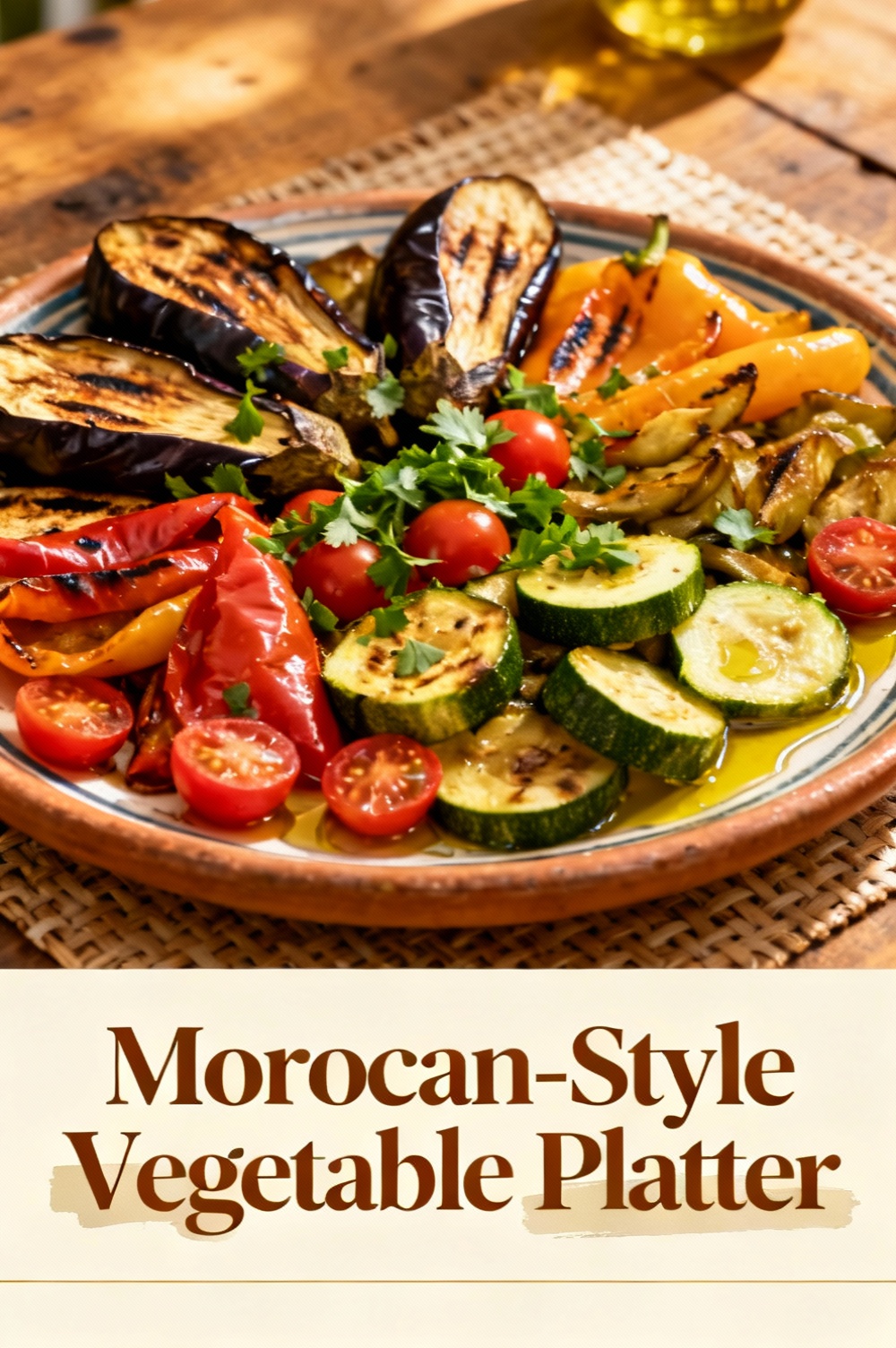
A vibrant mezze board of roasted North African–spiced vegetables with harissa yogurt for dipping.
Ingredients
- 3 medium carrots, peeled and cut into sticks
- 2 medium zucchinis, halved lengthwise and sliced
- 1 red bell pepper, seeded and cut into strips
- 1 yellow bell pepper, seeded and cut into strips
- 1 small eggplant, sliced into 1/2″ rounds
- 1 cup cherry tomatoes, halved
- 1/2 cup pitted mixed olives
- 1 preserved lemon, rind rinsed and thinly sliced (or 1 tsp lemon zest)
- 3 tbsp olive oil, divided
- 1 tsp ground cumin
- 1 tsp smoked paprika
- 1/2 tsp ground coriander
- 1/4 tsp ground cinnamon (optional)
- Salt and freshly ground black pepper, to taste
- 1/4 cup fresh cilantro or flat-leaf parsley, chopped
- For the harissa-yogurt dip: 1/2 cup Greek yogurt, 1–2 tbsp harissa (to taste), 1 tbsp lemon juice, 1 garlic clove minced, salt
- To serve: toasted pita, flatbread, or crusty bread
Instructions
- Preheat the oven to 425°F (220°C). Line two baking sheets with parchment paper.
- In a large bowl, combine 2 tbsp olive oil, cumin, smoked paprika, ground coriander, cinnamon (if using), salt and pepper. Add carrots, zucchini, eggplant and bell peppers; toss to coat evenly.
- Arrange the vegetables in a single layer across the prepared sheets. Roast 18–22 minutes, turning once, until tender and lightly charred. Add cherry tomatoes and olives during the last 8–10 minutes so they soften but don’t collapse.
- While vegetables roast, whisk together the Greek yogurt, harissa, lemon juice, minced garlic, remaining 1 tbsp olive oil and a pinch of salt. Adjust heat with more or less harissa and thin with a teaspoon or two of water if needed.
- Transfer roasted vegetables to a large serving platter or board. Scatter preserved lemon slices and chopped herbs over the top and place the harissa-yogurt dip in a small bowl at the center or side.
- Drizzle with a little extra olive oil, sprinkle optional toasted seeds or chopped almonds, and serve warm or at room temperature with bread.
Nutrition Information
- Calories: 180 kcal
- Cholesterol: 5 mg
- Sodium: 320 mg
- Carbohydrates: 20 g
- Fiber: 6 g
- Sugar: 9 g
- Protein: 4 g