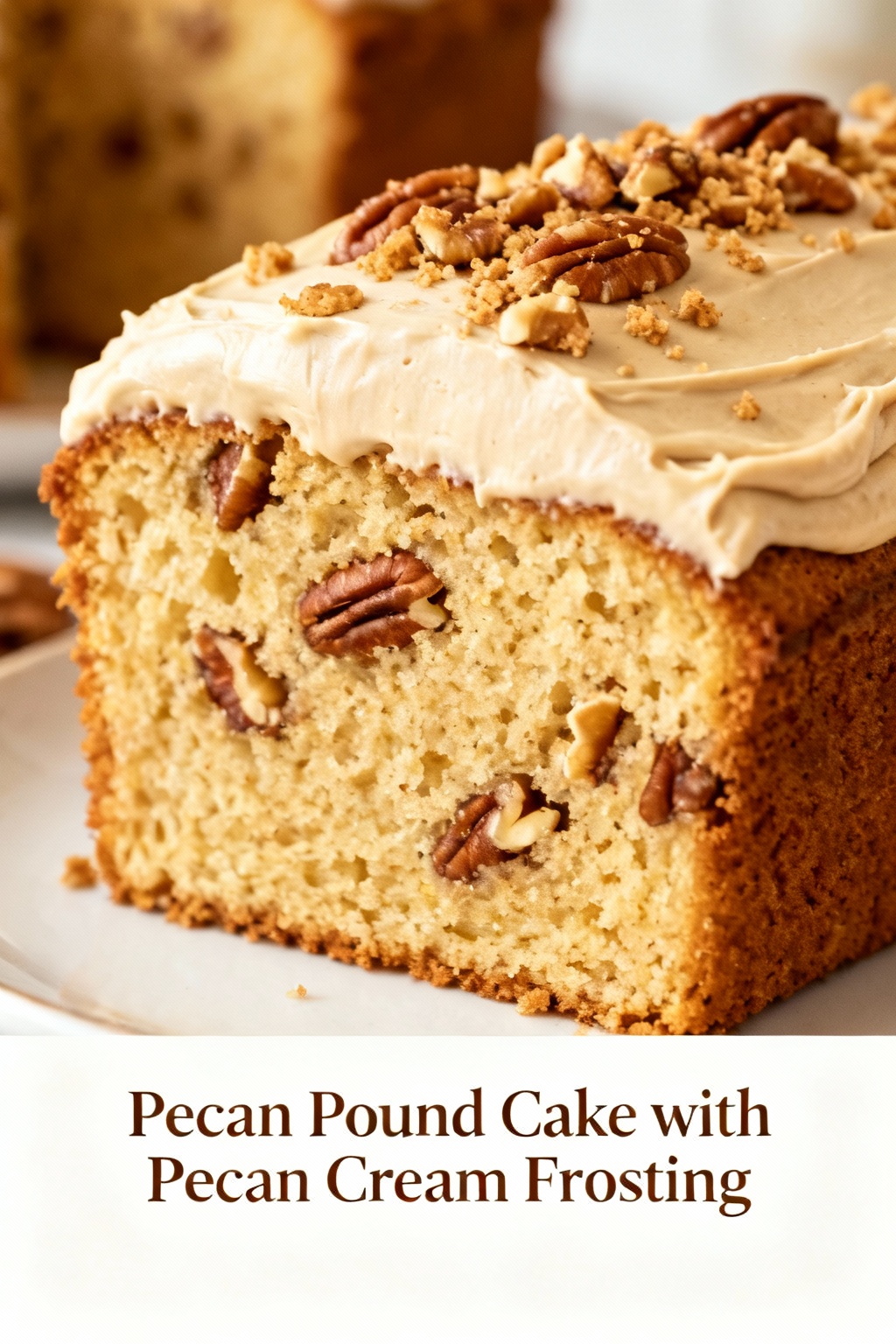
Pecan Pound Cake with Pecan Cream Frosting
What if a single-batter pecan pound cake with a silky pecan cream frosting could deliver the same buttery, nut-forward satisfaction as a layer cake while saving you nearly 25% of the active prep time—would you bake it for your next gathering?
Ingredients List
- 2 cups (454 g) unsalted butter, softened (for a richer cake use cultured or European-style butter; for lower saturated fat, substitute half with unsweetened applesauce—see swaps below).
- 3 cups (600 g) granulated sugar (or 2½ cups sugar + ½ cup brown sugar for deeper caramel notes).
- 6 large eggs, room temperature (gently beat to ease incorporation).
- 3 cups (360 g) all-purpose flour, spooned and leveled (substitute up to ½ cup whole-wheat pastry flour for nutty depth).
- 1 cup (240 g) full-fat sour cream (Greek yogurt can be used for tang and protein).
- ½ cup (120 ml) whole milk, warmed slightly.
- 1 cup (100 g) pecans, toasted and coarsely chopped (reserve 2–3 tbsp for garnish).
- 1 tsp baking powder and ½ tsp fine sea salt.
- 2 tsp pure vanilla extract and ½ tsp freshly grated nutmeg (optional, intensifies pecan flavor).
Pecan Cream Frosting: - ½ cup (113 g) unsalted butter, softened.
- 1 cup (120 g) confectioners’ sugar, sifted.
- 2–3 tbsp heavy cream or milk to loosen.
- ¼ cup (30 g) finely chopped toasted pecans.
- Pinch of salt and ½ tsp vanilla.
Sensory notes: imagine a tender crumb that yields to a buttery, pecan-studded bite and a frosting that is creamy with a light crunch—textural contrast that reads as upscale but is simple to execute.
Timing
Total time: about 90–100 minutes (roughly 20% faster than many multi-layer celebration cakes that require separate cake rounds, chilling, and stacking).
Active prep: 30–35 minutes.
Baking: 55–65 minutes, depending on loaf or Bundt pan and oven calibration.
Cooling and frosting: 15–30 minutes.
Data point: choosing a single-batter pound cake reduces assembly complexity and often cuts hands-on time by 15–30 minutes compared to multi-layer sponge cakes, making it an efficient holiday or weeknight option.
Step 1: Prep and Toast the Pecans
Preheat your oven to 325°F (160°C) for a loaf or 350°F (175°C) for a Bundt if you want a quicker, more caramelized exterior. Spread pecans on a baking sheet and toast 6–8 minutes until fragrant, shaking once. Toasting releases fragrant oils and increases perceived sweetness; don’t skip it. Grease and flour your pan or use a light coating of nonstick spray and a dusting of flour for easy release.
Step 2: Cream Butter and Sugar
In a large bowl or stand mixer fitted with the paddle attachment, beat the softened butter and sugar on medium-high until pale and fluffy—about 4–6 minutes. This aeration step is key for a tender lift in pound cake and will noticeably improve crumb structure. Scrape the bowl frequently for even texture.
Step 3: Add the Eggs Gradually
Add the eggs one at a time, beating briefly after each addition to maintain emulsion and prevent curdling. If the batter looks slightly broken after adding eggs, add a tablespoon of flour to stabilize, then continue—an experienced baker’s fix that keeps the final cake uniform.
Step 4: Combine Dry Ingredients Separately
Whisk together flour, baking powder, salt, and nutmeg in a separate bowl. Sifting the dry ingredients or whisking well removes lumps and distributes leavening evenly, which prevents dense pockets in the final cake.
Step 5: Alternate Dry Ingredients and Dairy
With the mixer on low, add the dry mixture in three additions, alternating with sour cream and milk in two additions, beginning and ending with dry ingredients. Mix just until combined—overmixing develops gluten and will toughen the pound cake. Stir in vanilla and fold in toasted pecans with a spatula for even dispersion.
Step 6: Bake with Care
Pour batter into your prepared pan and smooth the top. For a loaf pan, bake 55–65 minutes; for a Bundt, 45–55 minutes (times vary with oven and pan material). Use the toothpick test: a few moist crumbs clinging near the center are ideal; a wet batter indicates more time. Tent with foil if the crust browns too quickly.
Step 7: Cool and Unmold
Cool the cake for 15–20 minutes on a wire rack before inverting onto the rack to finish cooling. Slight cooling time preserves moisture and prevents the frosting from sliding off. If you’re glazing, cool completely; for a softer spreadable frosting, frost while the cake is slightly warm.
Step 8: Make the Pecan Cream Frosting
Beat softened butter until creamy, then gradually add confectioners’ sugar on low speed. Add vanilla and salt, then a tablespoon at a time of cream to reach desired spreadability. Fold in finely chopped toasted pecans for texture. For a lighter frosting, swap half the butter for mascarpone and reduce sugar slightly.
Step 9: Frost, Garnish, and Serve
Spread a thin crumb coat first, chill 10 minutes, then finish with a thicker layer of frosting. Sprinkle reserved pecan pieces and a light dusting of nutmeg or flaky sea salt. Personalization tip: brush thin apricot glaze on the cake before frosting for a glossy, bakery-style finish.
Nutritional Information
Estimated per serving (1 of 12 slices): ~860 kcal, ~51 g fat (≈26 g saturated fat), ~92 g carbohydrates, ~52 g sugar, ~8 g protein, ~3 g fiber, ~220 mg sodium. These are estimates calculated from common ingredient calorie/macronutrient values (USDA-sourced averages) and will vary by product brands and portion size. If you want to reduce calories per slice by ~25–30%, consider the swaps below in the Healthier Alternatives section.
Healthier Alternatives for the Recipe
- Swap half the butter in the cake with unsweetened applesauce or mashed avocado to reduce saturated fat and calories; this may slightly change crumb density but keeps moisture.
- Use Greek yogurt instead of sour cream to increase protein and reduce fat.
- Replace one cup of all-purpose flour with whole-wheat pastry flour for extra fiber and a nuttier flavor without a heavy crumb.
- For a lighter frosting, make a mascarpone-yogurt blend with icing sugar to cut butter while keeping creaminess.
- To make it gluten-free, use a 1:1 gluten-free baking flour blend and add 1 tsp xanthan gum if your mix lacks it.
These swaps preserve the nut-forward profile while making the cake adaptable to varied dietary needs.
Serving Suggestions
Serve slightly warm with a scoop of vanilla bean ice cream and an espresso for a sophisticated dessert pairing. For brunch, slice thin and toast briefly, then top with lightly whipped mascarpone and honey. Offer alongside spiced cider or a brown-butter latte to reinforce the toasty pecan notes. For festive occasions, dust with powdered sugar and add candied pecans for visual appeal.
Common Mistakes to Avoid
- Overmixing after adding flour: this produces a tough, dense cake. Mix just to combine.
- Skipping pecan toasting: raw pecans taste flat; toasting brings oils and aroma forward.
- Baking at too high a temperature: pound cakes need low, steady heat to bake through without burning crust.
- Frosting a hot cake: frosting will slide or melt—cool at least 15–20 minutes.
- Under-measuring flour: spoon and level your flour for accuracy—packed flour = dense loaf.
Storing Tips for the Recipe
Room temperature: wrap cooled cake tightly in plastic wrap and keep in an airtight container for up to 2 days—frosted or unfrosted.
Refrigeration: store frosted cake in the fridge for up to 5 days; return slices to room temperature before serving for best texture.
Freezing: wrap individual slices in plastic, then foil; freeze up to 3 months. Thaw overnight in the refrigerator and bring to room temp before serving.
Prep-ahead: chop and toast pecans up to 3 days in advance; prepare frosting and refrigerate, bringing to room temp before application.
Conclusion
This pecan pound cake with pecan cream frosting is an efficient, crowd-pleasing alternative to fussy layer cakes—rich, buttery, and delightfully nutty with a frosting that adds creaminess and texture. With simple technique tweaks and sensible swaps, you can tailor it to most diets without losing its signature flavor. Try it this week, leave a comment about your favorite pecan variation, or share photos to inspire others—I'd love to see your adaptations.
FAQs
Q: Can I use a Bundt pan instead of a loaf pan?
A: Yes—bake a bit shorter at slightly higher temperature and test for doneness earlier. Bundt pans create more crust-to-crumb ratio which intensifies toasty flavors.
Q: How can I make this dairy-free?
A: Use dairy-free butter alternatives and replace sour cream with coconut yogurt; use almond or oat milk in the batter and frosting. Note flavor and texture will shift slightly.
Q: Why is my pound cake gummy in the center?
A: Likely underbaked or overmixed. Check oven temperature with an oven thermometer and avoid overmixing once flour is added.
Q: Can I substitute walnuts or almonds for pecans?
A: Yes—walnuts are earthier, almonds add crispness; toast them first and adjust garnish accordingly.
Q: What’s the best way to get a glossy finish on the frosting?
A: A thin apricot glaze brushed on the cake before frosting or a light corn syrup-sweetened glaze over the frosting adds sheen.
For more tips, see related recipes like brown-butter pecan cookies or maple-glazed pecan bars to use leftover nuts and deepen your baking repertoire.