Roasted Carrots
Could perfectly caramelized roasted carrots (with the right roast time and a pinch of acid) become the single easiest way to make vegetables the star of your plate?
Ingredients List
- 1 lb (450 g) carrots — medium, peeled and cut into 2–3-inch batons or halved lengthwise for large carrots. Choose carrots with a firm texture and bright color for the best sweetness and crunch.
- 2 tbsp olive oil (or avocado oil for higher smoke point). Use enough to coat without pooling; oil encourages Maillard reactions and glossy caramelization.
- 1 tsp kosher salt and ¼–½ tsp freshly ground black pepper. Salt enhances sweetness; crack fresh pepper for aromatic lift.
- 1–2 tsp fresh thyme leaves or 1 tsp dried thyme (optional). Thyme pairs well with roasted carrots’ earthy sweetness.
- 1 tbsp honey or maple syrup (optional) — adds a glaze and deeper caramel notes; swap for agave for a vegan option.
- 1 tsp lemon zest + 1 tsp lemon juice or 1 tbsp balsamic vinegar (optional) — a touch of acid brightens the flavors and balances sweetness.
Substitutions and sensory swaps: Swap butter or ghee for olive oil for a silkier finish and nutty notes; use smoked paprika or za’atar for a Middle Eastern twist; roast parsnips, sweet potato, or beets alongside carrots for a root-vegetable medley.
Timing
- Preparation: 8–12 minutes (trim, peel, and cut).
- Cooking: 30–40 minutes at 400°F (200°C) for optimal caramelization.
- Total time: 38–52 minutes.
Context: This method takes roughly 30–40 minutes of active roasting time, about 20–40% faster than slow-roasting approaches that call for 60–90 minutes at lower temperatures while still delivering strong caramelization. Using convection/air-fry settings can cut cooking time by 10–15%.
Step 1: Preheat and prep for even roast
Preheat your oven to 400°F (200°C). If using convection, set to 375°F (190°C). Toss carrots in a bowl with oil, salt, pepper, and thyme, making sure every surface is coated — oil is the conductor that creates browning. Tip: set carrots on a parchment-lined rimmed baking sheet in a single layer with space between pieces; crowding creates steam instead of roast.
Step 2: Size and placement matter
Cut carrots to uniform thickness — thinner pieces brown faster and get crisp edges; thicker pieces stay tender inside. Arrange the carrots with cut-side down where possible to maximize surface contact with the hot pan and encourage rapid browning. Personalized tip: if serving picky eaters who prefer tender centers, halve lengthwise; for crunch fans, slice on the bias into thinner coins.
Step 3: Roast with intention
Roast on the middle rack for about 20–25 minutes, then check and toss to rotate the pan for even heat exposure. Roast another 10–15 minutes until edges are deeply golden and centers are fork-tender. Actionable trick: for deeper caramelization, bump the oven to 425°F for the last 5–7 minutes or broil for 1–2 minutes while watching closely to avoid burning.
Step 4: Finish for brightness and texture
After removing from the oven, immediately toss with lemon juice or balsamic vinegar and honey/maple if using. Sprinkle finishing salt (like Maldon) and a grind of fresh pepper. Add herbs or toasted nuts (almonds, pistachios) for crunch. Personalized finishing: shave fresh Parmesan for an umami finish, or toss with tahini and a pinch of cumin for a Middle Eastern flair.
Nutritional Information
Per serving (approx. 150 g roasted carrots; about 3–4 medium carrots): ~60–75 kcal, 14–18 g carbohydrates, 4–5 g fiber, 6–8 g sugars, 1–2 g protein, negligible fat (varies by oil/butter). Carrots are an excellent source of provitamin A (beta-carotene), vitamin K1, potassium, and antioxidants. Notes: roasting may reduce some heat-sensitive vitamin C but increases the bioavailability of carotenoids due to cell-wall breakdown; adding a small amount of healthy fat (olive oil) further improves absorption of fat-soluble nutrients.
Healthier Alternatives for the Recipe
- Oil reduction: Use 1 tbsp oil and 1 tbsp low-sodium vegetable broth to coat carrots and reduce calories while keeping moisture.
- Sugar-free glaze: Skip honey/maple; instead toss with a teaspoon of balsamic reduction or a sprinkle of smoked paprika and a squeeze of citrus for perceived sweetness without added sugars.
- Low-FODMAP version: Use garlic-infused oil instead of minced garlic to get allium flavor without FODMAPs.
- High-protein pairing: Toss roasted carrots with quick-cooked lentils or serve over Greek yogurt with herbs for a balanced, protein-forward plate.
- Keto-friendly: Reduce portions and pair with a high-fat dip (garlic herb butter or aioli) to fit macro needs while still enjoying the natural sweetness in moderation.
Serving Suggestions
Serve roasted carrots as a versatile side: alongside roasted chicken and herbed potatoes for a classic roast dinner; over a grain bowl with quinoa, chickpeas, and tahini drizzle for a vegetarian lunch; or chopped into salads for warm, caramelized contrast. For gatherings, serve on a platter with a trio of dips — herbed yogurt, harissa mayo, and lemon tahini — to cater to different palates. Personalization idea: top with pomegranate arils and toasted pistachios for a colorful holiday side.
Common Mistakes to Avoid
- Overcrowding the pan: causes steaming, not roasting — use two sheets if needed.
- Uneven cuts: mismatched sizes lead to uneven doneness; aim for uniformity.
- Skipping preheating: a cold pan prevents proper sear; always preheat oven fully.
- Ignoring finish: no acid or finishing salt can leave roasted carrots tasting flat despite good caramelization.
- Burning sugars: adding sweet glazes too early can cause burning — add honey/maple in the last 5–10 minutes or as a post-roast finishing touch.
Storing Tips for the Recipe
Store cooled roasted carrots in an airtight container in the refrigerator for up to 4 days. Reheat in a 375°F (190°C) oven for 8–12 minutes to revive crisp edges, or reheat gently in a skillet with a splash of oil. Freeze by flash-freezing on a tray then transferring to a freezer-safe bag for up to 2–3 months; reheat from frozen in the oven at 400°F until warmed through. Prep-ahead strategy: peel and cut carrots up to 2 days ahead and keep in cold water in the fridge to preserve freshness and reduce prep time on cook day.
Conclusion
Roasted carrots are a simple, high-impact way to transform an everyday vegetable into a flavorful, nutritious centerpiece. With just a handful of ingredients, controlled heat, and a smart finishing touch, you can achieve caramelized sweetness and depth that please a range of diets and occasions. Try this method, tweak the herbs and glazes to match your taste, and share your favorite variation in the comments — or tag a friend and roast a batch together this weekend.
FAQs
Q: Can I roast whole baby carrots without peeling?
A: Yes — baby carrots (true baby or peeled baby carrots) can be roasted whole. Toss with oil and roast slightly longer if they’re thicker; peeling is optional if skins are tender and clean.
Q: How do I get crispy edges without drying the centers?
A: Cut carrots into uniform thickness, roast at 400°F, space on the pan, and finish with high heat or a brief broil. Using a hot oven ensures fast exterior browning while the interior steams gently.
Q: Can I roast carrots from frozen?
A: It’s possible but not ideal. Frozen carrots release extra moisture and can steam instead of roast. Thaw and pat dry or roast at a higher temp and extend time while monitoring for excess sogginess.
Q: Are roasted carrots suitable for low-carb or keto diets?
A: Carrots contain natural sugars and have more carbs than leafy greens; in small portions they can fit into a low-carb plan but may be limited on stricter keto regimens. Pair with high-fat foods to balance macros.
Q: How do I make roasted carrots kid-friendly?
A: Cut into manageable batons, glaze lightly with honey and a pinch of cinnamon, and serve with a favorite dip like yogurt ranch or maple mustard to make them more appealing to children.
Q: Can I add garlic to roasted carrots?
A: Yes — add whole smashed garlic cloves at the beginning for mellow roasted garlic flavor, or add minced garlic in the last 5–7 minutes to preserve sharper garlic notes without burning.
Explore variations like maple-harissa roasted carrots, lemon-thyme glazed carrots, or roast carrots with za’atar for global flair — each small change will open new flavor avenues and keep this simple recipe exciting.
Roasted Carrots
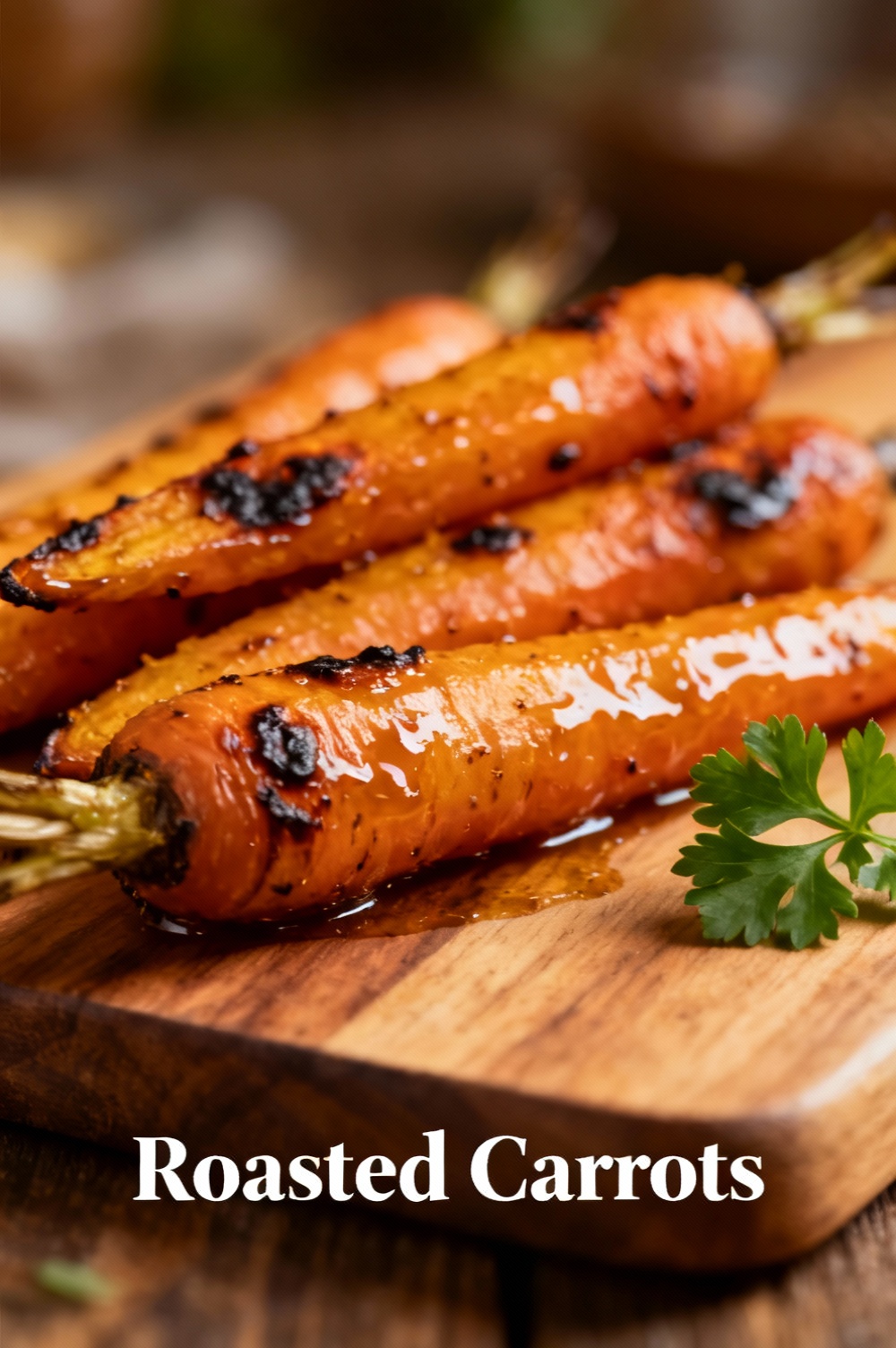
Tender, caramelized carrots roasted with olive oil, honey, garlic and fresh thyme.
Ingredients
- 1.5 lb (about 700 g) carrots, peeled and cut into 2-inch pieces (or use baby carrots)
- 2 tablespoons extra-virgin olive oil
- 1 tablespoon honey or maple syrup
- 1 teaspoon kosher salt (adjust to taste)
- 1/2 teaspoon freshly ground black pepper
- 1 teaspoon fresh thyme leaves (or 1/2 teaspoon dried thyme)
- 2 garlic cloves, minced (optional)
- 1 teaspoon lemon zest and a squeeze of lemon juice (optional, for finishing)
- 2 tablespoons chopped fresh parsley, for garnish
Instructions
- Preheat the oven to 425°F (220°C). Line a rimmed baking sheet with parchment paper or lightly oil it.
- Place the carrots in a large bowl. Add the olive oil, honey (or maple), salt, pepper, thyme and minced garlic (if using). Toss until the carrots are evenly coated.
- Spread the carrots in a single layer on the prepared baking sheet, cut side down if applicable. Do not overcrowd — use two sheets if necessary.
- Roast for 25–30 minutes, stirring or shaking the pan once about halfway through, until the carrots are tender and lightly caramelized at the edges.
- Remove from the oven. If using, add lemon zest and a squeeze of lemon juice; toss to combine. Adjust salt and pepper to taste.
- Transfer to a serving dish, garnish with chopped parsley, and serve warm.
Nutrition Information
- Calories: 150 kcal
- Cholesterol: 0 mg
- Sodium: 575 mg
- Carbohydrates: 15 g
- Fiber: 4.5 g
- Sugar: 8 g
- Protein: 1.5 g