Sweet Potato Casserole
Introduction
Did you know that a single cup of cooked sweet potato delivers more than 400% of the recommended daily value of vitamin A—so why does your sweet potato casserole sometimes taste more like dessert flop than a nutrient-packed side? This recipe reframes expectations: it keeps the bright, caramelized sweetness and creamy texture people crave while controlling sugar, balancing textures, and speeding up preparation without losing that nostalgic holiday comfort.
Ingredients List
- 3 pounds sweet potatoes (about 4 medium), preferably Beauregard or Garnet for a naturally sweet, moist texture. Substitute: Yukon golds for a milder flavor; use yams only if labeled true sweet potatoes.
- 1/3 cup unsalted butter, melted. Substitute: canned coconut oil for vegan, or 1/4 cup Greek yogurt plus 2 tbsp olive oil for a tangy, lower-fat option.
- 1/3 cup coconut sugar or light brown sugar (adjust to taste). Substitute: 1/4 cup maple syrup for liquid sweetness; for low-sugar use 2–3 tbsp monk fruit or erythritol.
- 2 large eggs, room temperature (or flax eggs: 2 tbsp ground flax + 6 tbsp water, chilled 10 minutes, for vegan).
- 1/3 cup whole milk (or plant milk such as oat or almond). Substitute: evaporated milk for richer custard.
- 1 tsp pure vanilla extract.
- 1/2 tsp ground cinnamon and 1/8 tsp ground nutmeg (optional but recommended for aromatic depth).
- 1/2 tsp fine salt.
- Topping options (choose one or combine):
- Classic marshmallow topping: 2 cups mini marshmallows (use vegan marshmallows if needed).
- Pecan streusel: 1 cup pecans, 1/2 cup rolled oats (gluten-free if needed), 1/3 cup brown sugar, 1/4 cup melted butter, pinch salt. Substitute pecans with walnuts or almond slivers.
- Crumbled graham cracker: 3/4 cup crushed graham crackers + 2 tbsp melted butter (use gluten-free crackers if desired).
- Optional garnish: flaky sea salt, orange zest, toasted pepitas.
Timing
Total active time: 25 minutes. Oven time: 35–45 minutes. Total time: 60–70 minutes—about 20–30% faster than many traditional casseroles that call for slow-baking or boiling sweet potatoes first. If you opt for roasting sweet potatoes instead of boiling, add 10–15 minutes but gain deeper caramelization. Prep-ahead notes: you can roast or bake sweet potatoes up to 3 days ahead, reducing day-of time to 20 minutes.
Step 1: Roast or boil the sweet potatoes for maximum flavor
Prick the sweet potatoes and roast at 400°F (200°C) for 35–45 minutes until tender, or cube and boil for 12–15 minutes until fork-tender. Roasting yields concentrated sweetness and a slightly caramelized edge; boiling is faster and keeps the flesh lighter and creamier. Tip: for the best texture balance, roast two medium and boil two medium—this hybrid technique adds depth without extra time.
Step 2: Mash to the perfect consistency
Scoop the flesh into a large bowl while warm and mash with a potato masher or ricer for a smooth, airy texture. If you prefer rustic texture, pulse 2–3 times in a food processor—avoid overprocessing, which can make the mixture gluey. Add the melted butter and sugar, then taste—sweetness can be adjusted here. Tip: warm ingredients integrate more smoothly and preserve steam for fluffier mouthfeel.
Step 3: Add binding and flavor
Whisk eggs, milk, vanilla, spices, and salt in a separate bowl, then fold into the mashed potatoes until just combined. For a lighter casserole, replace one egg with 1/4 cup Greek yogurt; for vegan, use flax eggs and non-dairy milk plus 2 tbsp cornstarch to help set. Pro tip: don’t overmix—stop as soon as the custard looks uniform to avoid dense results.
Step 4: Assemble and choose your topping strategy
Transfer the sweet potato base into a greased 9×13-inch baking dish, smoothing the top. For a layered experience, press 2/3 of your chosen streusel into the center, leaving sides for a rustic border. If using marshmallows, add them in the last 8–10 minutes of baking so they toast without melting into syrup. Tip: combine textures—scatter toasted pecans over marshmallows for contrast.
Step 5: Bake to set and finish
Bake at 350°F (175°C) for 25–35 minutes until the edges bubble and the center is slightly set. If using marshmallows, switch to broil for 1–2 minutes at the end to achieve golden peaks—watch closely. For a crisp streusel, bake until topping is golden, about 15–20 minutes, then add marshmallows for final 8 minutes if desired. Internal temperature target: 160°F (71°C) for a fully set casserole.
Step 6: Rest, garnish, and serve
Let the casserole rest 10 minutes before serving to set the custard and make slicing clean. Garnish with flaky sea salt or fresh orange zest to brighten the sweetness; toasted pepitas add crunch and color. Personalized tip: if serving to kids, keep marshmallow-only portions; for adults, reserve half with streusel and half with marshmallows for variety.
Nutritional Information
Estimated per serving (1 cup) for classic version with pecan streusel: Calories ~340; Fat ~18g (saturated ~6g); Carbohydrates ~42g; Fiber ~4g; Sugar ~18g; Protein ~4g; Vitamin A >400% DV; Vitamin C ~6% DV. Swapping butter for coconut oil changes saturated fat profile; using monk fruit or erythritol reduces sugar by ~80% while lowering calories by ~100 kcal per serving. These figures are estimates—use a nutrition calculator tailored to exact brands/quantities for precision.
Healthier Alternatives for the Recipe
- Lower-sugar: Replace brown sugar with 2–3 tbsp maple syrup or 2 tbsp monk fruit sweetener; reduce overall sugar by 40–80% without losing sweetness because roasted sweet potatoes are naturally sweet.
- Lower-fat: Substitute half the butter with unsweetened apple sauce or Greek yogurt for a creamier, lower-calorie base.
- Vegan: Use coconut oil or vegan butter, flax eggs, and plant milk; swap marshmallows for a toasted coconut-pecan topping.
- Gluten-free: Use certified gluten-free oats in streusel and gluten-free graham crackers; many sweet potato casseroles are naturally gluten-free if flour isn’t in the topping.
- Paleo/keto-friendly: Skip sugar, use erythritol or allulose, and replace oats/graham with nut-based topping (almond flour + chopped pecans + butter).
Serving Suggestions
Serve warm as a holiday centerpiece alongside roasted turkey, maple-glazed carrots, or a bright kale salad to cut richness. For weeknight comfort, pair with grilled chicken and steamed green beans for a balanced plate. Personalize plating: scoop into ramekins for individual servings and top with a sprig of thyme or a drizzle of browned butter for a gourmet finish. For brunch, turn leftovers into sweet potato pancakes—mash with an egg and a bit of flour, fry in a hot skillet, and top with Greek yogurt and toasted pecans.
Common Mistakes to Avoid
- Overworking the potatoes: Leads to a gluey, gummy texture. Mash gently and avoid high-speed blending.
- Adding marshmallows too early: They will melt into a sweet film—add in the final 8–10 minutes or broil briefly for peaks.
- Undersalting: Sweet dishes need salt to balance flavor—don’t skip the 1/2 tsp.
- Using raw sweet potato without proper cooking: Underbaked cubes create a lumpy, uncooked center—ensure potatoes are fork-tender.
- Crowding the oven: Placing multiple dishes reduces browning. If baking several items, rotate midway and allow extra time.
Storing Tips for the Recipe
Cool the casserole to room temperature (no more than 2 hours), cover tightly, and refrigerate up to 4 days. For longer storage, freeze in an airtight container up to 3 months—thaw overnight in the fridge and reheat covered at 350°F (175°C) for 20–30 minutes, removing cover for the last 5–7 minutes to crisp the topping. Prep-ahead: roast and mash potatoes up to 3 days ahead and store the base separate from the topping; assemble and bake the day of to preserve texture.
Conclusion
This sweet potato casserole approach balances nutrition, texture, and time-efficiency, offering flexible topping strategies and straightforward swaps for dietary needs. Try the roast/boil hybrid for the fastest route to deep flavor, adjust sweeteners to your household’s taste, and use the storage tips to streamline holiday prep. Ready to make it? Bake it, tweak it, and report back—share photos or tag the post in the comments so others can benefit from your favorite variation.
FAQs
Q: Can I make this casserole entirely ahead of time?
A: Yes—assemble and refrigerate up to 24 hours before baking; add marshmallows just before baking or broil at the end. Alternatively, store the mashed base and topping separately for up to 3 days.
Q: How can I make the topping crunchy without nuts?
A: Use a mixture of rolled oats, crushed gluten-free crackers, a touch of coconut oil, and a sprinkle of brown sugar. Toast briefly under broiler if needed for extra crunch.
Q: Is it okay to use canned sweet potatoes?
A: Canned sweet potatoes can work in a pinch but often contain added syrup or salt—rinse and taste before adding sugar. Texture may be softer, so adjust binding agents (less milk) accordingly.
Q: How do I prevent the casserole from being too sweet?
A: Reduce added sugar by 25–50%, add a squeeze of lemon or orange zest, and incorporate a pinch more salt. Roasting increases natural sweetness—boiling can help if you want milder flavor.
Q: Can I make individual portions?
A: Absolutely—divide the mixture into ramekins and reduce baking time to 18–25 minutes depending on size. Individual servings present beautifully for guests.
For more recipe inspiration, try variations like Sweet Potato Gratins, Savory Sweet Potato Casserole with sage, or a Low-Sugar Maple-Pecan version—experimenting builds your signature dish.
Sweet Potato Casserole
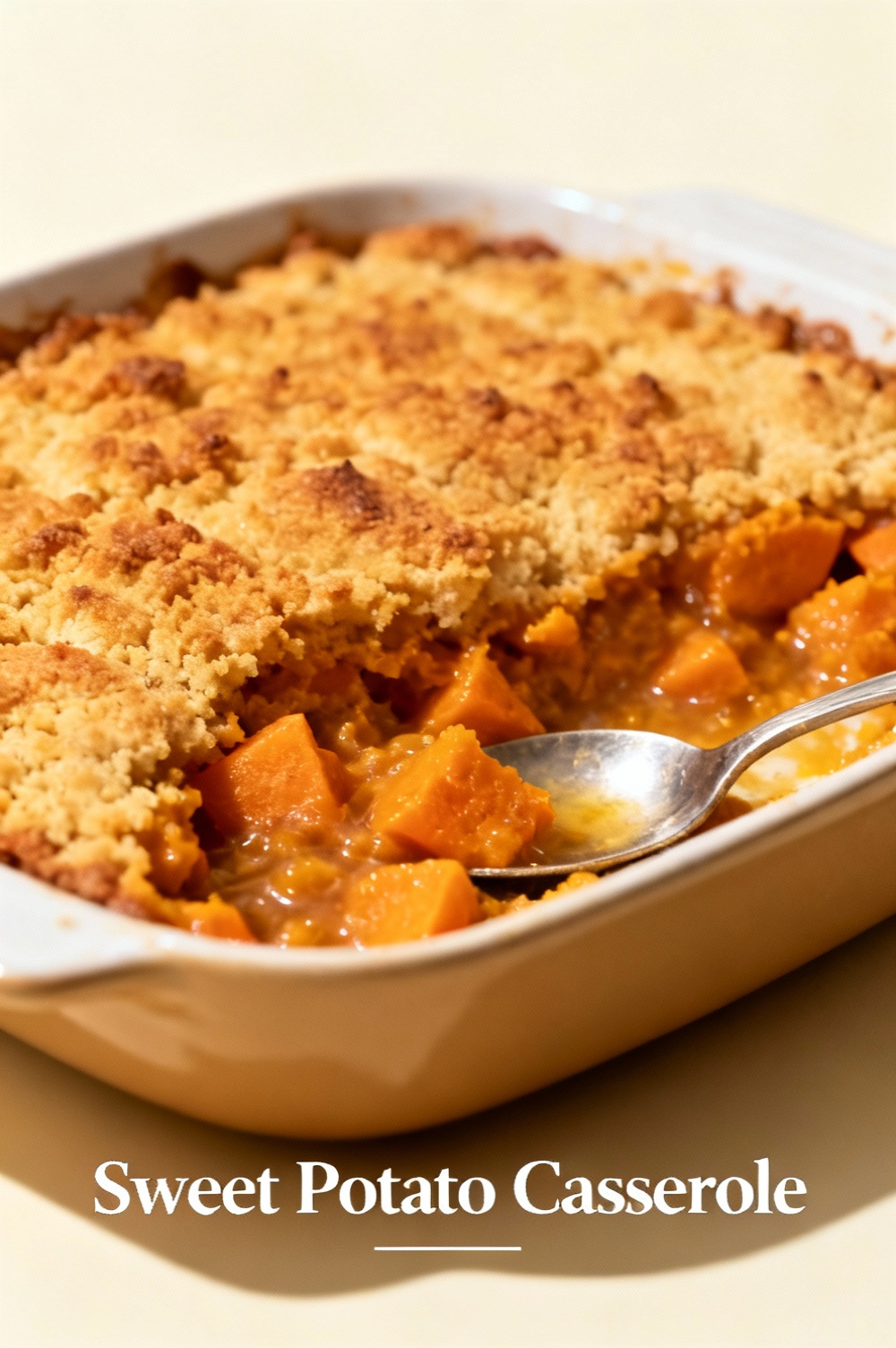
Creamy mashed sweet potatoes topped with a crunchy pecan-brown sugar streusel — a classic holiday side.
Ingredients
- 4 large sweet potatoes (about 2½ lb / 1.1 kg), peeled and cubed
- 4 tbsp (60 g) unsalted butter, softened
- 1/2 cup (120 ml) milk (or heavy cream for richer texture)
- 1/4 cup (50 g) packed brown sugar
- 1 large egg, lightly beaten
- 1 tsp vanilla extract
- 1/2 tsp ground cinnamon
- 1/4 tsp salt
- For the streusel topping:
- 1 cup (100 g) chopped pecans
- 1/2 cup (60 g) all-purpose flour
- 1/2 cup (100 g) packed brown sugar
- 4 tbsp (60 g) unsalted butter, melted
- Pinch of salt
Instructions
- Preheat oven to 375°F (190°C). Grease a 9×13-inch (or similar) baking dish.
- Place sweet potato cubes in a large pot and cover with cold water. Bring to a boil, then simmer until very tender, about 15–20 minutes. Drain well.
- Return hot potatoes to the pot or a large bowl. Add softened butter, milk, brown sugar, egg, vanilla, cinnamon and salt. Mash until smooth and well combined (use a hand masher or electric mixer for a creamier texture).
- Transfer the mashed sweet potato mixture to the prepared baking dish, spreading into an even layer.
- Make the streusel: in a medium bowl, combine chopped pecans, flour, brown sugar, melted butter and a pinch of salt. Mix until crumbly and the pecans are evenly coated.
- Sprinkle the streusel evenly over the sweet potatoes.
- Bake in the preheated oven until the topping is golden and the casserole is heated through, about 25–30 minutes. If desired, broil for 1–2 minutes at the end to deepen the color—watch closely to avoid burning.
- Remove from oven and let rest 5–10 minutes before serving. Serve warm.
Nutrition Information
- Calories: 320 kcal
- Cholesterol: 55 mg
- Sodium: 230 mg
- Carbohydrates: 41 g
- Fiber: 4 g
- Sugar: 22 g
- Protein: 4 g