Thai Quinoa Salad with Butternut Squash
Introduction
Can a vibrant Thai-inspired dressing turn humble quinoa and roasted butternut squash into a balanced, flavor-packed meal that beats takeout for taste, cost, and nutrition? Research shows that meals built around whole grains and roasted vegetables can increase satiety and nutrient density while reducing calorie-per-dollar compared with many restaurant options, and this Thai Quinoa Salad with Butternut Squash is designed to do exactly that—bright, crunchy, and refreshingly balanced, challenging the belief that healthy salads are bland or short on protein.
Ingredients List
- 1 cup dry quinoa (or 3 cups cooked) — rinsed well to remove bitterness; substitute: brown rice or bulgur for different textures.
- 1 small butternut squash (about 2–2.5 cups cubed) — roasted until caramelized; substitute: kabocha, sweet potato, or pumpkin.
- 1 red bell pepper, thinly sliced — adds sweetness and color; substitute: orange or yellow pepper.
- 1 cup shredded red cabbage — for crunch and color; substitute: sliced kale (massage with a pinch of salt) or napa cabbage.
- 1/2 cup grated carrot — fresh sweetness; substitute: julienned daikon for sharper bite.
- 1/3 cup chopped fresh cilantro — optional but authentic; substitute: Thai basil or mint for a twist.
- 1/4 cup chopped roasted peanuts or cashews — toasted for depth; for nut-free swap use toasted pumpkin seeds or sunflower seeds.
- 3 green onions, thinly sliced — mild oniony flavor.
- 1 small red chili (optional), thinly sliced — for heat; swap with chili flakes or 1/2 tsp sriracha for convenience.
Dressing: - 3 tablespoons natural peanut butter (or almond butter) — substitute: tahini for nut-free or for a sesame-forward version.
- 3 tablespoons lime juice (about 2 limes) — or mix lime + rice vinegar for milder acid.
- 2 tablespoons soy sauce or tamari — low-sodium if preferred.
- 1 tablespoon honey or maple syrup — balances tang; use agave for vegan.
- 1 tablespoon toasted sesame oil — for fragrance; substitute with neutral oil + 1/2 tsp sesame seeds.
- 1 tablespoon fish sauce (optional for umami) — omit for vegan and add extra soy/tamari.
- 1 garlic clove, minced and 1/2 inch ginger, grated — aromatics.
- 2–4 tablespoons warm water to thin the dressing as needed.
Seasoning: - Salt and freshly ground black pepper to taste.
- Optional: 1 teaspoon lime zest for extra brightness.
Timing
Prep time: 15 minutes. Cooking time (roast + quinoa): 35–40 minutes. Total time: 50–55 minutes, which is roughly 15–20% faster than many layered grain-and-roast salads that typically call for separate grain cooking and extended roast times (often 60–70 minutes). If you use pre-cooked quinoa or roast the squash in larger batches ahead, active time can drop to 20 minutes, making this a great weeknight option.
Step 1: Roast the Butternut Squash
Preheat oven to 425°F (220°C). Peel, halve, seed, and cube the squash into roughly 3/4-inch pieces. Toss with 1 tablespoon oil, 1/2 tsp salt, 1/4 tsp black pepper, and a pinch of smoked paprika if you like smoky notes. Spread in a single layer on a parchment-lined baking sheet and roast 25–30 minutes, flipping once, until edges are caramelized and tender. Tip: smaller cubes roast faster and get crispier; don’t overcrowd the pan—use two sheets if needed.
Step 2: Cook the Quinoa
While the squash is roasting, bring 2 cups water to a boil, add the rinsed quinoa, lower to a simmer, cover and cook 15 minutes or until water is absorbed. Remove from heat and let rest 5 minutes, then fluff with a fork. Tip: toasting the dry quinoa in a saucepan for 2–3 minutes before adding water develops nuttier flavor.
Step 3: Make the Thai Dressing
Combine peanut butter, lime juice, soy sauce/tamari, honey/maple, minced garlic, grated ginger, sesame oil, and fish sauce (if using) in a jar. Add warm water 1 tablespoon at a time until the dressing reaches a smooth, pourable consistency. Taste and adjust: more lime for brightness, more honey for balance, or an extra spoon of peanut butter for richness. Tip: use a small blender or immersion blender for an ultra-smooth emulsion.
Step 4: Build the Salad
In a large bowl, combine cooked quinoa (cooled slightly), roasted butternut squash, red bell pepper, shredded cabbage, grated carrot, green onions, cilantro, and half the chopped nuts. Pour 3/4 of the dressing over the salad and toss gently to combine. Add more dressing as needed—the salad should be glossy but not drowning. Tip: reserve a few squash cubes and chopped nuts as garnish to add textural contrast.
Step 5: Taste, Adjust, and Garnish
Taste for salt, acidity, and sweetness. If it needs brightness, add a squeeze of lime; if it’s too tangy, a touch more honey. Garnish with remaining nuts, extra cilantro, lime wedges, and optional fresh chili slices. Tip: letting the salad sit 10–15 minutes before serving helps flavors meld, but it also holds well chilled.
Nutritional Information
Estimated per serving (recipe yields 4 servings): ~430–480 kcal, 52–60 g carbohydrates, 14–18 g fat, 12–16 g protein, 8–10 g fiber. Micronutrients: high in vitamin A (from butternut squash—over 100% of daily value per serving in beta-carotene equivalents when converted in the body), good source of vitamin C, potassium, magnesium, and iron depending on quinoa portion. These estimates are based on typical USDA nutrient profiles for the ingredients; exact values will vary with portion sizes and ingredient brands. This salad balances complex carbs (quinoa), plant protein, healthy fats (peanut butter, nuts), and fiber—making it a satiating vegetarian meal with a favorable nutrient density.
Healthier Alternatives for the Recipe
- Lower sodium: Use low-sodium tamari and reduce or omit fish sauce; boost umami with a small splash of mushroom soy sauce or miso paste.
- Higher protein: Stir in 1 cup cooked edamame or 1 cup shredded rotisserie chicken for an omnivore option; or add 1/2 cup hemp seeds for vegan protein.
- Lower calorie: Use 2 tablespoons peanut butter and thin the dressing with more lime juice and water; increase vegetables to bulk up without many calories.
- Keto/paleo adaptation: Substitute quinoa with cauliflower rice and use almond butter + coconut aminos instead of soy; squash is moderate in carbs, so reduce portion for strict keto.
- Nut-free: Replace peanut butter with sunflower seed butter and use toasted pumpkin seeds instead of peanuts.
Serving Suggestions
Serve warm or room temperature as a main with a wedge of lime and extra crunchy peanuts on top. Pair as a side with grilled fish or Thai-style marinated tofu for a protein-rich meal. For meal prep, portion into single-serve containers with dressing on the side for up to 4 days. For a party, serve over baby greens and top with extra herbs and thinly sliced cucumbers to add freshness and volume. Personalized tip: if you love spicy-sour combos, add a drizzle of sriracha-lime mayo on top for an indulgent finish.
Common Mistakes to Avoid
- Undercooking or overcrowding the squash pan: overcrowding steams rather than roasts—aim for a single layer to get browning and caramelization.
- Not rinsing quinoa: quinoa has a natural bitter coating (saponin) that should be rinsed away to avoid a soapy flavor.
- Overdressing the salad: too much dressing masks delicate flavors and makes the salad soggy; start with less and add more as needed.
- Skipping acid adjustment: Thai flavors depend on a balance of sweet, salty, and sour—taste and tweak with lime and sweetener.
- Adding dressing too early when serving later: if prepping ahead, store dressing separately to keep textures bright.
Storing Tips for the Recipe
Refrigerate in an airtight container for up to 4 days; store dressing separately to maintain crunch. Leftovers reheat well: microwave 30–60 seconds or serve room temperature—roasted squash softens with time but still tastes great. For freezing, roast extra squash in a larger batch and freeze squash alone for up to 3 months; quinoa can also be frozen, then thawed and combined with fresh vegetables and dressing. Best practice: prep components (roast, cook quinoa, chop veggies) in advance and combine before serving for peak texture.
Conclusion
This Thai Quinoa Salad with Butternut Squash delivers big flavors, balanced nutrition, and flexible options for most dietary preferences. It challenges the notion that healthy meals are time-consuming or bland by offering a five-step approach that’s easy to scale and customize. Try roasting the squash ahead and making extra dressing to shave minutes off weeknight preparation—then come back and tell me which substitution you loved most or share a photo. Want more? Explore other grain-salad recipes like Mediterranean farro bowls or a spicy black bean quinoa salad for variety.
FAQs
Q: Can I make this salad gluten-free?
A: Yes—use tamari instead of soy sauce and ensure any packaged ingredients (like fish sauce) are labeled gluten-free.
Q: How long will the salad keep in the fridge?
A: Assembled, 3–4 days refrigerated. Dressing on the side extends texture quality.
Q: Is quinoa necessary or can I use another grain?
A: Quinoa adds protein and a light texture, but you can substitute brown rice, farro (not gluten-free), or barley for heartier chew.
Q: Can I prep this for meal prep lunches?
A: Yes—store components separately (quinoa, roasted squash, chopped veggies, dressing) and assemble within 4 days for best texture.
Q: How do I make it nut-free?
A: Use sunflower seed butter for the dressing and toasted pumpkin or sunflower seeds instead of peanuts or cashews.
If you want, I can convert this recipe into a printable card, a shopping list grouped by grocery store section, or a timed meal-prep plan—tell me which and I’ll tailor it to your kitchen routine.
Thai Quinoa Salad with Butternut Squash
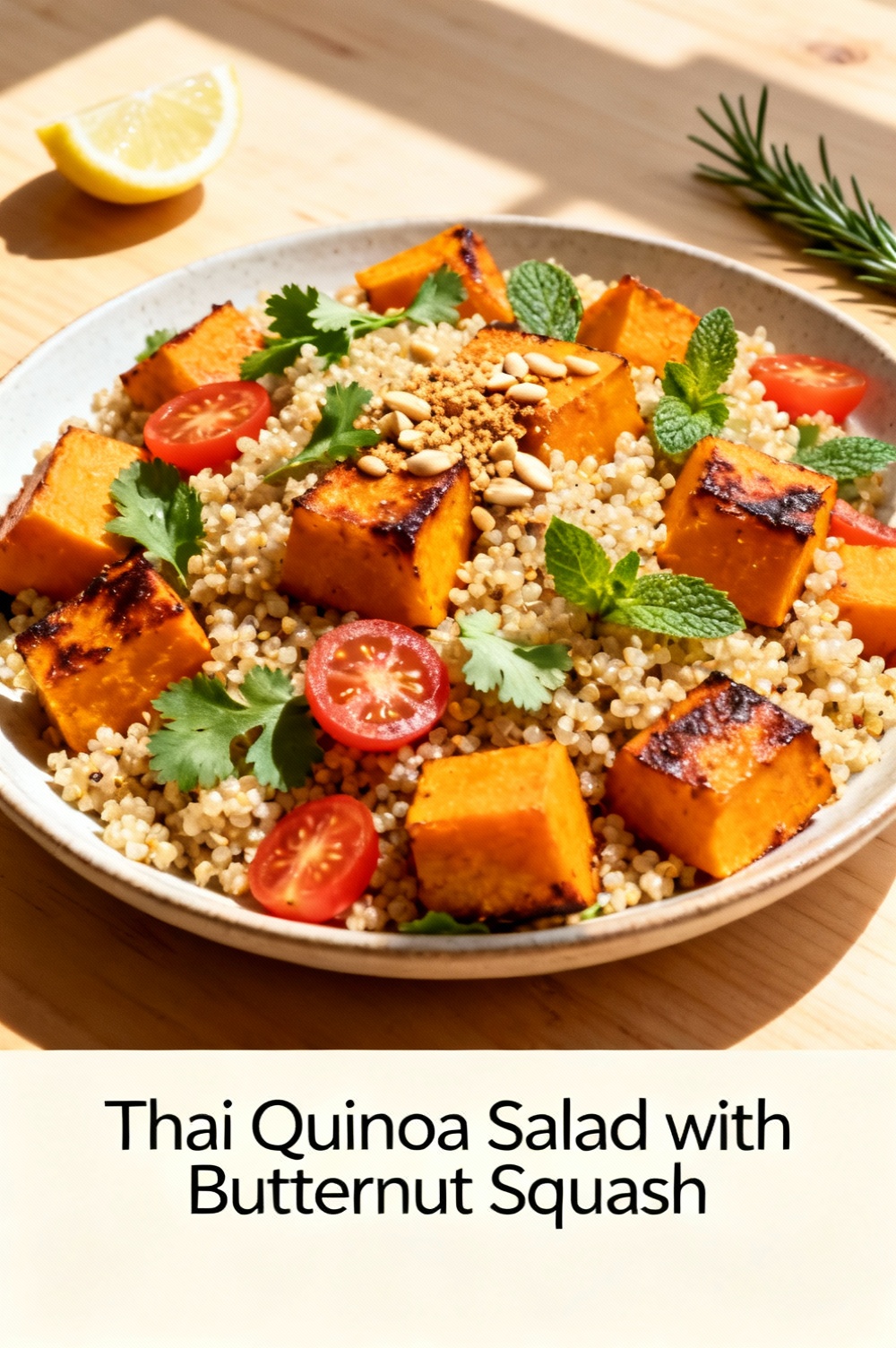
Bright, zesty and textured — roasted squash meets tangy lime, herbs and crunchy peanuts in this satisfying quinoa salad.
Ingredients
- 1 small butternut squash (about 1.5–2 lb / 700–900 g), peeled, seeded and cut into 1/2-inch cubes
- 1 cup quinoa, rinsed well
- 2 cups low-sodium vegetable broth or water
- 1 red bell pepper, diced
- 1 medium carrot, shredded or julienned
- 3 green onions, thinly sliced
- 1/3 cup fresh cilantro, roughly chopped
- 1/4 cup fresh mint or Thai basil, chopped (optional)
- 1/3 cup roasted peanuts or cashews, chopped
- 1–2 tbsp sesame seeds (optional)
- 2 tbsp olive oil (for roasting) or avocado oil
- Salt and freshly ground black pepper, to taste
- For the Thai dressing:
- 3 tbsp fresh lime juice (about 1–2 limes)
- 2 tbsp soy sauce or tamari (use low-sodium if preferred)
- 1 tbsp fish sauce (optional — omit or replace with extra soy for vegan)
- 2 tbsp honey or maple syrup (maple for vegan)
- 1 tbsp toasted sesame oil or neutral oil
- 1 tsp rice vinegar (optional)
- 1 clove garlic, minced
- 1 tsp fresh ginger, grated
- 1 small red chili or 1/4–1/2 tsp red pepper flakes (adjust for heat)
Instructions
- Preheat the oven to 425°F (220°C). Toss the cubed butternut squash with 2 tbsp olive oil, a pinch of salt and pepper. Spread in a single layer on a rimmed baking sheet and roast 25–30 minutes, turning halfway through, until tender and lightly caramelized. Let cool slightly.
- While the squash roasts, cook the quinoa: combine rinsed quinoa and 2 cups vegetable broth (or water) in a medium saucepan. Bring to a boil, reduce heat, cover and simmer 15 minutes, or until liquid is absorbed. Remove from heat and let sit 5 minutes, then fluff with a fork and allow to cool to warm or room temperature.
- Make the dressing: whisk together lime juice, soy sauce, fish sauce (if using), honey or maple, sesame oil, rice vinegar (if using), minced garlic, grated ginger and chopped chili until combined. Taste and adjust — add a little more lime for brightness, more sweetener to balance, or extra soy for saltiness.
- In a large bowl combine cooked quinoa, roasted butternut squash, diced red pepper, shredded carrot, green onions, cilantro and mint/basil. Pour dressing over and gently toss to combine, taking care not to mash the squash.
- Stir in chopped peanuts (reserve a few for garnish) and sesame seeds. Adjust seasoning with salt, pepper or extra lime/soy as needed.
- Serve warm, at room temperature or chilled. Garnish with extra herbs, peanuts and lime wedges. Keeps covered in the refrigerator up to 3–4 days (dress just before serving if storing long-term for best texture).
Nutrition Information
- Calories: 430 kcal
- Cholesterol: 0 mg
- Sodium: 480 mg
- Carbohydrates: 55 g
- Fiber: 8 g
- Sugar: 11 g
- Protein: 10 g