Wild Rice Pilaf
Could swapping white rice (205 kcal, 4.3 g protein, 0.6 g fiber per cooked cup) for a wild rice pilaf (≈166 kcal, 6.5 g protein, 2.3 g fiber per cooked cup) deliver tastier texture and better nutrition to your plate?
Ingredients List:
- 1 1/2 cups long-grain wild rice blend (or 100% wild rice for firmer, nuttier kernels). Substitution: use a 50/50 wild rice + brown rice blend for faster cook time and softer texture.
- 3 1/4 cups low-sodium chicken or vegetable broth (for depth). Substitution: water + 1 bouillon cube or 1 tablespoon miso for umami if you’re sodium-conscious.
- 2 tablespoons olive oil or unsalted butter (for silkiness). Sensory note: butter adds creaminess; olive oil highlights nutty notes.
- 1 medium yellow onion, finely diced (adds caramelized sweetness).
- 2 garlic cloves, minced (bright aromatic lift).
- 8 oz cremini or shiitake mushrooms, sliced (earthy, meaty texture). Substitution: roasted chestnuts for autumnal sweetness.
- 1 cup diced celery and 1 medium carrot, small dice (crunch + color).
- 1/2 cup toasted slivered almonds or chopped pecans (for crunch and toasty aroma). Substitution: pepitas or walnuts for different flavor profiles.
- 1/4 cup dried cranberries or cherries (optional — tart-sweet contrast).
- 1 teaspoon kosher salt (adjust to taste) and 1/2 teaspoon black pepper.
- 1 teaspoon fresh thyme leaves or 1/2 teaspoon dried thyme (herbal brightness). Substitution: rosemary or sage for savory warmth.
- Zest of 1 lemon and 2 tablespoons chopped fresh parsley (finishing brightness).
- Optional protein add-ins: cooked chickpeas, shredded rotisserie chicken, or pan-seared tofu.
Timing:
- Preparation time: 15 minutes.
- Active cooking time: 45–55 minutes (depending on rice blend and whether you pre-soak). Soaking 30 minutes can cut active cook time by ~20%.
- Total time: 60–75 minutes. Context: that’s roughly 3x the cook time of white rice (about 18–20 minutes) but yields a more nutrient-dense, texturally complex side that often replaces both a starch and vegetable on the plate.
Step 1: Rinse, toast, and (optional) soak the rice
Rinse the wild rice blend under cold water until the runoff is clear to remove dust and excess starch. Tip: Toast the drained rice in a dry skillet over medium heat for 3–4 minutes until you smell nutty aromatics; this deepens flavor and keeps kernels separate. Optional: soak for 20–30 minutes to reduce cooking time and improve tenderness. Personalized tip: if you prefer chewier texture, skip soaking.
Step 2: Build the aromatics
Heat olive oil or butter in a heavy-bottomed saucepan over medium heat. Add diced onion, celery, and carrot; sauté 6–8 minutes until onions are translucent and carrots begin to soften. Add mushrooms and stir 4–5 minutes until they release moisture and begin to brown. Add garlic in the last minute. Tip: sweat the vegetables rather than brown them heavily if you want a softer, pilaf-style mouthfeel.
Step 3: Add rice and liquid, simmer gently
Add toasted rice to the pan and stir to coat with fat and aromatics for 1–2 minutes. Pour in warm broth, add thyme, salt, and pepper, and bring to a gentle boil. Reduce to a low simmer, cover tightly, and cook according to package timing (usually 40–50 minutes for 100% wild rice; blends will be less). Actionable trick: set a timer and resist stirring—lifting the lid lets steam escape and can extend cooking time.
Step 4: Test, fluff, and finish
After the minimum cook time, test several grains for tenderness. When kernels are split and tender with a slight chew, remove from heat and let rest, covered, for 10 minutes. Fluff with a fork to separate grains. Stir in toasted nuts, dried fruit if using, lemon zest, and chopped parsley. Personalized tip: for creamier pilaf, fold in a tablespoon of butter or 2 tablespoons of ricotta cheese just before serving.
Step 5: Plate and pair
Spoon onto warmed plates and garnish with extra herbs and toasted nuts. Pair with lemony roasted chicken, pan-seared salmon, or a bright winter salad. Serving personalization: add a drizzle of browned butter and chopped sage in autumn, or fold in roasted corn and cilantro for a summer twist.
Nutritional Information:
Estimated per serving (1 cup pilaf, yields ~6 servings): Calories 220–260; Protein 6–9 g; Carbohydrates 34–40 g; Fat 7–10 g; Fiber 3–4 g; Sodium varies (200–400 mg depending on broth). Data insight: compared to a cup of cooked white rice, this pilaf offers more protein and fiber and a broader micronutrient spectrum (magnesium, zinc, B vitamins) from wild rice and added vegetables and nuts. Note: nutritional values depend on exact ingredients and portion sizes; use USDA FoodData Central values for precise calculations if tracking macros.
Healthier Alternatives for the Recipe:
- Lower sodium: use low-sodium broth and taste before adding salt; add lemon juice or a splash of vinegar to brighten instead of more salt.
- Lower fat: swap butter for 1 tablespoon olive oil or replace nuts with toasted seeds for similar crunch with more heart-healthy fats.
- Higher protein: stir in cooked quinoa or edamame, or top with shredded roast chicken or pan-fried tempeh.
- Lower carb/low-GI: blend with cauliflower rice (50/50 mix) to reduce carbs while maintaining bulk and texture.
- Vegan: use vegetable broth and coconut oil or olive oil; add toasted chickpeas for texture and protein.
- Gluten-free: naturally gluten-free when using certified gluten-free broth and ingredients—great for celiac-friendly menus.
Serving Suggestions:
Serve warm as a centerpiece or side: pair with herb-roasted chicken and glazed carrots for a holiday table; use as a bed for curried vegetables and chickpeas for a vegetarian entrée; fold into a warm grain salad with arugula, pomegranate seeds, and feta for lunch. Personal tip: serve with a wedge of lemon and extra herbs on the side so guests can customize acidity and freshness.
Common Mistakes to Avoid:
- Not rinsing or toasting the rice: leads to dusty or flat-tasting pilaf.
- Boiling too vigorously: violent boiling can burst kernels and create mushy texture; simmer gently.
- Lifting the lid too often: steam escapes and increases cook time; trust the timer and check near the end.
- Over-salting at the start: broths can be salty; always taste toward the end and adjust.
- Skipping the rest: resting off the heat lets steam finish cooking grains and keeps them separate and fluffy.
Storing Tips for the Recipe:
Cool to room temperature within 1 hour and refrigerate in airtight containers for up to 4 days. For longer storage, freeze in portioned airtight containers or freezer bags for up to 3 months. Reheat gently with a splash of water or broth in a covered pan over low heat, or microwave with a damp paper towel to restore moisture. Prep-ahead: cook the rice base a day ahead and refresh with toasted nuts, fresh herbs, and citrus zest right before serving to maintain crunch and brightness.
Conclusion:
Wild rice pilaf is a versatile, nutrient-forward upgrade from plain rice, delivering superior texture, flavor, and a stronger micronutrient profile. With a bit of planning—rinsing, toasting, and gentle simmering—you’ll transform simple grains into a polished side that pairs with everything from weeknight proteins to festive mains. Try the recipe, leave a note below about your favorite add-ins, and explore other grain-forward recipes like quinoa tabbouleh and lemon-herb brown rice for more ideas.
FAQs:
Q: Can I use pre-cooked or instant wild rice?
A: Instant or quick-cook varieties cut time dramatically; reduce simmer time per package instructions and monitor texture. Flavor will be slightly milder—toast for extra depth.
Q: How do I make this gluten-free?
A: The base ingredients are naturally gluten-free; choose certified gluten-free broth and avoid cross-contamination.
Q: Can I make this in a rice cooker or Instant Pot?
A: Yes. For electric pressure cookers, follow manufacturer liquid ratios (typically 1:1.25 to 1:1.5 wild rice to liquid) and cook 25–30 minutes on high, followed by natural release. In a rice cooker, use the wild rice setting if available or double the liquid and check after a typical cycle.
Q: What’s the best way to keep the pilaf from drying out when reheating?
A: Add 1–2 tablespoons of broth or water per cup when reheating and cover to trap steam; reheat slowly over low heat or short bursts in the microwave.
Q: Is wild rice pilaf suitable for meal prep?
A: Absolutely—make a big batch, portion with protein and vegetables, and store for balanced lunches. Add fresh herbs or nuts just before serving to keep textures vibrant.
Interested in variations? Try a citrus-cranberry pilaf for festive occasions or a smoky chipotle version folded with black beans and corn for Southwestern flair—experiment and note which swaps you and your family love most.
Wild Rice Pilaf
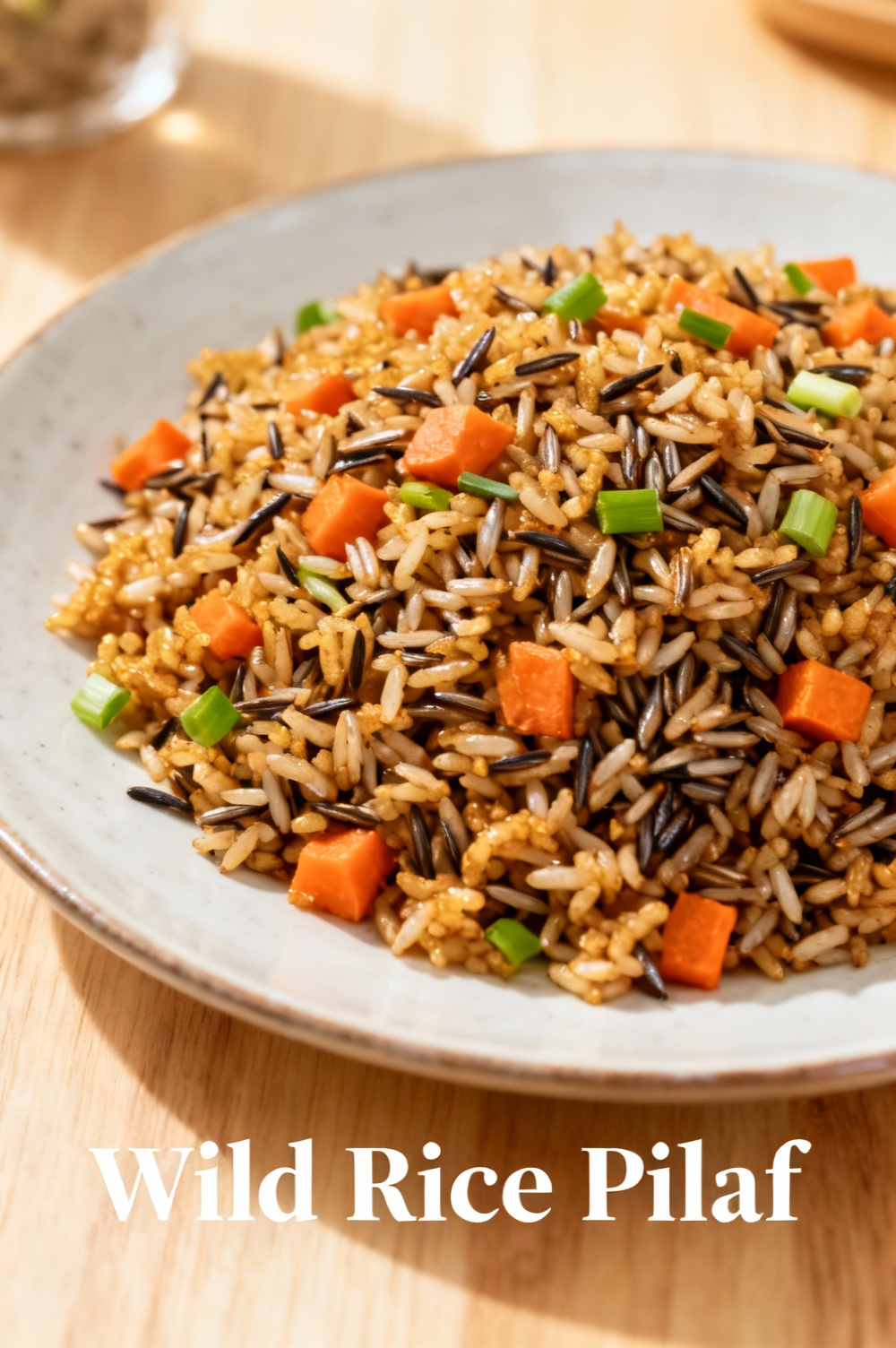
Hearty, nutty wild rice pilaf with toasted almonds and fresh herbs.
Ingredients
- 2 cups wild rice blend (wild rice + long-grain rice), rinsed and drained
- 3 tbsp unsalted butter or olive oil
- 1 medium yellow onion, finely chopped
- 2 carrots, diced
- 2 celery stalks, diced
- 8 oz cremini or button mushrooms, sliced (optional)
- 3 garlic cloves, minced
- 4 cups low-sodium chicken or vegetable broth
- 1 bay leaf
- 1 tsp fresh thyme leaves (or 1/2 tsp dried)
- 1/2 tsp kosher salt, plus more to taste
- 1/4 tsp freshly ground black pepper
- 1/3 cup sliced or slivered almonds, toasted
- 2 tbsp chopped fresh parsley
- 1 tbsp lemon juice (optional, brightens flavor)
Instructions
- Rinse the wild rice blend under cold water and drain. Set aside.
- In a large saucepan or Dutch oven, heat the butter or oil over medium heat. Add the chopped onion, carrots and celery and sauté 6–8 minutes until softened and translucent. If using mushrooms, add them and cook until they release their liquid and start to brown, about 4 minutes.
- Add the minced garlic and thyme and cook until fragrant, about 30 seconds.
- Stir in the rinsed wild rice, coating it with the aromatics for 1–2 minutes to toast lightly.
- Pour in the broth, add the bay leaf, salt and pepper. Bring to a gentle boil, then reduce heat to low, cover and simmer until the rice is tender and most of the liquid is absorbed — about 40–45 minutes (check package instructions for your rice blend).
- When done, remove from heat and let sit, covered, 5–10 minutes to steam. Discard the bay leaf.
- Fluff the pilaf with a fork, stir in the toasted almonds, chopped parsley and lemon juice if using. Taste and adjust seasoning.
- Serve warm as a side with roasted meats, poultry or as a hearty vegetarian main.
Nutrition Information
- Calories: 220 kcal
- Cholesterol: 5 mg
- Sodium: 420 mg
- Carbohydrates: 40 g
- Fiber: 3 g
- Sugar: 2 g
- Protein: 5 g